Jaishankar Meets Wang Yi in Manila, Flags Trade and Border Ties
Synopsis
External Affairs Minister Dr. S. Jaishankar met Chinese FM Wang Yi in Manila on 22 July 2026 on the EAS sidelines, welcoming normalisation steps including resumed flights and the Kailash Manasarovar Yatra, while pressing for fair market access, supply chain predictability, and robust border mechanisms.
Key Takeaways
Jaishankar and Chinese FM Wang Yi held bilateral talks in Manila on 22 July 2026 on the sidelines of the EAS and ASEAN Regional Forum.
India-China normalisation traces to the October 2024 Kazan leaders' summit, reinforced by a subsequent meeting in Tianjin .
Concrete normalisation steps cited include resumption of direct flights , updated visa regime , restarting of the Kailash Manasarovar Yatra , and recommencement of border trade .
Jaishankar flagged fair market access , trade balance , and supply chain predictability as outstanding issues requiring resolution.
Peace and tranquility in border areas was reiterated as the prerequisite for normal bilateral ties, with a call for full support to relevant mechanisms.
India, as BRICS chair in 2026 , acknowledged China's support for BRICS activities and initiatives during its chairship.
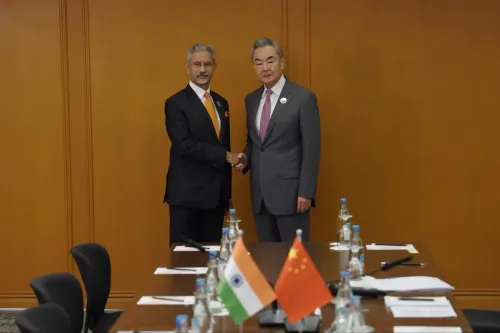
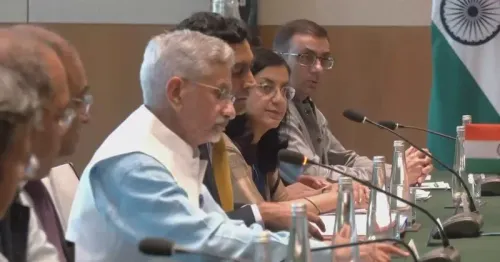
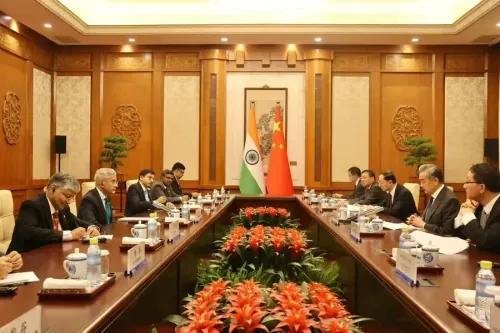
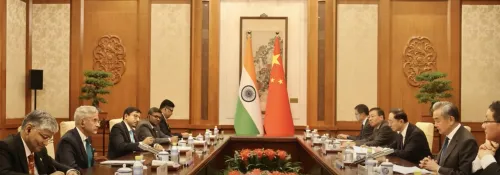
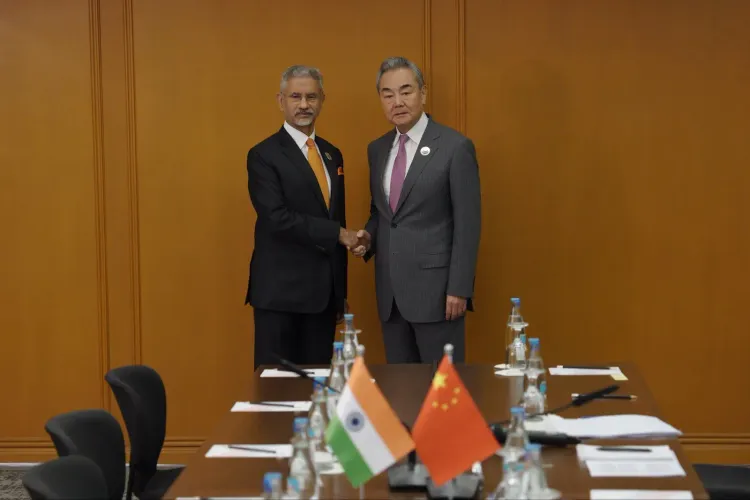
Union External Affairs Minister Dr. S. Jaishankar held a wide-ranging bilateral meeting with Chinese Politburo member and Foreign Minister Wang Yi on the sidelines of the East Asia Summit (EAS) and ASEAN Regional Forum in Manila, Philippines, on 22 July 2026, using the occasion to take stock of the gradual normalisation of India-China relations and press for progress on trade, people-to-people exchanges, and border mechanisms.
Context
Sharing the text of his opening remarks on X, Dr. Jaishankar noted that the two ministers had met a year earlier and that Wang Yi had also visited India in the intervening period. 'Today's occasion will be useful in taking stock of our ties and also discuss important regional and global developments,' he said. The meeting was made possible by both nations' participation in the multilateral EAS and ARF processes, which routinely provide a framework for parallel bilateral diplomacy.
Policy Backdrop
The minister anchored the bilateral conversation in the landmark October 2024 leaders' meeting in Kazan, which he described as the starting point of gradual normalisation between the two countries. That trajectory was 'further affirmed' when the two leaders met again in Tianjin the following August. Dr. Jaishankar reiterated India's core formulation: 'A stable and cooperative relationship can best be developed on the basis of mutual respect, mutual interest and mutual sensitivity,' adding that such a relationship 'can make a valuable contribution to a multi-polar Asia and a multi-polar world.'
On the border, he was unambiguous: 'Peace and tranquility in the border areas is obviously the pre-requisite for normal ties.' He called for 'constant attention' to border mechanisms and said relevant platforms 'must be given full support and strong encouragement.' He also cited the foundational political compact reached by the two leaders — that 'differences should not become disputes' — and described managing them as 'the responsibility of diplomacy.'
Normalization Steps and Remaining Concerns
Dr. Jaishankar acknowledged concrete progress in the normalisation process, listing the resumption of direct flights, an update to the visa regime, the restarting of the Kailash Manasarovar Yatra — the Hindu pilgrimage route to Tibet — and the recommencement of border trade as steps that 'must be welcomed.' However, he was equally direct about unresolved issues, placing fair market access and a more balanced trade relationship at the top of the agenda. Concerns over 'predictability of supply chains' were also flagged, along with the need to facilitate official and people-to-people exchanges and to schedule meetings of various bilateral mechanisms.
As two 'large and important nations' and 'proximate neighbours,' he acknowledged that India and China would inevitably have their own particular interests, framing diplomacy as the instrument for managing friction without allowing it to escalate.
BRICS and the Global Situation
With India holding the BRICS chairship in 2026, Dr. Jaishankar used the meeting to 'appreciate the support that China has given to various BRICS activities and initiatives' during India's tenure. He described the global situation as 'currently extremely complicated' and said the multilateral setting made it appropriate to 'exchange views on some of its pressing aspects,' signalling that the conversation extended beyond bilateral issues to broader geopolitical questions.
What's Next
The Manila meeting sets the stage for continued implementation of the normalisation agenda, with the operationalisation of bilateral mechanisms — from border talks to trade working groups — now the key measure of progress. The restarting of the Kailash Manasarovar Yatra and border trade are visible confidence-building markers, but substantive movement on market access and supply chain predictability will be closely watched by Indian industry and border communities alike. With India chairing BRICS, New Delhi will also look to Beijing's continued cooperation to ensure a successful summit under its presidency.
Point of View
Visas, the Yatra, border trade — while keeping structural grievances like market access and supply chain risk firmly on the table. By anchoring the conversation in the Kazan and Tianjin leader-level understandings, Jaishankar signals that India treats normalisation as a top-down political commitment that must translate into measurable economic and security deliverables. The explicit BRICS appreciation is a diplomatic gesture, but the pointed references to trade imbalance and mechanism meetings suggest New Delhi is using the goodwill of the chairship as quiet leverage. The overall arc points to a relationship managed through incremental confidence-building rather than any grand reset.
NationPress
22 Jul 2026
Frequently Asked Questions
Why did Jaishankar meet Wang Yi in Manila?
Both ministers were in Manila for the East Asia Summit and ASEAN Regional Forum, and used the multilateral gathering as an occasion for a bilateral meeting to review India-China ties and discuss regional and global issues.
What is the current status of India-China relations?
Relations have been gradually normalising since the leaders' meeting in Kazan in October 2024, with steps such as resumed direct flights, updated visas, the restarting of the Kailash Manasarovar Yatra, and recommencement of border trade, though issues like trade balance and market access remain unresolved.
What is the Kailash Manasarovar Yatra and why does its resumption matter?
The Kailash Manasarovar Yatra is a Hindu pilgrimage to a sacred site in Tibet, China. Its resumption after years of suspension is seen as a significant people-to-people confidence-building measure in the India-China normalisation process.
What did Jaishankar say about the India-China border?
He stated that 'peace and tranquility in the border areas is obviously the pre-requisite for normal ties,' called for constant attention to the issue, and urged full support for the relevant bilateral border mechanisms.
What role does BRICS play in India-China relations in 2026?
India holds the BRICS chairship in 2026, and Jaishankar acknowledged China's support for BRICS activities during India's tenure, using the chairship as a diplomatic touchpoint in the bilateral conversation.