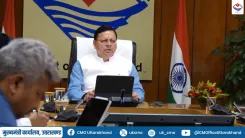
CM Samrat Choudhary inaugurates 3 ghats worth ₹46.26 crore in Bihar

Synopsis
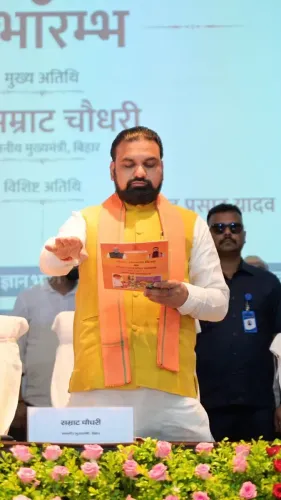
Bihar Chief Minister Samrat Choudhary on 22 July 2026 inaugurated construction of three ghats — Bhadra Ghat, Naujar Ghat, and Mahavir Ghat — at a cost of ₹46.26 crore, livestreaming the event and signalling the state's continued push for riverfront infrastructure development.
Key Takeaways
Bihar Chief Minister Samrat Choudhary inaugurated three ghat projects on 22 July 2026 .
The three ghats — Bhadra Ghat , Naujar Ghat , and Mahavir Ghat — will be built at a combined cost of ₹46.26 crore .
The inauguration was livestreamed on the Chief Minister's official X account, broadening public visibility of the event.
Ghat development in Bihar aligns with the Namami Gange programme , the central government's flagship river conservation and infrastructure initiative launched in 2014 .
Key beneficiaries include local residents, pilgrims, and riverine communities who rely on these sites for daily and religious use.
The projects are part of a broader pattern of riverfront renewal across Ganga-basin states, combining central and state funding for sanitation, access, and flood resilience.
Bihar Chief Minister Samrat Choudhary on Wednesday, 22 July 2026, inaugurated the construction of three riverfront ghats — Bhadra Ghat, Naujar Ghat, and Mahavir Ghat — at a combined cost of ₹46.26 crore, livestreaming the event on social media to mark the occasion.
Context
Choudhary shared the inauguration live on his official X account, captioning the post with the project cost and the names of all three ghats. The post, written in Hindi, announced the event as an ongoing live broadcast: '₹46.26 करोड़ की लागत से भद्र घाट, नौजर घाट एवं महावीर घाट निर्माण कार्य का उद्घाटन कार्यक्रम' ('Inauguration programme for the construction of Bhadra Ghat, Naujar Ghat, and Mahavir Ghat at a cost of ₹46.26 crore'). The public broadcast signals the state government's intent to highlight riverfront infrastructure as a visible development deliverable.
Policy Backdrop
Bihar sits at the heart of the Ganga river basin, and ghat development has been a recurring theme in both state and central policy frameworks over the past decade. The Namami Gange programme, launched by the central government in 2014, has channelled funds toward cleaning, conserving, and building infrastructure along the Ganga and its tributaries, with ghat construction forming a key component. State governments in the Ganga basin have increasingly paired central scheme funding with their own budgetary allocations to accelerate riverfront renewal, combining sanitation upgrades with improved public access at historic bathing sites.
Ghat projects in Bihar carry both civic and religious significance. These sites serve as bathing ghats for daily use by local residents, as pilgrimage destinations, and as flood-prone zones that require resilient engineering. The ₹46.26 crore outlay for three ghats reflects the scale of civil works typically involved — stone-paved steps, retaining walls, lighting, and drainage — that form the backbone of riverfront infrastructure.
Stakeholders and Impact
The primary beneficiaries of the three new ghats are local residents, pilgrims, and riverine communities who depend on these sites for daily rituals, livelihoods, and seasonal access to the river. Improved ghat infrastructure typically reduces the risk of accidents during floods and monsoon surges, while also creating better conditions for religious tourism. For the Bihar government, such projects serve a dual purpose: delivering tangible infrastructure to constituents and reinforcing the state's identity as a culturally significant destination along the Ganga corridor.
Contractors, local construction labour, and eventually small vendors and boat operators around the ghats are also indirect stakeholders, as completed riverfront projects tend to stimulate localised economic activity.
What's Next
The inauguration of Bhadra Ghat, Naujar Ghat, and Mahavir Ghat is likely to be followed by monitoring of construction timelines and quality, with completion milestones expected to draw further political attention. Analysts tracking Bihar's infrastructure spending will watch whether these ghats are subsequently integrated into the state's tourism promotion plans or linked to smart-city or heritage-corridor frameworks in upcoming budgets. Broader river conservation goals under central schemes will also shape how additional phases of ghat development are funded and sequenced across the state.
Point of View
Where riverfront infrastructure serves simultaneously as civic utility and electoral symbolism. By livestreaming the event, Chief Minister Choudhary amplifies the visibility of state spending to a digitally connected constituency — a tactic that has become standard practice for BJP-governed states seeking to demonstrate development credentials ahead of electoral cycles. The alignment with the Namami Gange framework also allows the state to claim credit for projects that may draw on central funding, blurring the line between state and central delivery. Whether these ghats translate into sustained tourism or sanitation gains will depend on post-construction maintenance, a perennial weak link in India's public infrastructure story.
NationPress
22 Jul 2026
Frequently Asked Questions
Which three ghats did Bihar CM Samrat Choudhary inaugurate in July 2026?
Bihar Chief Minister Samrat Choudhary inaugurated the construction of Bhadra Ghat, Naujar Ghat, and Mahavir Ghat on 22 July 2026.
What is the total cost of the three ghat projects in Bihar?
The combined cost of the three ghat construction projects — Bhadra Ghat, Naujar Ghat, and Mahavir Ghat — is ₹46.26 crore.
What is the Namami Gange programme and how does it relate to Bihar ghat construction?
Namami Gange is a central government programme launched in 2014 for cleaning and developing infrastructure along the Ganga river, including ghat construction. Bihar's ghat projects align with this broader river conservation framework.
Who benefits from the new ghat projects in Bihar?
Local residents, pilgrims, and riverine communities are the primary beneficiaries, gaining safer and better-maintained access to the river for daily rituals, bathing, and religious activities.
Why do state governments in Bihar prioritise ghat construction?
Ghat projects combine civic utility — improving sanitation, flood resilience, and public access — with cultural and religious significance, making them high-visibility infrastructure investments that also support local tourism.