CM Dhami Backs FPO to Lift Uttarakhand Fruit Farmers
Synopsis
The Uttarakhand government under CM Pushkar Singh Dhami is leveraging the Ramgarh Mount Valley FPO in Nainital district to grade, brand, and directly market fruits, aiming to raise farmer incomes and modernise hill horticulture through collective market access.
Key Takeaways
The Chief Minister's Office of Uttarakhand announced on 22 July 2026 that the state is focused on raising farmer incomes through horticulture.
The Ramgarh Mount Valley FPO in Nainital district is conducting fruit grading, packaging, and branding for member farmers.
The FPO provides direct market access, reducing dependence on intermediaries for small horticulture growers.
The initiative aligns with the Government of India's 10,000 FPO scheme launched in 2020 to empower farmer collectives.
Ramgarh is an established temperate-fruit cluster, making it a strategic location for value-addition efforts.
Further scale-up to neighbouring districts and integration with state horticulture missions is the expected next phase.
The Chief Minister's Office of Uttarakhand announced on Wednesday, 22 July 2026 that the state government, under Chief Minister Pushkar Singh Dhami, is actively working to raise farmer incomes and give horticulture a new direction, with the Ramgarh Mount Valley Farmer Producer Organisation (FPO) in Nainital district serving as a key instrument of that push.
Context
The Chief Minister's Office stated that the Ramgarh Mount Valley FPO is engaged in grading, packaging, and branding of fruits, while simultaneously creating seedha bazaar tak pahunch (direct market access) for farmers. The post highlighted this initiative as part of the Dhami government's broader commitment to horticulture-led rural prosperity in the hill state.
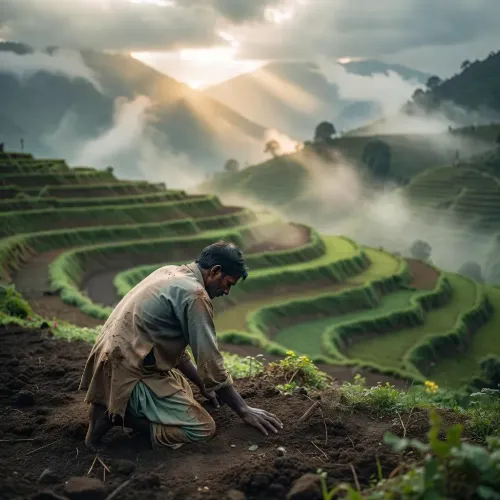
Ramgarh, a cluster within Nainital district, has long been associated with temperate fruit cultivation — including peaches, plums, and apples — making it a natural base for value-addition efforts targeting small and marginal growers.
Policy Backdrop
The initiative draws on the Government of India's central sector scheme launched in 2020 for the formation and promotion of 10,000 Farmer Producer Organisations across the country. The scheme is designed to enable collective marketing by small farmers, reduce dependence on intermediaries, and improve price realisation at the farm gate.
Hill states face a particular challenge: fragmented land holdings and the perishable nature of horticultural produce make post-harvest losses acute. FPOs that bundle grading, cold-chain handling, branding, and direct buyer linkages are widely seen as a structurally sound response to this challenge. Uttarakhand's terrain-specific focus on horticulture — rather than field crops — reflects the comparative advantage of its mid-altitude districts.
The national FPO programme envisages each producer organisation receiving financial support, capacity building, and market linkage assistance over a five-year period, with the aim of making collectives self-sustaining thereafter.
Stakeholders and Impact
The primary beneficiaries of the Ramgarh Mount Valley FPO's work are small and marginal horticulture growers in Nainital district who previously had limited bargaining power when selling to traders. By pooling produce for grading and branding, member farmers can access urban retail and institutional buyers that would otherwise be out of reach for individual smallholders.
Consumers and downstream buyers also stand to gain from standardised, labelled produce with traceable origins — a growing requirement in organised retail and export markets. The branding component, in particular, positions Ramgarh fruits as a distinct regional product, a strategy that has yielded premium prices in analogous hill-region clusters elsewhere in India.
What's Next
Analysts and horticulture officials will watch whether the Uttarakhand government scales the FPO model to additional blocks within Nainital and neighbouring districts such as Almora and Bageshwar, which share similar agro-climatic profiles. Integration with state horticulture missions and the establishment of collection centres or pack-houses would be the logical next step to deepen the supply chain.
The Dhami administration's public communication around the Ramgarh Mount Valley FPO signals that farmer-collective models are likely to remain a visible plank of the government's rural economy narrative ahead of future policy cycles.
Point of View
Poor road connectivity, and high post-harvest losses — that conventional agricultural support has failed to address. By foregrounding branding and direct market access rather than just procurement, the Dhami administration is signalling a shift toward value-chain integration rather than subsidy-driven support. The move also dovetails neatly with the Centre's 10,000-FPO programme, allowing the state to claim credit for a nationally funded architecture. Whether the model delivers measurable income gains will depend on the pace of infrastructure build-out and the FPO's ability to sustain buyer relationships beyond the initial push.
NationPress
22 Jul 2026
Frequently Asked Questions
What is the Ramgarh Mount Valley FPO in Uttarakhand?
The Ramgarh Mount Valley FPO is a Farmer Producer Organisation based in Nainital district, Uttarakhand, that helps fruit growers with grading, packaging, branding, and direct market access, reducing their dependence on middlemen.
What is CM Pushkar Singh Dhami doing for Uttarakhand farmers?
Chief Minister Pushkar Singh Dhami's government is supporting farmer producer organisations like the Ramgarh Mount Valley FPO to raise incomes through collective marketing, value addition, and direct linkages to buyers for horticultural produce.
What is the Government of India's 10,000 FPO scheme?
The central government launched the 10,000 FPO scheme in 2020 to promote and fund farmer producer organisations across India, enabling small farmers to collectively market produce, access finance, and reduce intermediary costs.
Why is Nainital important for horticulture in Uttarakhand?
Nainital district, particularly the Ramgarh area, has established temperate fruit clusters suited to peaches, plums, and apples, making it a natural hub for horticulture-based income initiatives in the state.
How do FPOs help hill farmers in India?
FPOs help hill farmers by pooling fragmented produce for collective grading and branding, negotiating better prices with bulk buyers, and enabling access to organised retail and institutional markets that individual smallholders cannot reach on their own.