Sonowal Meets Panama FM on Maritime Ties, Shipping Routes
Synopsis
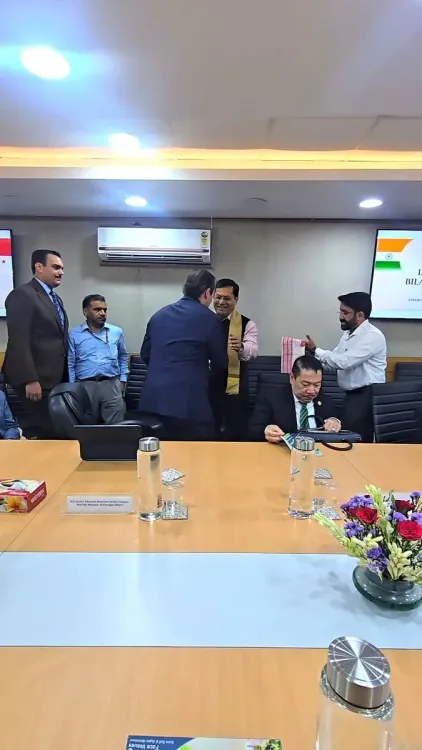
Union Minister Sarbananda Sonowal met Panama Foreign Minister Javier Martinez-Acha Vasquez in New Delhi on 22 July 2026, discussing port development, direct shipping routes, and seafarer welfare to strengthen India-Panama maritime ties under PM Modi's maritime vision.
Key Takeaways
Sarbananda Sonowal , Union Minister of Ports, Shipping and Waterways, met Panama Foreign Minister H.E.
Javier Martinez-Acha Vasquez in New Delhi on 22 July 2026 .
Discussions covered port development , establishment of direct shipping routes , and welfare of seafarers .
Both sides committed to strengthening India-Panama bilateral ties guided by PM Narendra Modi's maritime vision.
India's Sagarmala project (2015) and Maritime India Vision 2030 form the policy backbone for such bilateral engagements.
India-Panama diplomatic relations date to 1962 ; direct shipping links remain limited, making this push strategically significant.
Follow-up MoUs on shipping routes or seafarer welfare may emerge at upcoming India-CELAC or bilateral consultations.
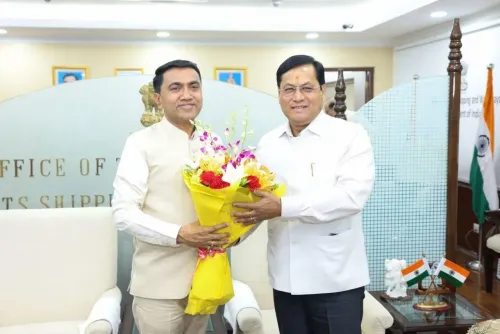
Union Minister of Ports, Shipping and Waterways Sarbananda Sonowal held a bilateral meeting with Panama Foreign Minister H.E. Javier Martinez-Acha Vasquez in New Delhi on 22 July 2026, focusing on deepening maritime cooperation between the two countries. The discussions spanned port development, direct shipping routes, and the welfare of seafarers, underscoring the growing strategic importance of India-Panama maritime ties.
Context
Minister Sonowal described the engagement as 'productive', with both sides exploring ways to 'harness shared strengths in the maritime sector.' The meeting signals a deliberate diplomatic push to formalise bilateral cooperation in an area where both nations hold complementary assets — India as one of the world's largest seafaring nations and Panama as the custodian of one of global shipping's most critical arteries, the Panama Canal.
Sonowal noted that the talks were guided by the vision of Prime Minister Narendra Modi, and that both sides 'committed to boosting the vibrant India-Panama ties for a better future.' Panama's foreign minister, who oversees his country's diplomatic engagement on trade and maritime affairs, was the principal interlocutor on the Panamanian side.
Policy Backdrop
The meeting sits within a well-established policy framework. India launched the Sagarmala project in 2015 to modernise its ports and expand coastal and international shipping connectivity. This was followed by Maritime India Vision 2030, released in 2021, which set out targets for port capacity expansion, seafarer welfare, and the development of new international shipping corridors.
India and Panama have maintained diplomatic relations since 1962, with periodic high-level consultations on maritime and trade matters. However, direct shipping links between the two countries have remained limited, making the current push for dedicated routes a significant step in the bilateral relationship. For Indian shipping companies, access through the Panama Canal offers a faster lane to the Atlantic and Caribbean markets.
The Modi government has consistently framed maritime diplomacy as a pillar of economic strategy, seeking to reduce dependence on a narrow set of trade corridors and build supply-chain resilience through diversified port partnerships across Latin America and beyond.
Stakeholders and Impact
Indian seafarers stand to benefit directly if the two governments formalise welfare provisions and recognition arrangements, a recurring demand from maritime labour organisations. Port developers and shipping companies on both sides are watching for any follow-up agreements that could reduce transit times and costs on India-Americas trade routes.
For Panama, deeper engagement with India — one of the fastest-growing major economies — offers diversification of the Canal's user base and potential investment interest in Panamanian port infrastructure. The meeting also carries symbolic weight as India broadens its diplomatic footprint in Latin America, a region it has historically engaged with less intensively than Asia, Europe, or the Middle East.
What's Next
Possible follow-up steps include the signing of memoranda of understanding on shipping routes or seafarer welfare, which could surface at upcoming India-CELAC forums or dedicated bilateral foreign-office consultations. Parliamentary committees tracking India's port sector will likely seek updates on any concrete agreements emerging from this engagement.
As India continues to position its ports as hubs in a reconfigured global supply chain, bilateral meetings of this nature are expected to become more frequent — and more consequential — in translating maritime ambition into operational reality.
Point of View
Moving beyond symbolic ties toward operational shipping corridors. Panama, as the gatekeeper of a critical global chokepoint, is a high-value partner for India's ambition to diversify its supply-chain geography into the Americas. The emphasis on seafarer welfare alongside port development signals that New Delhi is framing this not merely as a commercial play but as a people-centric maritime agenda, which carries political resonance domestically. If follow-up agreements materialise, this engagement could become a template for India's broader outreach to Latin American maritime nations.
NationPress
21 Oct 2026
Frequently Asked Questions
Why did Sarbananda Sonowal meet Panama's Foreign Minister?
Sonowal met Panama Foreign Minister Javier Martinez-Acha Vasquez in New Delhi on 22 July 2026 to discuss maritime cooperation, including port development, direct shipping routes, and welfare of seafarers, as part of India's broader push to strengthen bilateral ties with Panama.
What is India's maritime policy framework for international cooperation?
India's key frameworks are the Sagarmala project, launched in 2015 to modernise ports and expand shipping connectivity, and Maritime India Vision 2030, released in 2021, which sets targets for port capacity, seafarer welfare, and new international shipping corridors.
What is the significance of Panama for India's shipping sector?
Panama controls the Panama Canal, one of the world's most critical shipping arteries. Direct shipping routes through the Canal would give Indian vessels faster and more cost-effective access to Atlantic and Caribbean markets, reducing transit times significantly.
How long have India and Panama had diplomatic relations?
India and Panama established diplomatic relations in 1962 and have held periodic high-level consultations on maritime and trade matters since then, though direct shipping links have remained limited.
What could follow from the India-Panama maritime meeting?
Possible outcomes include memoranda of understanding on direct shipping routes or seafarer welfare agreements, which may be formalised at upcoming India-CELAC forums or bilateral foreign-office consultations.