Jaishankar Visits Seoul and Jeju to Deepen India-Korea Ties

Synopsis
External Affairs Minister Dr. S. Jaishankar visited Seoul and Jeju on 26 June 2026, citing global rebalancing as reason for deeper India-South Korea engagement. The trip builds on a Special Strategic Partnership in place since 2015 and India's Act East Policy priorities.
Key Takeaways
Jaishankar visited Seoul and Jeju , Republic of Korea, sharing highlights on 26 June 2026 .
He cited 'global rebalancing and fragmentation' as the driving rationale for stronger India-South Korea ties.
India and South Korea have maintained a Special Strategic Partnership since 2015 .
The bilateral Comprehensive Economic Partnership Agreement (CEPA) has been in force since 2009 and is under discussion for an upgrade.
India's Act East Policy (2014) explicitly prioritises deeper engagement with the Republic of Korea.
The visit signals continued Indo-Pacific outreach, mirroring India's 'like-minded partners' framework used in Quad diplomacy.
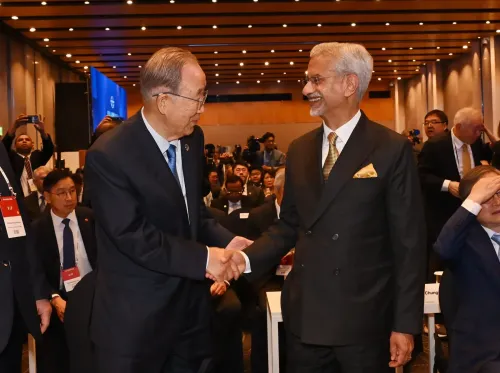
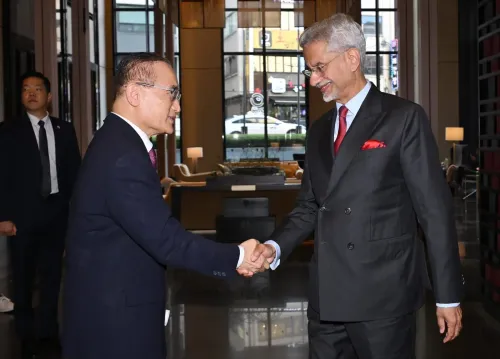
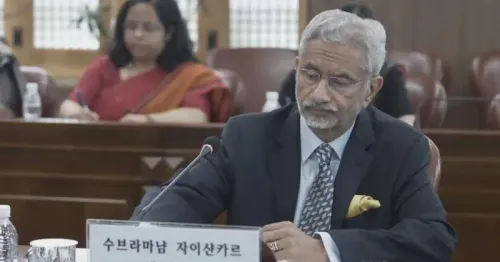
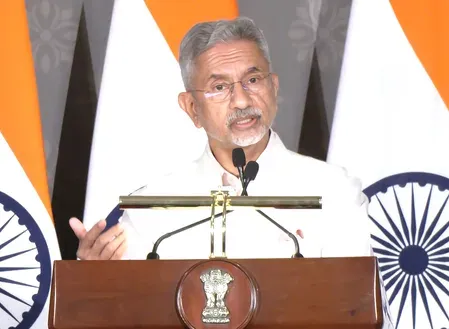
Union External Affairs Minister Dr. S. Jaishankar shared highlights of his visit to Seoul and Jeju, Republic of Korea, on Friday, 26 June 2026, underlining the strategic importance of deeper engagement between India and South Korea amid shifting global dynamics. The minister framed the visit as a direct response to what he described as 'global rebalancing and fragmentation,' arguing that such conditions make the case for closer ties between like-minded partners more compelling than ever.
Context
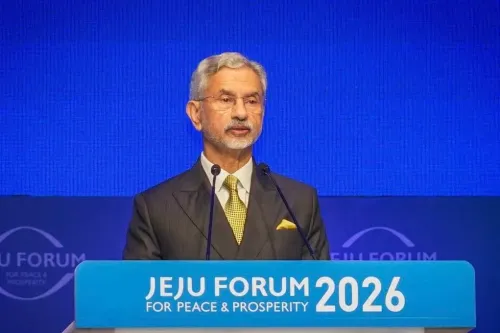
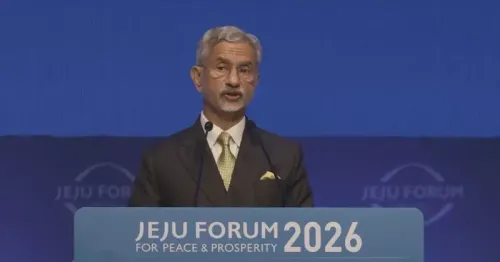
Posting on social media after his engagements in the South Korean capital and the island province of Jeju, Dr. Jaishankar wrote that 'the global rebalancing and fragmentation underway necessitates greater international cooperation' and makes 'a powerful case for deeper engagement between like-minded partners like India and the Republic of Korea.' The dual-city itinerary — combining Seoul, the political and diplomatic hub, with Jeju, which hosts the annual Jeju Forum for Peace and Prosperity — signals both bilateral and multilateral dimensions to the visit.
Policy Backdrop
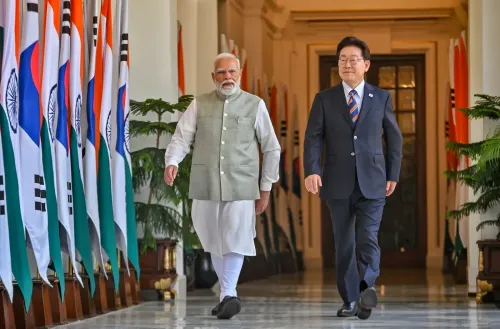
India and the Republic of Korea have built a substantial institutional architecture over the past two decades. The two countries signed a Comprehensive Economic Partnership Agreement (CEPA) in 2009, and bilateral ties were elevated to a Special Strategic Partnership during Prime Minister Narendra Modi's visit to Seoul in 2015 — the same year a civil nuclear cooperation agreement between the two countries entered into force. India's Act East Policy, articulated in 2014, explicitly identifies deeper engagement with the Republic of Korea as a strategic priority.
The language Dr. Jaishankar used — 'like-minded partners' — mirrors the framing India employs in its Quad engagements with the United States, Japan, and Australia, and reflects New Delhi's broader effort to diversify strategic and economic partnerships across the Indo-Pacific. South Korea's strengths in semiconductors, shipbuilding, defence manufacturing, and advanced technology make it a natural partner as global supply chains undergo structural realignment.
Stakeholders and Impact
The visit carries direct relevance for defence manufacturers, technology firms, and trade negotiators on both sides. Analysts and industry stakeholders have been watching for movement on an upgrade to the 2009 CEPA, which both governments have acknowledged needs modernisation to reflect the current trade and technology landscape. South Korean conglomerates have a significant manufacturing and investment presence in India, while Indian information-technology and pharmaceutical firms maintain a footprint in South Korea.
For New Delhi, the engagement also fits a pattern of intensified outreach to democratic, technologically advanced economies in Asia — a hedge against supply-chain concentration and an effort to build coalitions on global governance issues. For Seoul, deeper ties with the world's most populous country and one of its fastest-growing major economies represents both a commercial opportunity and a strategic diversification.
What's Next
Observers will watch for any announcements on CEPA upgrade negotiations, defence cooperation memoranda, or semiconductor and clean-energy partnerships that may emerge from the Seoul and Jeju engagements. Dr. Jaishankar's framing of the visit as a response to global fragmentation suggests that both sides are looking beyond transactional trade to position the India-Republic of Korea Special Strategic Partnership as a pillar of the emerging Indo-Pacific order. Progress on these fronts is likely to set the agenda for the next India-ROK summit-level meeting.
Point of View
Rather than multilateral institutions alone, will manage that stress. South Korea, with its semiconductor and defence-industrial depth, fits precisely the profile of partner India needs as it tries to move up global value chains. The visit keeps the CEPA upgrade and defence cooperation tracks warm ahead of what is expected to be a more substantive summit-level engagement.
NationPress
26 Jun 2026
Frequently Asked Questions
Why did Jaishankar visit Seoul and Jeju in June 2026?
Dr. Jaishankar visited Seoul and Jeju on 26 June 2026 to advance India's Special Strategic Partnership with the Republic of Korea, framing the engagement as a necessary response to global rebalancing and fragmentation that makes cooperation between like-minded partners more important.
What is India's Special Strategic Partnership with South Korea?
India and South Korea elevated their bilateral relationship to a Special Strategic Partnership in 2015 during Prime Minister Modi's visit to Seoul. It covers trade, defence, technology, and civil nuclear cooperation.
What is the India-South Korea CEPA?
The Comprehensive Economic Partnership Agreement between India and the Republic of Korea was signed in 2009 and covers goods, services, and investment. Both sides have acknowledged it needs an upgrade to reflect current trade and technology realities.
How does India's Act East Policy relate to South Korea?
India's Act East Policy, articulated in 2014, explicitly includes deeper engagement with the Republic of Korea as a strategic priority, positioning Seoul as a key partner in India's Indo-Pacific outreach.
What is the Jeju Forum that Jaishankar may have attended?
The Jeju Forum for Peace and Prosperity is an annual multilateral dialogue held on South Korea's Jeju island that brings together government officials, academics, and business leaders to discuss regional security and economic cooperation in Asia.