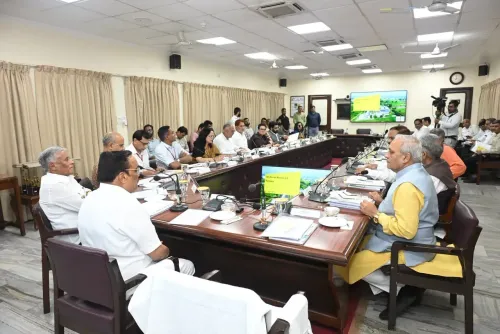
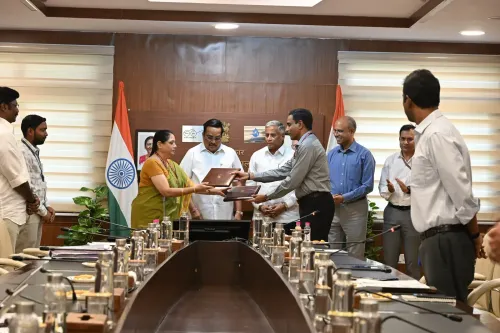
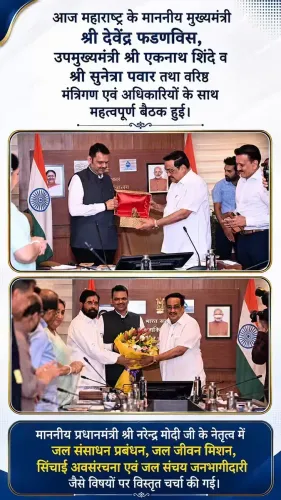
Jal Shakti Minister Paatil at JJM 2.0's First Regional Conference in Trichy
Synopsis
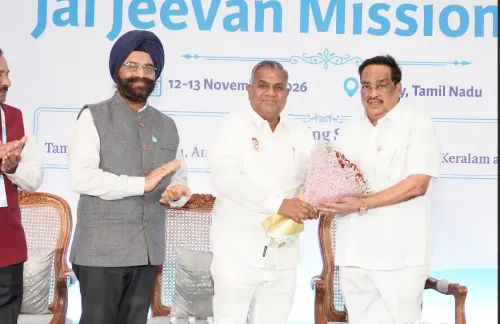
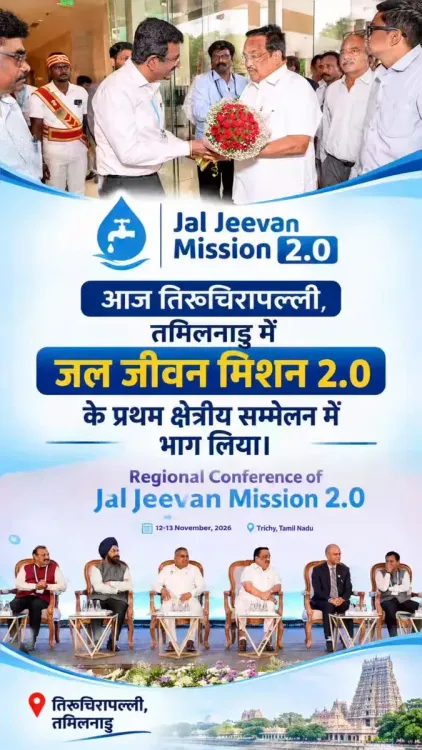
Union Jal Shakti Minister C. R. Paatil attended the first regional conference of Jal Jeevan Mission 2.0 in Tiruchirappalli, Tamil Nadu on 12 November 2026, signalling active Centre-state coordination as the rural water mission enters its expanded phase.
Key Takeaways
Union Jal Shakti Minister C.
Paatil attended the first regional conference of Jal Jeevan Mission 2.0 on 12 November 2026 .
The conference was held in Tiruchirappalli (Trichy), Tamil Nadu — placing a southern state at the centre of the mission's first major 2.0 review event.
The original Jal Jeevan Mission was launched in 2019 with the goal of providing functional tap water connections to all rural households in India.
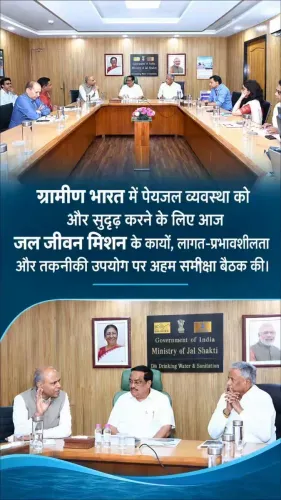
Regional conferences under JJM are designed to review state-level implementation and close coordination gaps between the Ministry of Jal Shakti and state water departments.
Further regional conferences under JJM 2.0 are anticipated across other zones, with state-wise coverage progress expected to inform future targets.
Water reached the agenda in Tamil Nadu on Thursday, 12 November 2026, as Union Jal Shakti Minister C. R. Paatil landed in Tiruchirappalli for the first regional conference under Jal Jeevan Mission 2.0 — a signal that the Centre is pushing the next phase of its flagship rural water scheme into active review mode.
Paatil shared a glimpse of the gathering on X, posting in Hindi: 'आज तिरुचिरापल्ली, तमिलनाडु में जल जीवन मिशन 2.0 के प्रथम क्षेत्रीय सम्मेलन में भाग लिया, एक झलक।' ('Today participated in the first regional conference of Jal Jeevan Mission 2.0 in Tiruchirappalli, Tamil Nadu — a glimpse.') The hashtag #JJM anchored the post, keeping it squarely inside the mission's public communication universe.
Why Trichy, and Why Now
Regional conferences are the Centre's preferred tool for stress-testing central-state coordination on JJM — bringing together Ministry of Jal Shakti officials and state water departments to surface implementation gaps before they harden into missed targets. Choosing Tamil Nadu as the venue for the very first such gathering under JJM 2.0 gives the southern states an early seat at the table in what is shaping up as the mission's expanded chapter.
The original Jal Jeevan Mission, launched in 2019, set out to deliver functional household tap connections to every rural home in India — a scale of ambition that demanded relentless inter-governmental coordination. The 2.0 phase carries that mandate forward, with regional conferences designed precisely to keep state-level momentum from stalling.
Paatil's Role in Driving the Mission Forward
As Union Minister of Jal Shakti and a senior BJP leader — formerly the party's Gujarat state president — Paatil carries both administrative authority and political weight into these engagements. His presence at the inaugural regional conference, rather than delegating to a junior official, underscores the ministry's intent to treat JJM 2.0 rollout as a priority, not a routine review.
Further regional conferences are expected to follow across other zones of the country, with state-wise tap water coverage reports likely to shape the Centre's next round of targets and resource allocation.
The first conference is on the books. The question now is what the states brought to the table — and how fast the numbers move.
Point of View
At least in optics. For Paatil, the ministerial presence at a first-of-its-kind event rather than a delegation visit reflects a deliberate effort to stamp personal ownership on JJM 2.0's rollout. Regional conferences have historically served as accountability checkpoints, so the choice of venue and the seniority of the attendee together suggest the Centre is serious about moving from connection targets on paper to water flowing in taps. Watch whether subsequent regional conferences draw state ministers into the room — that would be the real indicator of genuine coordination depth.
NationPress
12 Nov 2026
Frequently Asked Questions
What is Jal Jeevan Mission 2.0?
Jal Jeevan Mission 2.0 is the expanded phase of the Central government scheme originally launched in 2019 to provide functional household tap water connections to all rural households in India. The 2.0 phase continues and builds on that mandate, with regional conferences being used to review state-level progress and address implementation gaps.
Why was the first JJM 2.0 regional conference held in Tiruchirappalli?
Tiruchirappalli (Trichy) in Tamil Nadu hosted the first regional conference of Jal Jeevan Mission 2.0 as part of the Ministry of Jal Shakti's effort to engage southern states in the mission's next phase. Regional conferences rotate across the country to ensure Centre-state coordination across different zones.
Who is C. R. Paatil?
C. R. Paatil is India's Union Minister of Jal Shakti and a senior BJP leader. He previously served as BJP's Gujarat state president and now heads the ministry responsible for the Jal Jeevan Mission and other water supply schemes.
What does a JJM regional conference do?
JJM regional conferences bring together central Ministry of Jal Shakti officials and state water departments to review progress on tap water coverage, identify implementation gaps, and coordinate on targets and resource allocation.
What comes next after the Tiruchirappalli JJM 2.0 conference?
Further regional conferences under Jal Jeevan Mission 2.0 are expected to be held across other zones of India, with state-wise tap water coverage reports likely to shape the Centre's subsequent targets and funding decisions.