Jal Shakti Minister Paatil Champions Catch the Rain Drive
Synopsis
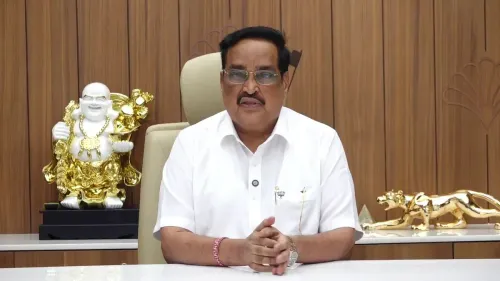
Union Jal Shakti Minister C. R. Paatil on 8 August 2026 hailed the Catch the Rain campaign as a jan andolan powered by citizens, volunteers, and NGOs, crediting PM Modi's guidance for turning water conservation into a nationwide people's movement.
Key Takeaways
Union Jal Shakti Minister C.
Paatil posted on 8 August 2026 championing the Catch the Rain campaign as a people's movement, not just a government scheme.
Paatil credited Prime Minister Narendra Modi's guidance for giving water conservation a nationwide mass-movement character.
The Jal Shakti Abhiyan was launched in 2019 to address water scarcity through community participation across states.
The Jal Jeevan Mission , also from 2019 , complements the effort by pushing piped water access and source sustainability in rural India.
Social organisations, volunteers, and citizens are described as the campaign's core execution layer, not peripheral supporters.
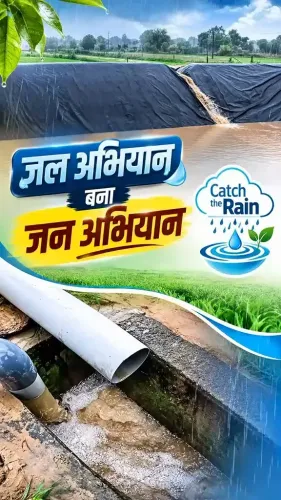
Every raindrop counts — and Union Jal Shakti Minister C. R. Paatil wants every Indian to act on that truth. On Saturday, 8 August 2026, Paatil took to X to champion the 'Catch the Rain' campaign, calling it not merely a government initiative but a 'jan andolan' — a people's movement — powered by volunteers, NGOs, and ordinary citizens working together to harvest every drop of rainfall.
Posting in Gujarati, Paatil wrote: 'Catch the Rain abhiyan matr ek pahel nahi, parantu janabhagidaari thi jal sanrakshan ne janandolan banaavvano sashakt prayas chhe.' — 'The Catch the Rain campaign is not merely an initiative, but a powerful effort to turn water conservation into a people's movement through public participation.' He credited the campaign's momentum to the guidance of Prime Minister Narendra Modi and offered heartfelt thanks to every organisation, volunteer, and citizen committed to water security.
From a Government Scheme to a National Resolve
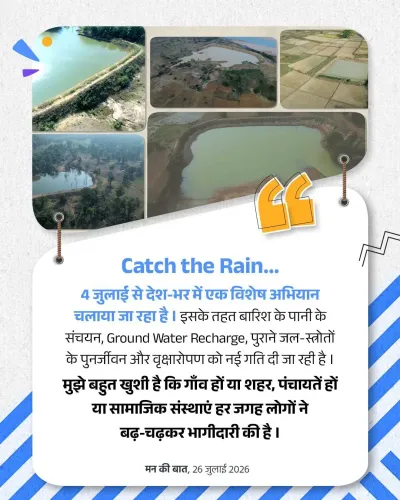
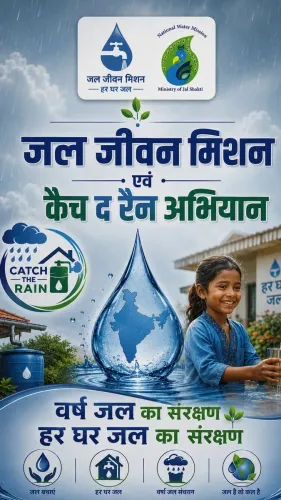
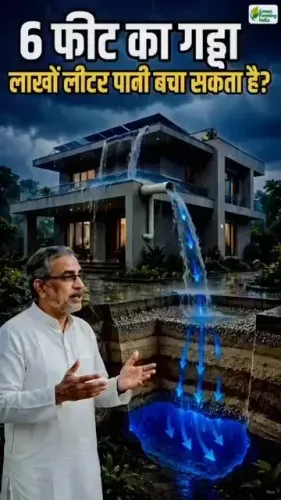
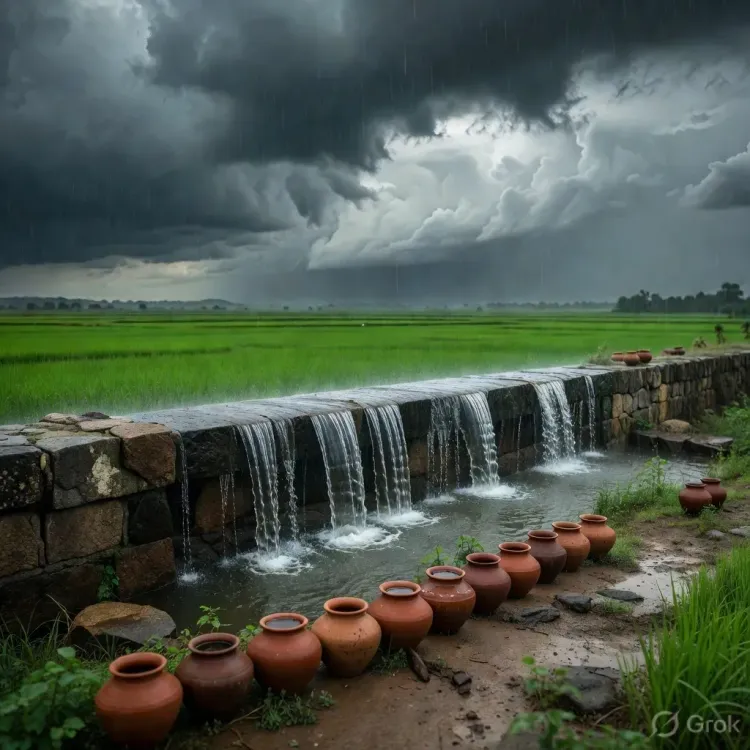
The Catch the Rain campaign sits within the broader Jal Shakti Abhiyan framework, which the central government launched in 2019 to address water scarcity through community-led action. The approach mirrors the mass-mobilisation playbook used by the Swachh Bharat Mission — combining central policy direction with grassroots execution. Rainwater harvesting, aquifer recharge, and check-dam construction form the campaign's practical spine, targeting both urban and rural water stress zones ahead of each monsoon season. The Jal Jeevan Mission, also announced in 2019, runs alongside, aiming to deliver piped water connections to rural households while simultaneously pushing for source sustainability. Together, the two programmes reflect the Modi government's bet that durable water security cannot be engineered from Delhi alone — it has to be owned at the village and ward level.Social Organisations and Volunteers at the Core
Paatil's post specifically acknowledged the role of social organisations and volunteers — a deliberate nod to the campaign's ground architecture. Across states, NGOs have partnered with local administrations to identify water-stressed catchments, organise community drives, and monitor rainwater storage structures. The minister's message signals that this civic machinery is central to the government's water security ambitions, not peripheral. The campaign hashtags — #CatchTheRain, #JalJanAbhiyan, #WaterConservation — amplify the call for participation as the monsoon season intensifies across India. India's water challenge is structural and urgent. The political will is visible. Whether the annual campaign translates into measurable aquifer recovery and reduced water stress will be the real verdict — and that verdict arrives with every monsoon.Point of View
Framed in Gujarati and rich with jan andolan rhetoric, signals that the political messaging around water conservation is being pitched as a civic identity, not just a policy deliverable. For the BJP, embedding water stewardship into grassroots volunteer networks also serves a deeper organisational purpose: keeping party-affiliated social organisations active between electoral cycles. The real test, however, remains ground-level impact — whether monsoon-season campaigns are translating into verifiable aquifer recharge and reduced water stress in India's most vulnerable districts.
NationPress
8 Aug 2026
Frequently Asked Questions
What is the Catch the Rain campaign in India?
The Catch the Rain campaign is a water conservation initiative under the Jal Shakti Abhiyan framework that promotes rainwater harvesting and community-led water management across India, encouraging citizens, NGOs, and volunteers to harvest every drop of rainfall.
When was the Jal Shakti Abhiyan launched?
The Jal Shakti Abhiyan was launched in 2019 by the central government to address water scarcity through community participation and inter-ministerial coordination across states.
What did C. R. Paatil say about the Catch the Rain campaign?
Union Jal Shakti Minister C. R. Paatil called the Catch the Rain campaign a 'jan andolan' — a people's movement — powered by social organisations, volunteers, and citizens, crediting PM Modi's guidance for its nationwide scale.
What is the Jal Jeevan Mission?
The Jal Jeevan Mission, announced in 2019 , aims to provide piped water connections to rural households across India while emphasising source sustainability to ensure long-term water security.
How does the Catch the Rain campaign work at the ground level?
The campaign works through partnerships between NGOs, local administrations, and volunteers who identify water-stressed catchments, organise community drives, and monitor rainwater storage structures such as check dams and harvesting pits during the monsoon season.