Jal Shakti Minister Paatil meets Arunachal's Ojing Tasing
Synopsis
Jal Shakti Minister C. R. Paatil and Arunachal Pradesh's Rural Development Minister Ojing Tasing met on 18 November 2026 to coordinate on water conservation, clean drinking water access, and Jal Jeevan Mission implementation, reinforcing Centre–state partnership under PM Modi's Viksit Bharat vision.
Key Takeaways
Union Jal Shakti Minister C.
Paatil met Ojing Tasing , Arunachal Pradesh's Rural Development and Panchayati Raj Minister, on 18 November 2026 .
Discussions centred on water conservation, clean drinking water availability, and accelerating rural development in Arunachal Pradesh .
Both ministers underlined the critical role of panchayati raj institutions and community participation in achieving water security goals.
The meeting aligns with the Jal Jeevan Mission , launched in 2019 to provide household tap connections to all rural homes in India.
Paatil reaffirmed commitment to strong Centre–state coordination under PM Narendra Modi 's Viksit Bharat vision for water security.
Progress in Arunachal Pradesh — a challenging terrain with remote tribal settlements — will be tracked at upcoming central review meetings on northeastern states.
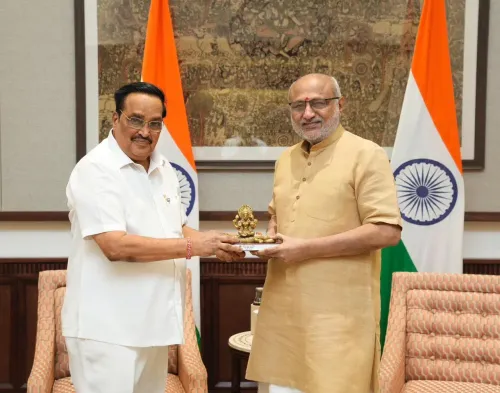
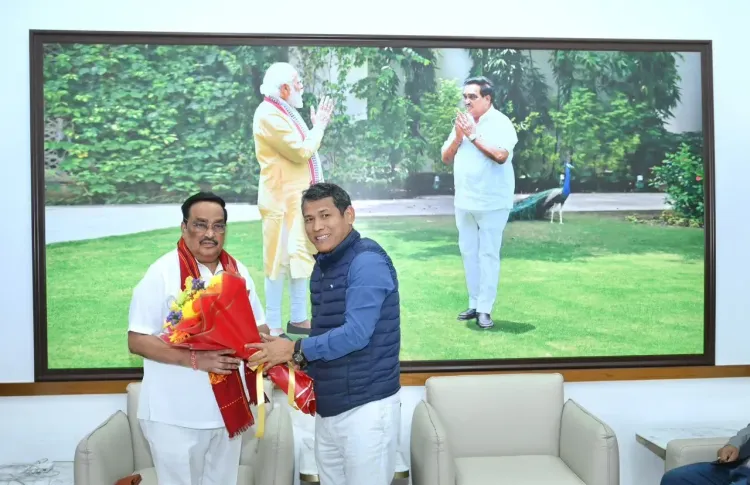
Water security in India's far northeast moved to the front burner on Wednesday, 18 November 2026, when Union Jal Shakti Minister C. R. Paatil held a cordial meeting with Ojing Tasing, Arunachal Pradesh's Minister for Rural Development and Panchayati Raj, to align central and state efforts on clean drinking water and rural development.
What was discussed between Paatil and Tasing
Paatil described the meeting as 'sauhaardapurna bhet' — a cordial, constructive exchange — focused on three pillars: water conservation, the availability of clean drinking water, and giving fresh momentum to rural development in Arunachal Pradesh. Both ministers emphasised that panchayati raj institutions and community participation are central to making those goals real on the ground.
The minister reaffirmed the Centre's commitment to strong coordination with state governments under Prime Minister Narendra Modi's vision for water security and a 'Viksit Bharat' — a developed India. 'We are committed to joint efforts between the central and state governments,' Paatil wrote, framing the meeting as part of a broader, ongoing partnership rather than a one-off courtesy call.
Jal Jeevan Mission's northeastern frontier
The meeting sits squarely within the arc of the Jal Jeevan Mission, the flagship scheme launched in 2019 to deliver functional household tap connections with safe drinking water to every rural home in the country. Arunachal Pradesh, with its difficult terrain, dispersed settlements, and remote tribal villages, represents one of the more challenging frontiers for the mission's national coverage targets.
Panchayats have a defined operational role under the mission — from planning village water supply schemes to monitoring water quality — making Tasing's portfolio as Rural Development and Panchayati Raj Minister a direct pressure point for how well the mission performs at the last mile in the state.
Centre–Northeast coordination on water targets
The engagement reflects a pattern the Centre has pursued with northeastern states: regular ministerial-level check-ins to keep state machinery aligned with central review timelines and funding cycles. For Arunachal Pradesh, the stakes are significant — rural households dependent on seasonal streams and inadequate infrastructure stand to gain the most from sustained central investment and local governance capacity.
Upcoming central review meetings on Jal Jeevan Mission coverage and functionality in northeastern states will be a key indicator of how the commitments discussed today translate into measurable outcomes on the ground.
Point of View
So direct coordination between Paatil and Tasing carries concrete operational significance beyond ceremonial optics. The emphasis on panchayat participation also reflects a deliberate political strategy: local bodies are being positioned as delivery partners, which distributes accountability while building grassroots buy-in for flagship schemes. How quickly coverage and functionality numbers move in the state will be the real measure of this partnership.
NationPress
18 Nov 2026
Frequently Asked Questions
Who is Ojing Tasing?
Ojing Tasing is the Minister for Rural Development and Panchayati Raj in the Arunachal Pradesh state government.
What is the Jal Jeevan Mission?
The Jal Jeevan Mission is a central government scheme launched in 2019 to provide functional household tap connections with safe drinking water to every rural home across India.
Why did C. R. Paatil meet Arunachal Pradesh's minister?
Union Jal Shakti Minister C. R. Paatil met Ojing Tasing on 18 November 2026 to strengthen coordination on water conservation, clean drinking water access, and rural development under the Jal Jeevan Mission in Arunachal Pradesh.
What is Viksit Bharat and how does water security connect to it?
Viksit Bharat, meaning 'Developed India', is PM Narendra Modi's vision for India's comprehensive development; water security through schemes like the Jal Jeevan Mission is a core pillar of achieving that goal in rural areas.
What role do panchayats play in Jal Jeevan Mission?
Panchayati raj institutions are responsible for planning village water supply schemes, managing local infrastructure, and monitoring water quality under the Jal Jeevan Mission at the grassroots level.