Jamiat opposes Lok Sabha seat expansion, says women's quota must stay within current strength
Synopsis
Jamiat Ulama-e-Hind Maharashtra's president has broken with the government's approach to the Women's Reservation Bill, arguing that expanding Lok Sabha seats to accommodate the quota is unnecessary and politically motivated to advantage Hindi-belt states — an argument that aligns Jamiat's position with the long-running southern states' delimitation grievance.
Key Takeaways
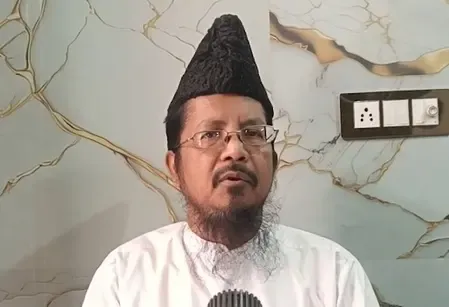
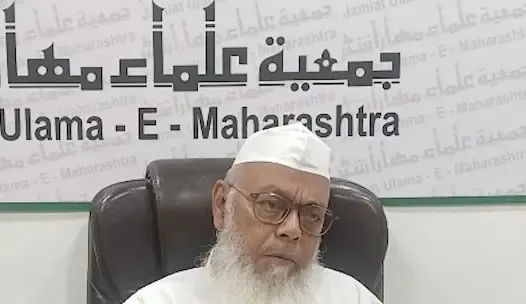
Maulana Haleemullah Qasmi , President of Jamiat Ulama-e-Hind Maharashtra , opposed the expansion of Lok Sabha seats on 16 November .
He argued women's reservation should be implemented within Parliament's existing strength , without a fresh delimitation.
Qasmi alleged the delimitation exercise was designed to benefit Hindi-speaking states with larger populations.
He flagged deteriorating law-and-order in West Bengal , including alleged attacks on Members of Parliament and controversial police encounters.
Qasmi accused the BJP of divisive politics and urged RSS chief Mohan Bhagwat to guide party leadership away from communal polarisation.
Jamiat Ulama-e-Hind Maharashtra President Maulana Haleemullah Qasmi on 16 November came out against the proposed expansion of Lok Sabha seats linked to the Women's Reservation Bill, asserting that the quota for women must be implemented within the Parliament's existing strength rather than through a fresh delimitation exercise. The remarks, made in Mumbai, signal growing resistance from minority religious organisations to the government's delimitation roadmap.
Opposition to Seat Expansion
Qasmi argued that increasing the number of parliamentary seats was unnecessary and that the energy of the state should instead be directed toward strengthening elected representatives and workers at the grassroots level. He drew a sharp distinction between lawmakers at Parliament level and ground-level workers who, in his view, have more direct impact on citizens.
'Women should be given reservation within the existing strength. If at all, the strength of MLAs and ground workers should be increased because they are the ones who engage with the public. That will make a difference. If we increase seats in Parliament any further, it will soon become a fish market,' Qasmi said.
Delimitation Seen as Benefiting Hindi-Belt States
Questioning the rationale of clubbing the Women's Reservation Bill with delimitation, Qasmi alleged that the exercise was designed to favour Hindi-speaking states with larger populations. He contended that the governing establishment was aware it stood to gain electorally from population-based seat redistribution in the Hindi heartland, and that linking women's reservation to that process 'makes no sense.'
This critique echoes concerns raised by several southern states, which have argued that any population-based delimitation would reduce their proportional representation in Parliament — a tension that has been building since the 2001 population freeze was extended.
Remarks on West Bengal Law and Order
Turning to West Bengal, Qasmi alleged a deteriorating law-and-order situation, claiming Members of Parliament had been gheraoed and attacked. He attributed the disorder to governance failures and questioned police explanations in encounter cases in the state.
'The police's statement on the issue is a cliché: that the criminals attacked, and they responded to the situation, and thus, the criminal was encountered. However, we all know the truth behind it,' he said, adding that such actions were unacceptable under any government.
Critique of BJP and RSS
Qasmi accused the Bharatiya Janata Party (BJP) of pursuing divisive politics aimed at creating fault lines between Hindus and Muslims. Referring to RSS chief Mohan Bhagwat, he said he respected the position but perceived a gap between Bhagwat's public statements and the conduct of those affiliated with the organisation. He urged Bhagwat to actively guide the BJP leadership away from what he characterised as a politics of division.
Qasmi also commented on Prime Minister Narendra Modi's foreign policy, saying that Modi's praise for US President Donald Trump during visits to the United States had set an example that others within the country had drawn upon.
What to Watch
The delimitation commission's timeline and the government's response to such opposition voices will determine whether the Women's Reservation Bill's implementation schedule faces further political friction ahead of the next general election cycle.
Point of View
But its trigger — a fresh census and delimitation — remains in a holding pattern, and every passing month of delay invites exactly this kind of interpretive suspicion. The harder question mainstream coverage tends to skip is whether a quota implemented within the existing 543 seats is structurally viable, or whether it merely shifts which constituencies become women-only without expanding overall representation.
NationPress
16 Nov 2026
Frequently Asked Questions
What is Jamiat Ulama-e-Hind's position on the Women's Reservation Bill?
Jamiat Ulama-e-Hind Maharashtra President Maulana Haleemullah Qasmi supports women's reservation in principle but insists it should be implemented within Parliament's existing strength of 543 seats. He opposes any expansion of Lok Sabha seats as a precondition for the quota.
Why does Qasmi oppose the delimitation exercise linked to women's reservation?
Qasmi alleges the proposed delimitation is intended to benefit Hindi-speaking states with larger populations, giving the ruling party an electoral advantage. He argues that clubbing the Women's Reservation Bill with delimitation serves political rather than representational goals.
What did Qasmi say about the law-and-order situation in West Bengal?
Qasmi alleged growing disorder in West Bengal, claiming Members of Parliament have been gheraoed and attacked. He also questioned the police's explanations in encounter cases, calling standard justifications a 'cliché' and stating that such actions were unacceptable under any government.
What did the Jamiat leader say about RSS chief Mohan Bhagwat?
Qasmi said he respected Bhagwat's position but perceived a significant gap between his public statements and the conduct of those associated with the RSS and the BJP. He urged Bhagwat to actively guide the party away from what he characterised as divisive politics.
How does the delimitation debate affect southern states?
Any population-based delimitation would likely reduce the proportional representation of southern states, which have lower population growth rates, in Parliament. This concern has been raised by multiple southern state governments and aligns with Qasmi's allegation that the exercise advantages the Hindi-speaking belt.