J&K AgriStack: CS Dulloo orders 100% Farmer ID coverage across all districts
Synopsis
J&K's Chief Secretary has put district administrations on notice: no eligible farmer must be left out of AgriStack. With 80.7% Khasra approval, 1.21 lakh Farmer IDs generated, and an RBI lending interface integration in the pipeline, J&K's land-record overhaul is near the finish line — but the last mile, as always, will be the hardest.
Key Takeaways
Chief Secretary Atal Dulloo directed all Deputy Commissioners to ensure 100% AgriStack and Farmer ID coverage for eligible farmers in J&K .
J&K has achieved 100% digitisation across all 20 districts , 207 tehsils , and 6,818 villages , with 68,62,596 Khasras digitised.
AgriStack data entry stands at 80.7% of the total base of 71,04,737 Khasras .
1,21,472 Farmer IDs have been generated across 1,663 villages so far.
The Kharif 2026 Digital Crop Survey is 96.55% complete , covering 30.61 lakh plots across 5,714 villages .
Integration of digitised land records with RBI's Unified Lending Interface (ULI) is proposed to ease agricultural credit access for farmers.
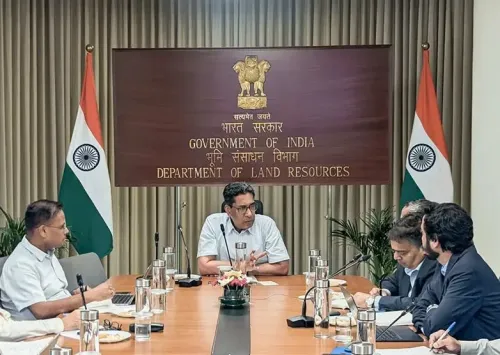
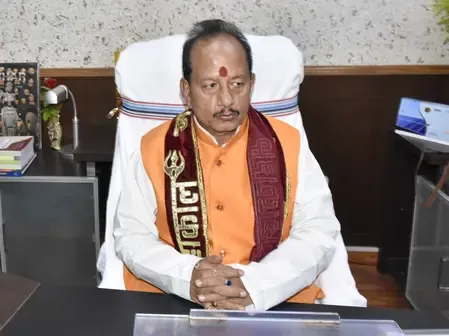
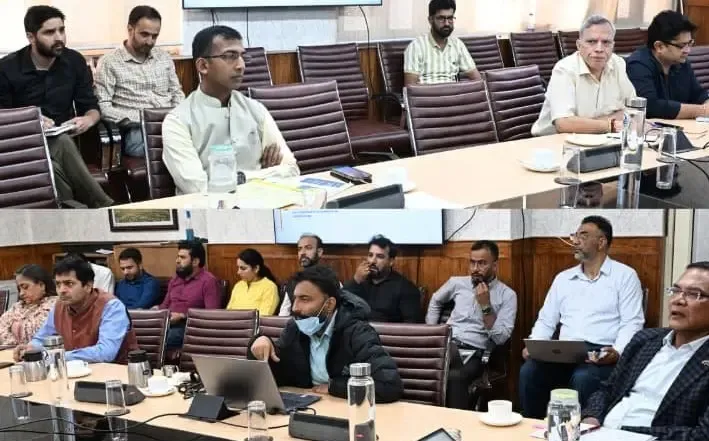
Jammu & Kashmir Chief Secretary Atal Dulloo on Friday, 2 October 2026, chaired a comprehensive review meeting in Srinagar to assess the progress of land-record digitisation and the implementation of AgriStack across the Union Territory. Dulloo directed all Deputy Commissioners (DCs) to ensure that no eligible farmer is excluded from AgriStack or Farmer ID registration, and asked them to submit certificates confirming full coverage after due verification.
Key Directives from the Chief Secretary
Dulloo instructed district administrations to fix accountability wherever undue delays are observed and to conduct regular field inspections to monitor both progress and quality. He asked DCs to depute concerned officers for field-level monitoring and to submit weekly progress reports going forward.
He stressed that the digitisation exercise must not remain confined to data generation alone. According to Dulloo, the effort must translate into accurate, updated, and field-validated land records that enable faster citizen services, transparent land administration, and easier access to institutional agricultural credit for farmers.
Progress on Land Digitisation and AgriStack
Secretary Revenue Kumar Rajeev Ranjan informed the meeting that J&K has achieved 100 per cent digitisation coverage across all foundational land-administration units — covering all 20 districts, 207 tehsils, and 6,818 villages. A total of 68,62,596 land parcels (Khasras) have been digitised, and a backlog of 6,47,274 mutations has been fully incorporated, leaving no pending cases.
Against a base of 71,04,737 Khasras across 6,818 villages, AgriStack data entry has progressed to 80.7 per cent of the total base — with 65,77,944 Khasras submitted, 58,17,502 verified, and 57,30,681 approved. In Jammu Division, 2,770 out of 3,750 villages have been fully approved; in Kashmir Division, 1,945 out of 3,068 villages have received full approval.
So far, 1,21,472 Farmer IDs have been generated across 1,663 villages. Kashmir Division accounts for 70,979 Farmer IDs across 836 villages, while Jammu Division has generated 52,751 Farmer IDs across 827 villages.
Digital Crop Survey and ULPIN Generation
The Kharif 2026 Digital Crop Survey is being conducted across 5,714 villages, covering approximately 30.61 lakh agricultural plots. The survey has been completed for 30,61,696 plots, representing 96.55 per cent progress, while supervisors have approved 27,27,189 plots.
On Unique Land Parcel Identification Number (ULPIN) generation, the meeting was informed that coverage expanded to 5,275 villages from 4,078 as of 25 September, with the total number of ULPINs generated rising to 33,47,011 — an addition of 4,08,887 since the previous review.
BhuNaksha Integration and RBI Lending Interface
The meeting reviewed implementation of BhuNaksha, the programme to integrate cadastral maps with digitised land records. Of 6,818 village maps, 6,468 have been handed over to BISAG-N, of which 6,049 have been received back. Geo-referencing of 425 maps remains pending, while attribute tables for 5,754 maps have been completed.
The meeting also deliberated on the proposed integration of J&K's digitised land records with the Reserve Bank of India's (RBI) Unified Lending Interface (ULI) through specialised APIs. The integration is expected to facilitate secure access to land and farm-related data for agricultural lending — including landowner details, farm parameters, mortgage records, crop information, and flagging of existing loans.
ACS Finance Shailendra Kumar urged field agencies to prioritise farmers in villages, noting they constitute the overwhelming majority of the target population, and warned against generalising exceptions as grounds for delay. He also asked DCs to formulate specific operational guidelines for different field situations to prevent procedural bottlenecks.
Timelines and Next Steps
DCs have been directed to complete the locking of Record of Rights (RoR)/Jamabandi within one month of Farmer ID generation, finalise Farmer ID generation in all identified villages, and resolve unclaimed buckets and cross-district land parcels within two months. The administration's overarching target remains 100 per cent AgriStack coverage for all eligible farmers across the Union Territory.
Point of View
818 villages and a near-complete crop survey are genuine milestones for a region that has historically lagged in land-records reform. But the Chief Secretary's own directive reveals the gap: 80.7% Khasra approval and barely 1.21 lakh Farmer IDs against a base of over 71 lakh Khasras suggests the last 20% is where resistance, absenteeism, and procedural ambiguity will concentrate. The proposed RBI-ULI integration is the most consequential downstream piece — if it works, it could meaningfully expand formal credit access for small farmers. If Farmer ID coverage stalls, that promise will not materialise.
NationPress
3 Oct 2026
Frequently Asked Questions
What is AgriStack and why is it being implemented in J&K?
AgriStack is a national digital agriculture infrastructure that assigns Farmer IDs and Unique Land Parcel Identification Numbers (ULPINs) to create a verifiable database of farmers and their landholdings. In J&K, it is being implemented to modernise land administration, improve targeting of agricultural schemes, and eventually link farmers to institutional credit through the RBI's Unified Lending Interface.
How far has J&K progressed on AgriStack and Farmer ID generation?
As of the 2 October review, 80.7% of J&K's total Khasra base has been approved under AgriStack, with 57,30,681 out of 71,04,737 Khasras approved. A total of 1,21,472 Farmer IDs have been generated across 1,663 villages — 70,979 in Kashmir Division and 52,751 in Jammu Division.
What is the deadline set for completing AgriStack coverage in J&K?
Deputy Commissioners have been directed to complete Farmer ID generation in all identified villages and lock Record of Rights (RoR)/Jamabandi within one month of Farmer ID generation. Unclaimed buckets and cross-district land parcels must be resolved within two months.
How does the RBI Unified Lending Interface connect to J&K's land records?
The proposed integration will link J&K's digitised land records with the RBI's Unified Lending Interface (ULI) through specialised APIs, enabling lenders to securely access land parcel details, farm parameters, mortgage records, crop information, and existing loan flags. The aim is to facilitate faster and more transparent agricultural credit for farmers.
What is the status of the Kharif 2026 Digital Crop Survey in J&K?
The Kharif 2026 Digital Crop Survey is 96.55% complete, covering 30,61,696 out of approximately 30.61 lakh agricultural plots across 5,714 villages. Supervisors have approved 27,27,189 plots so far.