J&K Chief Secretary, MHA official review CSS progress in Srinagar
Synopsis
J&K Chief Secretary Atal Dulloo and MHA's Nitesh Vyas sat down in Srinagar to audit the delivery of over a dozen Central schemes — from rooftop solar and BharatNet broadband to TB elimination and rural housing — signalling the Centre's intensified focus on measurable outcomes in the Union Territory.
Key Takeaways
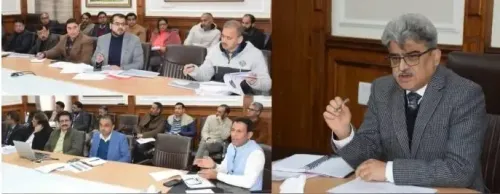
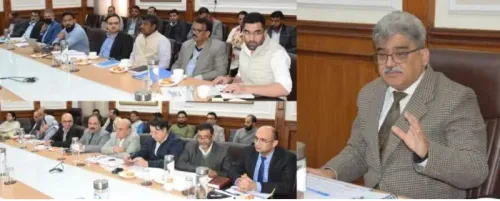
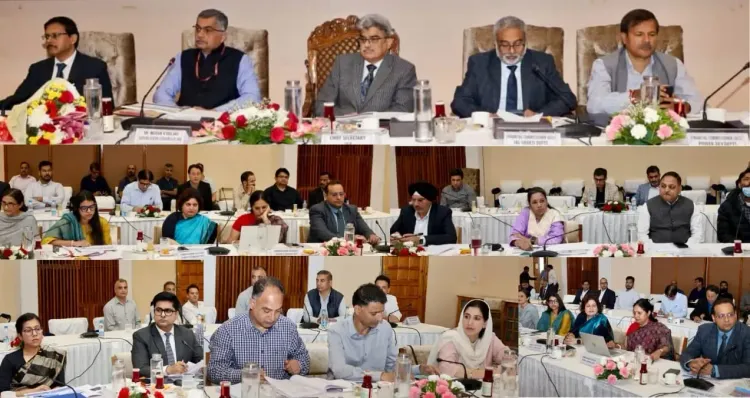
J&K Chief Secretary Atal Dulloo and MHA Additional Secretary Nitesh Vyas jointly chaired a high-level CSS review meeting in Srinagar on 3 October .
More than a dozen flagship schemes were reviewed, spanning education, health, housing, sanitation, digital connectivity, and tourism.
Dulloo directed departments to prioritise time-bound project completion and full saturation of eligible beneficiaries under welfare schemes.
Vyas stressed inter-departmental coordination and urged agencies to resolve implementation bottlenecks with respective Union Ministries.
A separate session reviewed implementation of new criminal laws and the immigration and foreigners management framework in J&K .
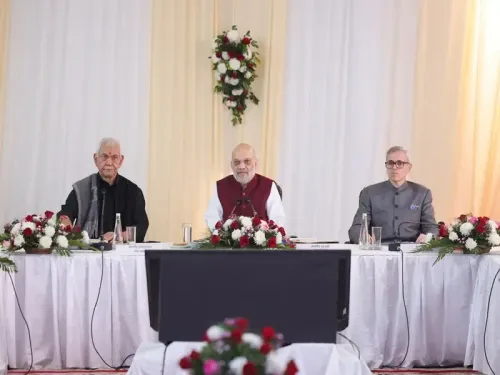
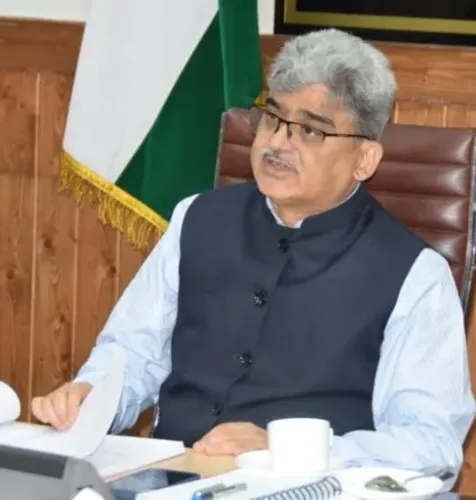
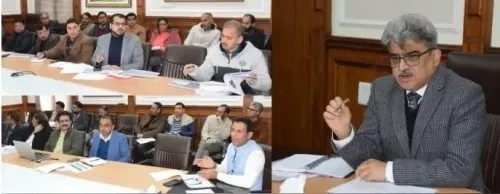
J&K Chief Secretary Atal Dulloo and Additional Secretary (Foreigners & J&K), Union Ministry of Home Affairs (MHA), Nitesh Vyas, on Saturday, 3 October jointly chaired a high-level meeting in Srinagar to assess the implementation of Centrally Sponsored Schemes (CSS) and the progress of ongoing developmental projects across Jammu and Kashmir. The wide-ranging review spanned more than a dozen flagship programmes — from rural housing and digital connectivity to health, sanitation, and tourism infrastructure.
Key Directions from the Chief Secretary
Atal Dulloo called for an outcome-oriented approach to CSS implementation, stressing that physical targets alone are insufficient. He directed departments to ensure that infrastructure and services created under these programmes deliver 'sustained and measurable benefits' to residents.
Dulloo specifically instructed concerned departments to prioritise time-bound project completion, effective fund utilisation, and full saturation of eligible beneficiaries. He also underlined the importance of regular field-level monitoring so that implementation gaps are caught early and corrective action is taken promptly.
What the MHA Official Emphasised
Nitesh Vyas echoed the call for timely execution, adding that inter-departmental coordination and optimal resource utilisation are critical to avoiding bottlenecks. He urged implementing agencies to maintain close coordination with the respective Union Ministries to resolve issues without delay.
Vyas also stressed the need to strengthen convergence among departments and improve project execution so that welfare benefits reach intended beneficiaries effectively and on schedule.
Schemes and Sectors Reviewed
A detailed PowerPoint presentation covered the status of Samagra Shiksha and PM SHRI Schools, including phase-wise selection and infrastructure assessments. Skilling initiatives under Pradhan Mantri Kaushal Vikas Yojana (PMKVY) and readiness for PM-SETU were also examined.
The review extended to the PM Surya Ghar-Muft Bijli Yojana, focusing on rooftop solar installations and solarisation of government buildings. Progress on smart meters, power infrastructure augmentation under the Revamped Distribution Sector Scheme (RDSS), and BharatNet Phase III broadband expansion were also discussed.
Social security schemes reviewed included Pradhan Mantri Jan Dhan Yojana (PMJDY), Pradhan Mantri Jeevan Jyoti Bima Yojana (PMJJBY), Pradhan Mantri Matru Vandana Yojana (PMMVY), and POSHAN 2.0 nutrition indicators. Health sector discussions covered Ayushman Bharat Digital Health, PM-JAY, the National Health Mission (NHM), and the TB Mukt Bharat programme, including targets for tuberculosis elimination.
Urban and rural housing progress under Pradhan Mantri Awas Yojana-Urban (PMAY-U) 1.0 and 2.0 and PMAY-Gramin (PMAY-G) was reviewed alongside sanitation metrics under Swachh Bharat Mission (urban and rural). The rural sanitation discussion emphasised sustaining Open Defecation Free (ODF) status and improving solid and liquid waste management.
The Jal Jeevan Mission (JJM) review focused on functional household tap connections, water quality monitoring, and sustainability of drinking water sources in rural J&K. Tourism infrastructure under Swadesh Darshan 2.0, PRASHAD, and the India Infrastructure Project Development Fund (IIPDF) was also discussed, as were green mobility initiatives under FAME and PM e-Bus schemes. Fisheries development under Pradhan Mantri Matsya Sampada Yojana (PMMSY) and inland waterways potential rounded out the agenda.
Criminal Laws and Immigration Framework
In a separate session held later the same day, Dulloo and Vyas conducted a comprehensive review of the implementation of the new criminal laws as well as the updated legal framework governing immigration and foreigners management across Jammu and Kashmir. No further details of that discussion were made available.
Why This Review Matters
Jammu and Kashmir, as a Union Territory, receives a significant share of Central funding across welfare and infrastructure programmes, making MHA oversight a routine but consequential check on delivery. This comes amid the Centre's broader push to demonstrate tangible development outcomes in J&K following the region's reorganisation in 2019. Periodic joint reviews of this nature are designed to bridge the gap between scheme design in New Delhi and ground-level delivery — a gap that has historically been a persistent challenge in the region.
Point of View
And the Centre's post-2019 development narrative depends heavily on demonstrable results. The inclusion of new criminal law implementation alongside welfare scheme progress in the same review day signals that governance reform and development delivery are now being treated as a unified agenda — a framing that deserves scrutiny on both counts. Without independently verifiable outcome metrics, these high-level reviews risk becoming periodic ritual rather than genuine accountability.
NationPress
3 Oct 2026
Frequently Asked Questions
What was reviewed at the J&K Chief Secretary's meeting with the MHA official on 3 October?
The meeting reviewed the implementation of Centrally Sponsored Schemes (CSS) and developmental projects across Jammu and Kashmir, covering education, health, housing, sanitation, digital connectivity, tourism, fisheries, and green mobility. A separate session also reviewed the new criminal laws and immigration framework in J&K.
Who chaired the high-level CSS review meeting in Srinagar?
J&K Chief Secretary Atal Dulloo and MHA Additional Secretary (Foreigners & J&K) Nitesh Vyas jointly chaired the meeting on 3 October in Srinagar.
Which flagship schemes were discussed at the Srinagar review meeting?
Key schemes reviewed included Samagra Shiksha, PM SHRI Schools, PMKVY, PM Surya Ghar-Muft Bijli Yojana, BharatNet Phase III, Jal Jeevan Mission, PMAY-Urban and Gramin, Swachh Bharat Mission, PM-JAY, Ayushman Bharat, TB Mukt Bharat, PMMSY, Swadesh Darshan 2.0, FAME, and PM e-Bus, among others.
Why does the Centre conduct such reviews for J&K specifically?
As a Union Territory, J&K receives substantial Central funding and is subject to direct MHA oversight. Since the region's reorganisation in 2019, the Centre has placed greater emphasis on demonstrating tangible development outcomes, making periodic joint reviews a key accountability mechanism.
What did the Chief Secretary direct departments to focus on?
Chief Secretary Atal Dulloo directed departments to ensure time-bound completion of ongoing projects, effective utilisation of funds, saturation of eligible beneficiaries, and regular field-level monitoring to identify and address implementation gaps at an early stage.