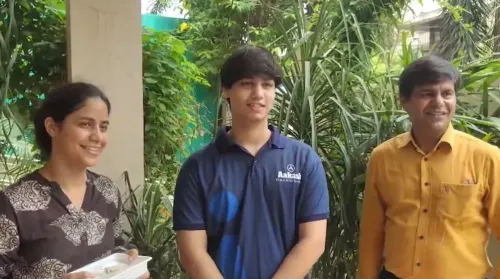
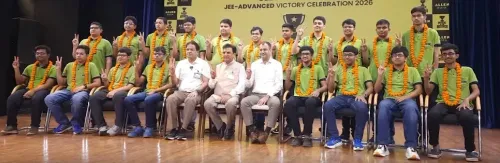
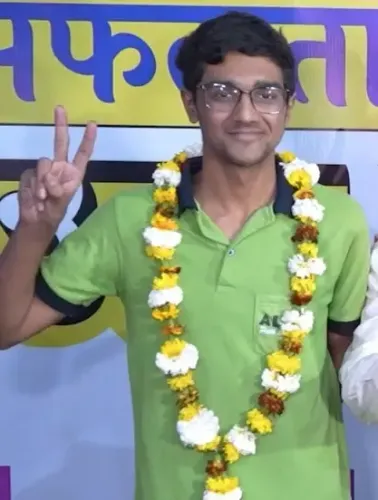
JEE Advanced 2026 results: Shubham Kumar tops with AIR 1, scores 330/360
Synopsis
Shubham Kumar of the IIT Delhi zone has topped JEE Advanced 2026 with a near-perfect 330 out of 360, as IIT Roorkee declared results on 1 June. With 56,880 qualifiers from nearly 1.8 lakh test-takers, the race now shifts to JoSAA counselling — where a fraction of these students will secure seats at India's most sought-after engineering institutions.
Key Takeaways
Shubham Kumar (IIT Delhi zone) secured AIR 1 in JEE Advanced 2026 with a score of 330 out of 360 .
Arohi Deshpande topped among female candidates; 10,107 female students qualified overall.
56,880 candidates qualified out of 1,79,694 who appeared for both papers on 17 May 2026 .
Results were declared by IIT Roorkee on 1 June 2026 ; scorecards are available on the official JEE Advanced portal.
Qualified candidates will now proceed to JoSAA counselling for seat allocation across all IITs .
IIT Roorkee declared the JEE Advanced 2026 results on 1 June 2026, confirming Shubham Kumar of the IIT Delhi zone as the national topper with a score of 330 out of 360 in the Common Rank List (CRL). Arohi Deshpande secured the highest rank among female candidates. Of the 1,79,694 students who appeared for both papers, 56,880 have qualified — marking the culmination of one of India's most competitive engineering entrance cycles.
Top Rankers and Regional Dominance
Shubham Kumar claimed All India Rank 1 (AIR 1) in the CRL, followed by Kabir Chhillar and Jatain Chahar, both also from the IIT Delhi zone. The sweep of the top three positions by candidates from a single zone is a notable outcome, underscoring the IIT Delhi zone's consistent competitive strength in recent years.
Among female candidates, Arohi Deshpande emerged as the top performer. A total of 10,107 female students qualified in JEE Advanced 2026, reflecting a continued, if gradual, improvement in female representation in IIT-bound cohorts.
Examination at a Glance
A total of 1,87,389 candidates registered for JEE Advanced 2026, of whom 1,79,694 appeared for both Paper 1 (9 am to 12 noon) and Paper 2 (2 pm to 5 pm), conducted on 17 May 2026 at centres across the country. The examination was administered by IIT Roorkee, which holds the organising responsibility for this cycle.
Along with individual scorecards, IIT Roorkee has released the CRL and category-wise merit lists. Candidates can access their results on the official JEE Advanced portal by logging in with their registration or roll number, date of birth, and registered mobile number. Authorities have advised students to retain a printed copy of their scorecard for use during the admission and counselling process.
What Comes Next: JoSAA Counselling
Qualified candidates will now enter the seat allocation process conducted by the Joint Seat Allocation Authority (JoSAA). JEE Advanced scores are accepted by all IITs, including those in Bombay, Delhi, Madras, Kanpur, Kharagpur, Roorkee, Guwahati, Hyderabad, Varanasi, and Dhanbad, among others.
Candidates who did not qualify still have pathways through the National Institutes of Technology (NITs), IIITs, and several leading state-run engineering institutions, where admissions are based on JEE Main scores.
Context and Significance
JEE Advanced remains the most selective undergraduate engineering entrance in India, with a qualification rate of roughly 31.7% of those who appeared this year. This comes amid ongoing national conversations about engineering education access, seat expansion in IITs, and the pressure on aspirants navigating a two-stage examination process. Notably, the 56,880 qualifiers this year will compete for a significantly smaller number of IIT seats, making JoSAA counselling the next high-stakes phase for successful candidates.
Point of View
But the more telling number is 56,880 — the total qualifiers competing for IIT seats that number a fraction of that figure. JEE Advanced has long functioned as a funnel so narrow that even clearing it is no guarantee of an IIT seat. The dominance of the IIT Delhi zone in the top three ranks also raises a recurring question about geographic and coaching-ecosystem concentration that India's education policy has yet to structurally address. As IITs slowly expand capacity, the pressure on this single examination only intensifies.
NationPress
18 Oct 2026
Frequently Asked Questions
Who topped JEE Advanced 2026?
Shubham Kumar from the IIT Delhi zone topped JEE Advanced 2026 with AIR 1, scoring 330 out of 360 in the Common Rank List. He was followed by Kabir Chhillar and Jatain Chahar, both also from the IIT Delhi zone.
Who is the female topper of JEE Advanced 2026?
Arohi Deshpande secured the highest rank among female candidates in JEE Advanced 2026. A total of 10,107 female students qualified in the examination this year.
How many students qualified in JEE Advanced 2026?
A total of 56,880 candidates qualified in JEE Advanced 2026 out of 1,79,694 who appeared for both papers. Of the 1,87,389 who had registered, a small number did not appear for one or both papers.
When was JEE Advanced 2026 conducted and who organised it?
JEE Advanced 2026 was conducted on 17 May 2026 in two sessions — Paper 1 from 9 am to 12 noon and Paper 2 from 2 pm to 5 pm. It was organised by IIT Roorkee, which declared the results on 1 June 2026.
What is the next step for JEE Advanced 2026 qualifiers?
Qualified candidates will participate in the counselling and seat allocation process conducted by the Joint Seat Allocation Authority (JoSAA). Scores are accepted by all IITs across India, including those in Bombay, Delhi, Madras, Kanpur, and Roorkee.