Jharkhand CMO Opens Draft Industrial Policy 2026 for Public Input

Synopsis
The Chief Minister's Office of Jharkhand has opened the Draft Industrial and Investment Promotion Policy 2026 for public consultation, inviting investors, MSMEs, local industries, and tribal communities to submit feedback and help shape the state's next industrial framework.
Key Takeaways
The Draft Jharkhand Industrial and Investment Promotion Policy, 2026 is now open for public consultation as of 4 July 2026 .
The Chief Minister's Office of Jharkhand is inviting feedback from all stakeholders including investors, MSMEs, local industries, and tribal communities.
The draft follows the state's previous Industrial Policy 2016 , which included capital subsidies, stamp duty exemptions, and single-window clearance.
Jharkhand holds major reserves of coal, iron ore, and bauxite, forming the backbone of its industrial economy.
The final policy is expected to be notified after the consultation window closes, potentially followed by investor summits or sector-specific announcements.
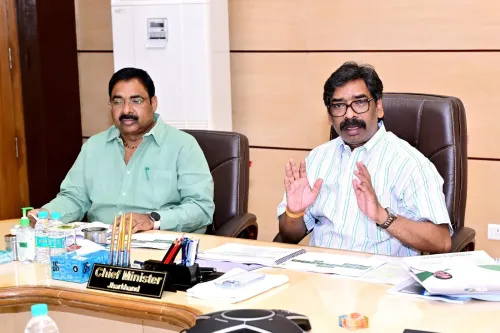
Chief Minister Hemant Soren of the Jharkhand Mukti Morcha is overseeing the policy revision process.
The Chief Minister's Office of Jharkhand on Saturday, 4 July 2026, announced that the Draft Jharkhand Industrial and Investment Promotion Policy, 2026 is open for public consultation, inviting stakeholders across sectors to submit feedback and suggestions to shape the state's next industrial framework.
Context
The CMO's post, tagging Chief Minister Hemant Soren and the hashtag #InvestJharkhand, called on 'all stakeholders to share their valuable feedback and suggestions to help shape a future-ready policy for Jharkhand.' The public consultation model signals a deliberate effort by the Hemant Soren-led government to widen the drafting process beyond bureaucratic circles and incorporate ground-level inputs from industry, civil society, and local communities.
Jharkhand is one of India's most mineral-rich states, holding significant reserves of coal, iron ore, and bauxite, and has historically anchored its industrial base in steel, mining, and heavy engineering. The new policy is intended to build on that foundation while signalling openness to downstream and value-added manufacturing.
Policy Backdrop
The 2026 draft follows the state's earlier Industrial Policy 2016, which offered capital subsidies, stamp duty exemptions, and single-window clearance mechanisms to attract manufacturing investment. A decade on, the state government is seeking to update the incentive architecture to reflect shifts in national manufacturing priorities, global supply chain realignments, and the growing role of MSMEs.
Across India, states have made periodic industrial policy revisions a competitive tool, using investor summits, sector-specific incentive packages, and streamlined regulatory frameworks to court both domestic and foreign capital. Jharkhand's latest exercise fits squarely within this pattern, with the public consultation phase serving as both a policy-refinement mechanism and a signal of governance transparency.
Stakeholders and Impact
The consultation is addressed to a broad tent: large investors, MSMEs, established local industries, and tribal communities who have historically had a complex relationship with industrial expansion in the state. Tribal land rights and community livelihoods have been a recurring tension in Jharkhand's industrialisation story, making inclusive consultation particularly significant.
For the business community, the draft's eventual provisions on incentives, regulatory ease, and sector prioritisation will directly influence investment decisions. For civil society and tribal groups, the consultation window represents an opportunity to ensure that growth targets are balanced against social and environmental safeguards.
What's Next
The government is expected to collate stakeholder responses before finalising and officially notifying the policy. Past practice in several Indian states suggests this process may be followed by a high-profile investor summit or sector-specific incentive announcements to operationalise the new framework. The Soren government's ability to translate public inputs into concrete, balanced policy provisions will be closely watched by investors and communities alike as Jharkhand positions itself for the next phase of industrial growth.
Point of View
Where transparency is deployed as a tool of competitive governance. For the Hemant Soren administration, the exercise carries a dual political logic: signalling investor-friendliness while demonstrating sensitivity to tribal and community concerns that have historically complicated industrial expansion in Jharkhand. The move aligns with a national pattern of states revising decade-old industrial frameworks to compete for post-pandemic investment flows and to align with central government manufacturing push programmes. How effectively the government synthesises divergent stakeholder inputs — from large industry on one end to tribal community groups on the other — will define whether the 2026 policy marks a genuine upgrade or a largely cosmetic revision.
NationPress
4 Jul 2026
Frequently Asked Questions
What is the Draft Jharkhand Industrial and Investment Promotion Policy 2026?
It is a proposed state policy outlining incentives, regulatory reforms, and sector priorities aimed at attracting domestic and foreign investment into Jharkhand's industrial base. It is currently open for public consultation.
How can stakeholders submit feedback on the Jharkhand Industrial Policy 2026?
The Chief Minister's Office of Jharkhand has invited all stakeholders to share their feedback and suggestions, though the specific submission portal or deadline has not been detailed in the official announcement.
What was Jharkhand's previous industrial policy?
Jharkhand's previous industrial policy was the Industrial Policy 2016 , which offered capital subsidies, stamp duty exemptions, and single-window clearance mechanisms to boost manufacturing investment in the state.
Who is the Chief Minister of Jharkhand overseeing this policy?
Hemant Soren , affiliated with the Jharkhand Mukti Morcha (JMM) , is the Chief Minister of Jharkhand and is tagged in the official announcement regarding the 2026 draft policy consultation.
Why is public consultation important for Jharkhand's industrial policy?
Jharkhand's industrial expansion has historically involved complex negotiations around tribal land rights and community livelihoods. Public consultation allows investors, MSMEs, and tribal communities to contribute to the policy, helping balance growth targets with social and environmental safeguards.