Jharkhand CMO: State Moving Toward Economy 2.0

Synopsis
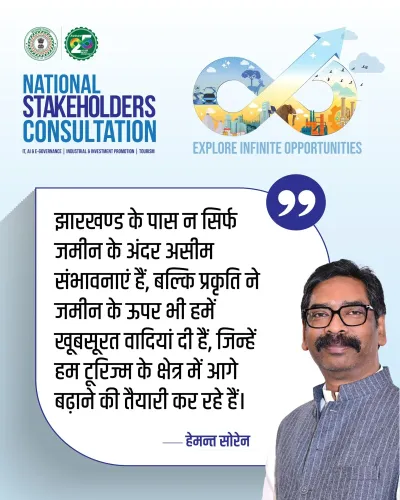
The Chief Minister's Office of Jharkhand announced on 11 July 2026 that the state is advancing toward 'Economy 2.0' under CM Hemant Soren, signalling a strategic shift from mineral extraction toward a diversified economic model encompassing manufacturing, services, and tourism.
Key Takeaways
The Jharkhand CMO declared on 11 July 2026 that the state is moving firmly toward 'Economy 2.0' under CM Hemant Soren .
Jharkhand is a mineral-rich eastern Indian state historically dependent on coal and iron ore extraction.
The JMM -led government has pursued economic diversification alongside welfare schemes since winning the 2019 assembly elections .
The 'Economy 2.0' framing targets industrial investors, local entrepreneurs, and youth seeking opportunities beyond the mining sector.
The exact components and launch details of the 'Economy 2.0' initiative remain to be formally announced.
State budget presentations and investor summits are expected to provide concrete details of the new economic agenda.
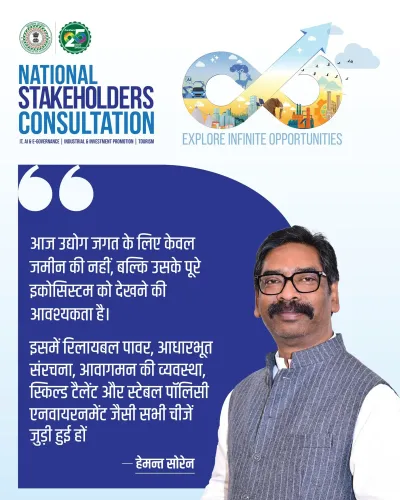
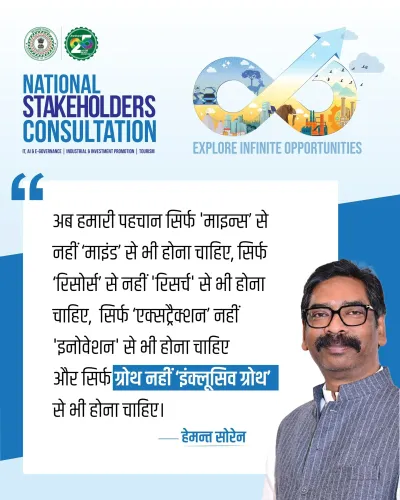
The Chief Minister's Office of Jharkhand declared on Saturday, 11 July 2026 that the state is advancing firmly toward what it terms 'Economy 2.0', crediting the leadership of Chief Minister Hemant Soren for steering this economic transition.
The post, shared on the official CMO handle, stated in Hindi: 'Mukhyamantri Hemant Soren ke netritva mein Jharkhand ab Economy 2.0 ki or mazbooti se badh raha hai' — translated as 'Under Chief Minister Hemant Soren's leadership, Jharkhand is now moving firmly toward Economy 2.0.' The message was tagged with the hashtag #JharkhandSeJohar, a phrase that has become a cultural and political identifier for the state's outreach.
Context
Jharkhand, a mineral-rich state in eastern India with a significant tribal population, has historically depended on resource extraction — particularly coal and iron ore — as the backbone of its economy. The Soren-led government has, in recent years, sought to reframe the state's economic identity by signalling a pivot toward manufacturing, services, and tourism alongside its traditional mining base. The 'Economy 2.0' framing appears to be part of this broader messaging effort, positioning the current administration as an architect of a diversified economic future.Policy Backdrop
Since returning to power after the 2019 Jharkhand assembly elections, the Jharkhand Mukti Morcha (JMM)-led government under Hemant Soren has pursued a dual track: expanding welfare schemes for the state's large tribal and rural population while simultaneously working to improve the ease of doing business and attract private investment beyond the mining sector. Indian states have increasingly adopted versioned branding — framing economic strategies as successive upgrades — to highlight shifts in policy orientation and signal intent to investors. Jharkhand's 'Economy 2.0' language fits squarely within this national trend.Stakeholders and Impact
The transition narrative carries implications for multiple groups. Industrial investors and private capital looking to enter non-mining sectors — such as light manufacturing, agro-processing, and tourism — are the primary intended audience for this kind of signalling. Local entrepreneurs and youth, particularly in districts outside the traditional mining belt, stand to benefit if the policy pivot translates into new employment opportunities and infrastructure investment. The state's tribal communities, who have historically borne the social costs of extractive industries, also have a stake in whether economic diversification delivers more equitable outcomes.What's Next
The specific components, launch date, and defined targets of the 'Economy 2.0' initiative have not been formally detailed in publicly available documents as of this report. Observers will watch closely for state budget presentations or investor summits where the Soren government is expected to flesh out the concrete policy incentives and sectoral priorities that underpin this branding. How the administration translates the 'Economy 2.0' vision into measurable reform — on ease of doing business rankings, industrial corridors, or skilling programmes — will determine whether the phrase marks a genuine policy inflection or remains aspirational messaging.Point of View
The CMO is simultaneously building an electoral narrative around economic stewardship ahead of future political cycles. The framing also serves a dual audience: domestic voters in tribal and rural belts who want to see tangible development, and external investors who need a coherent story beyond Jharkhand's extractive past. Whether 'Economy 2.0' crystallises into a defined policy architecture or remains aspirational positioning will be the defining test of this messaging cycle.
NationPress
11 Jul 2026
Frequently Asked Questions
What is Jharkhand's Economy 2.0?
'Economy 2.0' is a term used by the Jharkhand Chief Minister's Office to describe the state's strategic shift under CM Hemant Soren toward a diversified economic model that moves beyond traditional dependence on mining and mineral extraction toward manufacturing, services, and tourism. Specific policy details have not yet been formally announced.
Who is Hemant Soren?
Hemant Soren is the Chief Minister of Jharkhand and the national president of the Jharkhand Mukti Morcha (JMM) , the regional party that leads the state government. He returned to power after the 2019 Jharkhand assembly elections.
What is Jharkhand's economy based on?
Jharkhand's economy has historically been driven by mineral extraction, particularly coal and iron ore, owing to the state's rich natural resource base. The current government is attempting to diversify into manufacturing, agro-processing, services, and tourism.
What does JharkhandSeJohar mean?
Jharkhand Se Johar is a cultural and political phrase used by the Jharkhand government in its outreach. 'Johar' is a traditional greeting of respect among tribal communities in the region, and the phrase broadly means 'Greetings from Jharkhand,' serving as a state identity marker.
How is Jharkhand improving its ease of doing business?
The Soren government has signalled intent to improve Jharkhand's ease of doing business rankings by attracting private investment beyond the mining sector and promoting industrial diversification. Specific reform measures under the 'Economy 2.0' agenda are expected to be detailed in upcoming budget or investor summit announcements.