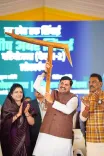
Jharkhand CMO: State will not back down on resource rights
Synopsis
The Chief Minister's Office of Jharkhand quoted Hemant Soren saying the state will not retreat from a fight over resource and revenue rights, tying the claim to the 2000 statehood struggle.
Key Takeaways
The Chief Minister's Office of Jharkhand on 27 November 2026 quoted CM Hemant Soren on resource and revenue rights.
Soren said Jharkhand will not back down from the fight for those rights.
He compared the campaign to the struggle that won statehood in 2000.
Jharkhand was created on 15 November 2000; the JMM was founded in 1972.
The state is mineral-rich, with coal and iron ore central to its revenue claims.
The post did not name a specific law, court case or authority behind the alleged obstruction.
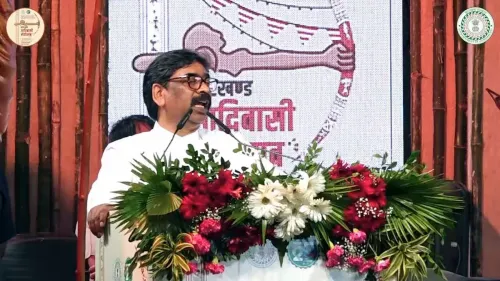
The Chief Minister's Office of Jharkhand did not wait for a closed-door council. On Friday, 27 November 2026, it put Hemant Soren's warning on the public record: attempts are under way to obstruct the state's rights over resources and revenue, and Jharkhand will not retreat. The message yoked that fight to the same struggle that produced the state in 2000.
Quoting the Chief Minister, the CMO said efforts were being made to block 'our rights over resources and revenue', but Jharkhand would not step back from apne hak ki ladai (the fight for its due). Just as the state was won through struggle, Soren said, the same struggle would secure those rights. The people of the state, he added, would receive their entitlements.
Soren ties today's claim to the 2000 statehood fight
Jharkhand was carved out of Bihar on 15 November 2000, after decades of tribal and regional agitation. The Jharkhand Mukti Morcha, founded in 1972 and now led by Soren, was a principal force in that movement. Its politics have always treated control over land, minerals and local revenue as the point of statehood, not an afterthought.
Friday's post made that lineage explicit. The method named was struggle. The prize named was hak — rights over what the ground yields, and the revenue that follows. No law, notification or court order was identified. The political frame was unmistakable: this government will not treat resource control as a file to be quietly negotiated away.
Coal, iron ore and the royalty question
The state sits on some of India's richest seams of coal and iron ore. That geology has made mining royalties, lease terms and the Centre-state split of natural-resource money a recurring fault line. Other mineral-bearing states have run the same argument: that extraction on their soil should return a larger, more certain share to their treasuries and their people.
Jharkhand's position fits that pattern of fiscal federalism fights — royalty rates, devolution, and who decides how resource wealth is counted and shared. For a state whose public finances are tightly bound to mining, the CMO's language is not ceremonial. It is a claim on the cash that comes out of the pits.
Where the next round of the money fight will land
Budget sessions, royalty reviews and inter-governmental talks on GST compensation and fiscal devolution are the usual arenas. The post offered no timetable. It offered a posture: Ranchi will contest any squeeze on resource and revenue rights, and it will do so in the name of the state's people rather than as a technical dispute between accountants.
The founding demand of Jharkhand was to own the wealth of its land. The CMO's Friday line is that this government still treats that demand as unfinished.
Point of View
Cesses or central levies look set to shrink the local share. The political test for Ranchi is converting a rights narrative into a concrete fiscal win. The test for the Centre is whether a statehood-era grievance hardens into a wider federalism clash around royalties and devolution.
NationPress
27 Nov 2026
Frequently Asked Questions
What did the Jharkhand CMO post about resource rights?
The Chief Minister's Office of Jharkhand quoted Hemant Soren as saying attempts are being made to obstruct the state's rights over resources and revenue, and that Jharkhand will not back down. He linked the fight to the struggle that created the state and said residents would get their entitlements.
When was Jharkhand formed as a separate state?
Jharkhand was formed on 15 November 2000 after being separated from Bihar. The creation followed decades of agitation by tribal groups and regional parties, including the Jharkhand Mukti Morcha.
Why is mining revenue important for Jharkhand?
Jharkhand is rich in coal, iron ore and other minerals, so royalties and resource-related taxes are a core part of state finances. Control over those revenues has been a recurring Centre-state issue for mineral-bearing states.
What is the Jharkhand Mukti Morcha's stand on state rights?
The JMM, founded in 1972 and led by Chief Minister Hemant Soren, has long emphasised regional autonomy and tribal rights, including greater state control over local resources. It was a principal force in the movement for Jharkhand's statehood.
Did the post name who is obstructing Jharkhand's resource rights?
No. The statement referred to attempts to obstruct resource and revenue rights without naming a law, institution or government. The CMO framed the issue as a continuing struggle rather than a specific notified dispute.