Jharkhand CMO Shares Varun Beverages Chief's Praise for New Policy
Synopsis
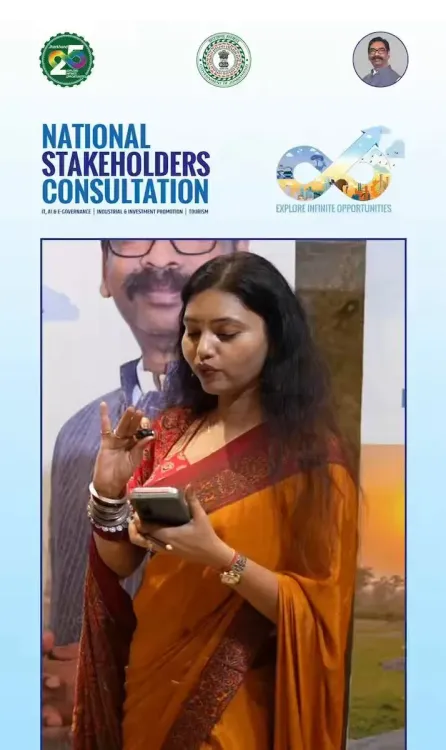
The Jharkhand CMO on July 9, 2026, amplified a video endorsement from Varun Beverages President Devyani Khankhoje, who called the state's new industrial policy a 'brilliant initiative' set to drive the state's development in a 'very positive way.'
Key Takeaways
The Chief Minister's Office of Jharkhand posted a video on July 9, 2026 , featuring a statement from Devyani Khankhoje , President of Varun Beverages Limited .
Khankhoje described Jharkhand's new policy as a 'brilliant initiative' that would help the state's development in a 'very, very positive way.' Varun Beverages Limited , part of the RJ Corp group, is one of India's largest PepsiCo bottlers with operations across India and international markets.
Jharkhand's industrial policy evolution builds on the Jharkhand Industrial and Investment Promotion Policy 2021 , which offered capital subsidies and single-window clearances.
The endorsement signals potential investment interest from the beverage sector, with formal MoUs and budget allocations expected to follow.
The Chief Minister's Office of Jharkhand on Thursday, July 9, 2026, shared a statement from Devyani Khankhoje, President of Varun Beverages Limited, endorsing the state government's newly announced industrial policy as a significant step toward accelerating the state's economic development.
Context
In the shared video, Khankhoje stated: 'The government of Jharkhand has taken a brilliant initiative in framing this new policy, and this new policy is really going to help the development of Jharkhand in a very, very positive way.' The statement positions Varun Beverages — one of India's largest beverage manufacturers and a major bottler for PepsiCo — as an early and vocal supporter of the policy framework.
Varun Beverages, part of the RJ Corp group, operates manufacturing plants and supply chains across India and several international markets. The company's endorsement carries weight given its scale of operations and its history of setting up production facilities in states that offer competitive industrial incentives.
Policy Backdrop
Jharkhand has been progressively refining its industrial policy architecture over recent years. The Jharkhand Industrial and Investment Promotion Policy 2021 laid groundwork by offering capital subsidies, land allocation, and single-window clearances for food processing and manufacturing units, aimed at improving the state's ease-of-doing-business standing.
The current policy referenced in the post appears to be a continuation or evolution of that framework, though its exact title, provisions, and notification date have not yet been officially detailed in public records. Indian states have increasingly competed to issue revised industrial policies that align with national initiatives such as Make in India and the Production Linked Incentive (PLI) scheme for the food and beverage sector.
Stakeholders and Impact
The beverage manufacturing sector is a significant employer of semi-skilled and unskilled labour, making any large-scale investment by a firm like Varun Beverages consequential for Jharkhand's local workforce. The state, which has historically lagged in attracting large-scale private manufacturing, stands to benefit from both direct employment and ancillary supply-chain development.
Beyond the beverage sector, an endorsement of this nature from a listed, high-profile corporate entity can serve as a signal to other potential investors evaluating Jharkhand as a destination. Industry observers note that credible corporate testimonials often precede formal memoranda of understanding or investment commitments at state-level investor summits.
What's Next
Attention will now turn to whether Varun Beverages or similarly positioned firms formalise investment commitments through MoUs with the Jharkhand government in the coming months. State budget allocations for implementing the policy's incentive provisions will also be closely watched as a measure of the administration's commitment to following through on the framework.
For Jharkhand Chief Minister Hemant Soren's administration, securing visible private-sector backing for its industrial agenda strengthens its position ahead of any upcoming investor conclaves and reinforces the state's pitch as an emerging manufacturing hub in eastern India.
Point of View
This positions Jharkhand within the broader eastern India industrialisation narrative, where states like Odisha and West Bengal have made aggressive inroads. The critical question remains whether this endorsement translates into announced capital expenditure, or stays at the level of goodwill optics.
NationPress
8 Oct 2026
Frequently Asked Questions
What is the new Jharkhand policy praised by Varun Beverages?
The Jharkhand government announced a new industrial policy aimed at attracting private investment in manufacturing and processing sectors. Its exact title and detailed provisions have not yet been officially published in publicly available records as of July 2026.
Who is Devyani Khankhoje?
Devyani Khankhoje is the President of Varun Beverages Limited , one of India's largest beverage manufacturers and a major bottler for PepsiCo, operating under the RJ Corp group.
What is Varun Beverages Limited?
Varun Beverages Limited is a leading Indian beverage manufacturer and distributor, part of the RJ Corp group, with manufacturing plants and supply chains across India and several international markets.
How does Jharkhand's new policy fit into national industrial schemes?
Jharkhand's industrial policy framework aligns with national initiatives such as Make in India and the Production Linked Incentive (PLI) scheme for the food and beverage sector, offering state-level incentives like capital subsidies and single-window clearances.
Will Varun Beverages invest in Jharkhand?
No formal investment commitment or MoU has been announced as of July 9, 2026 . Observers will watch for follow-up announcements at state investor summits or in subsequent state budget allocations.