CM Hemant Soren Pushes 5,000 Schools of Excellence for Jharkhand
Synopsis
Chief Minister Hemant Soren has directed Jharkhand officials to accelerate the expansion of CM Schools of Excellence to 5,000 institutions, as the state reports school dropout rates improving beyond the national average. Quality education and scheme transparency are cited as top priorities.
Key Takeaways
The Chief Minister's Office of Jharkhand announced on 26 May 2026 that the state's school dropout rate is improving and is ahead of the national average.
CM Hemant Soren has directed officials to fast-track the plan to scale CM Schools of Excellence to 5,000 schools.
Quality education has been declared a government priority, with a specific directive on ensuring transparency in school-related scheme delivery.
The CM Schools of Excellence programme upgrades government schools with better infrastructure and faculty, aligned with National Education Policy 2020 .
Independent verification of dropout improvement will depend on forthcoming UDISE+ and ASER national data releases.
The expansion is expected to benefit students in tribal and rural communities who rely almost entirely on state-run institutions.
The Chief Minister's Office of Jharkhand announced on Tuesday, 26 May 2026 that the state is outperforming the national average on school dropout reduction, and that Chief Minister Hemant Soren has directed officials to accelerate plans to scale the CM Schools of Excellence programme to 5,000 institutions across the state.
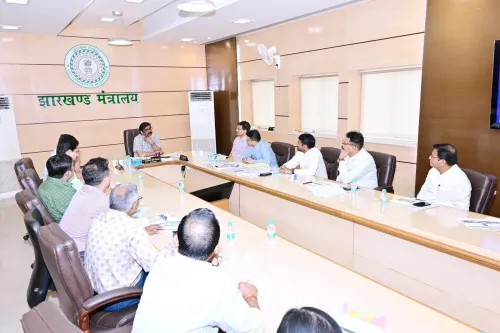
The official post, shared in Hindi, quotes the Chief Minister's directive: 'CM स्कूल ऑफ़ एक्सीलेंस की संख्या 5000 किए जाने की योजना पर तेजी से कार्य करें' ('Work at speed on the plan to take the number of CM Schools of Excellence to 5,000'). The directive also calls for quality education to be treated as a government priority and for ensuring that school-related schemes reach beneficiaries with full transparency.
Context
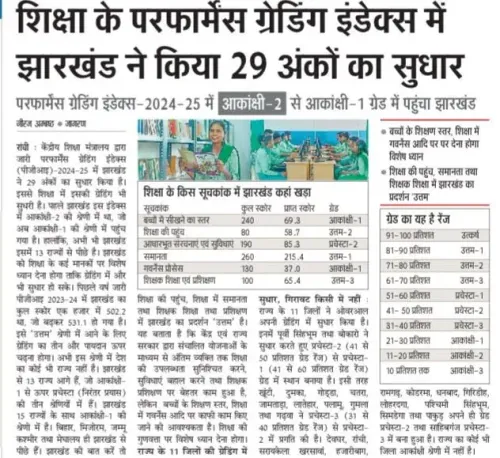
Jharkhand has historically struggled with elevated school dropout rates, particularly among its large tribal and rural populations. The state government's claim that dropout figures are now improving and tracking ahead of the national average marks a significant shift, though independent verification will come from forthcoming national data releases. The Right to Education Act, 2009 mandates free and compulsory schooling for children aged 6 to 14, forming the legal floor on which state-level retention efforts are built.Policy Backdrop
The CM Schools of Excellence initiative was introduced by the Jharkhand government to upgrade select government schools with better physical infrastructure, qualified faculty, and improved learning resources, positioning them as model institutions for surrounding areas. The programme aligns with the goals of the National Education Policy 2020, which emphasises universal access and measurable quality improvement. Scaling the scheme from its current footprint to 5,000 schools would represent a substantial expansion of the state's model-school architecture. The emphasis on transparency in scheme delivery reflects a broader administrative push to reduce leakage and ensure benefits reach intended student and household beneficiaries.Stakeholders and Impact
The primary beneficiaries of the expansion would be students in government schools across Jharkhand, with particular significance for tribal communities in districts where private schooling options are limited. Rural households that depend entirely on state-run institutions stand to gain the most from infrastructure upgrades and quality improvements. Education officials at the district and block levels are directly tasked by the directive to implement the scale-up and ensure scheme transparency. The move also carries implications for teachers, whose professional development and deployment would need to match the expanded institutional footprint.What's Next
The pace of the 5,000-school target will be closely watched through state budget allocations and departmental progress reports. National datasets such as UDISE+ and the Annual Status of Education Report (ASER) will serve as independent benchmarks to assess whether Jharkhand's dropout improvement claim is sustained over successive years. If the state maintains its trajectory ahead of the national average, it could emerge as a reference model for other high-dropout states seeking to leverage model-school frameworks under the NEP umbrella.Point of View
000 is a politically visible commitment in a state where education access has long been a flashpoint, particularly for tribal constituencies that form a core part of his support base. Framing the dropout improvement as ahead of the national average — even before independent data confirms it — sets a benchmark the administration will be held to in future UDISE+ cycles. The transparency mandate signals awareness that scheme delivery gaps, not just scheme design, have historically undermined education outcomes in Jharkhand. Taken together, the announcement fits a broader pattern of state governments using model-school frameworks to demonstrate NEP alignment while building durable electoral narratives around public education investment.
NationPress
21 Sept 2026
Frequently Asked Questions
What is the CM Schools of Excellence programme in Jharkhand?
CM Schools of Excellence is a Jharkhand state initiative that upgrades select government schools with better infrastructure, qualified teachers, and improved learning resources to serve as model institutions for surrounding areas.
How many CM Schools of Excellence does Jharkhand plan to have?
Chief Minister Hemant Soren has directed officials to work at speed on scaling the CM Schools of Excellence programme to 5,000 schools across the state.
Is Jharkhand's school dropout rate better than the national average?
The Chief Minister's Office of Jharkhand claimed on 26 May 2026 that the state's dropout figures are improving and are currently ahead of the national average, though independent verification awaits forthcoming national data such as UDISE+ reports.
What is the Right to Education Act and how does it relate to Jharkhand's dropout efforts?
The Right to Education Act, 2009 guarantees free and compulsory schooling for children aged 6 to 14 across India and forms the legal foundation for state-level dropout reduction programmes, including those in Jharkhand.
What did CM Hemant Soren say about transparency in school schemes?
CM Soren directed officials to ensure that school-related government schemes reach beneficiaries with full transparency, addressing concerns about delivery gaps that have historically affected education outcomes in the state.