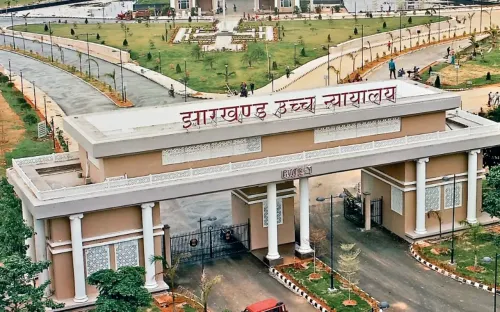
Jharkhand HC orders surprise inspections of Ramgarh industrial units over pollution
Synopsis
The Jharkhand High Court has cracked down on industrial pollution in Ramgarh, ordering surprise inspections, a 48-hour CEMS trigger for show-cause notices, and a fresh water-quality assessment of the Damodar River — all backed by mandatory compliance affidavits. The ruling reinforces that environmental accountability cannot wait for prior notice.
Key Takeaways
The Jharkhand High Court disposed of a PIL filed by Ram Kishor alleging air and water pollution by industrial units in Ramgarh district .
The JSPCB Hazaribagh Regional Officer must inspect each unit at least twice a year , with at least one surprise inspection.
If CEMS records excess emissions for more than 48 hours , a show-cause notice must be issued within 7 days .
Water samples from the Damodar River and near Viva International School must be collected within 3 months and tested at an accredited lab.
Environmental clearances, CTE and CTO documents will be reviewed within 2 months ; expired approvals will attract legal action.
Compliance affidavits must be filed within 4 months ; the petitioner may approach the court again on future violations.
The Jharkhand High Court has issued a set of binding directions to the Jharkhand State Pollution Control Board (JSPCB) over alleged air and water pollution by private industrial units in Ramgarh district, ordering mandatory regular and unannounced inspections as part of a comprehensive enforcement framework. The order came while disposing of a Public Interest Litigation filed by Ram Kishor.
What the Court Observed
A division bench of Chief Justice M.S. Sonak and Justice Rajesh Shankar held that the right to a clean environment is an inseparable component of the right to life protected under Article 21 of the Constitution. The PIL had alleged that certain Ramgarh-based industrial units were emitting smoke and dust from their chimneys and discharging pollutants into the Damodar River and surrounding water sources.
Key Directions Issued
The court directed the Hazaribagh Regional Officer of the JSPCB to inspect the concerned industrial units at least twice every year. Critically, at least one of those inspections must be conducted without prior notice, enabling authorities to assess the actual functioning of pollution-control infrastructure rather than a prepared compliance display.
The bench further stipulated that if a unit's Continuous Emission Monitoring System (CEMS) records emissions exceeding prescribed limits for more than 48 hours, the JSPCB must issue a show-cause notice to the industry within seven days. This introduces a direct and time-bound accountability mechanism tied to real-time data.
Water Pollution Assessment
On the water pollution front, the court set a three-month deadline for authorities to collect water samples from locations near Viva International School and from upstream and downstream stretches of the Damodar River. The samples must be tested at an accredited laboratory, with findings submitted to the Ramgarh Deputy Commissioner. This comes amid longstanding concerns over industrial effluents reaching the Damodar — a river that serves as a water source for communities across Jharkhand and West Bengal.
Review of Environmental Clearances
The division bench also ordered a detailed review of environmental clearances, Consent to Establish (CTE), and Consent to Operate (CTO) granted to the companies in question. Relevant documents are to be scrutinised over the next two months, with consolidated records prepared. Should any approval be found to have expired, appropriate legal action will follow.
Compliance and Future Safeguards
To enforce its directions, the court required the concerned authorities to file compliance affidavits within four months. The petitioner has also been granted liberty to file an interlocutory application in the same matter should pollution levels deteriorate or the court's directions be violated in the future. The order ensures judicial oversight remains active even after the PIL's disposal.
Point of View
Timelines, and trigger thresholds. The 48-hour CEMS breach rule, in particular, converts an otherwise passive monitoring system into an active enforcement tool. What remains to be seen is whether the JSPCB, historically under-resourced and susceptible to regulatory capture in mining-heavy districts, can execute surprise inspections without dilution. The Damodar River has been under ecological stress for decades; a single court order, however well-crafted, will need institutional follow-through to make a dent.
NationPress
14 Sept 2026
Frequently Asked Questions
What has the Jharkhand High Court ordered regarding Ramgarh industrial pollution?
The Jharkhand High Court has directed the JSPCB to conduct at least two inspections of the concerned industrial units every year, including at least one surprise inspection, and to issue show-cause notices within seven days if CEMS records excess emissions for over 48 hours. The court also ordered water sampling from the Damodar River within three months and a review of all environmental clearances within two months.
Why was the PIL filed against the Ramgarh industrial units?
The PIL, filed by Ram Kishor, alleged that private industrial units in Ramgarh were emitting smoke and dust from their chimneys and polluting the Damodar River and nearby water sources. The court acknowledged that the right to a clean environment is part of the fundamental right to life under Article 21 of the Constitution.
What is the timeline for compliance with the court's directions?
Authorities must collect water samples within three months, complete a review of environmental clearances within two months, and file compliance affidavits before the court within four months of the order.
What happens if a unit's emissions exceed limits for more than 48 hours?
If a unit's Continuous Emission Monitoring System records emissions above prescribed limits for more than 48 hours, the Jharkhand State Pollution Control Board is required to issue a show-cause notice to the industry concerned within seven days.
Can the petitioner approach the court again if violations continue?
Yes. The court granted liberty to the petitioner to file an interlocutory application in the same matter if there is any future violation of the court's directions or if pollution levels deteriorate, ensuring continued judicial oversight.