Mudra Yojana at 10: How Jharkhand's Dhaneshwar Saw went from bicycle to car
Synopsis
A bicycle-riding shopkeeper from Pakrar village in Jharkhand's Hazaribagh secured a ₹5 lakh collateral-free Mudra loan in 2017 and now runs three shops, owns a car, and has built his own home. As the Pradhan Mantri Mudra Yojana marks a decade, Dhaneshwar Saw's story puts a human face on what the scheme was designed to do — and what it can deliver when a borrower bets everything on it.
Key Takeaways
Dhaneshwar Saw of Pakrar village, Hazaribagh, Jharkhand secured a ₹5 lakh PMMY loan from Bank of India in 2017 .
He grew from a single small shop to three shops in Hazaribagh's vegetable market and main road.
Saw repaid the full loan on time and received direct recognition from Prime Minister Narendra Modi at a public event.
He now owns a car and home, and has funded the weddings of his three daughters .
The Pradhan Mantri Mudra Yojana completed 10 years of operation on 8 April last year, offering collateral-free loans to micro and small entrepreneurs.
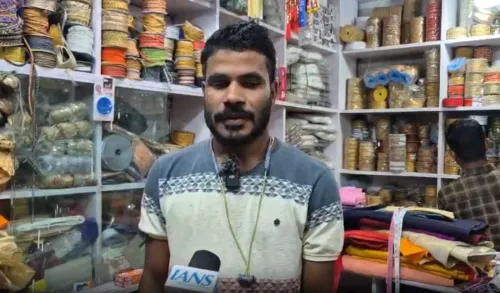
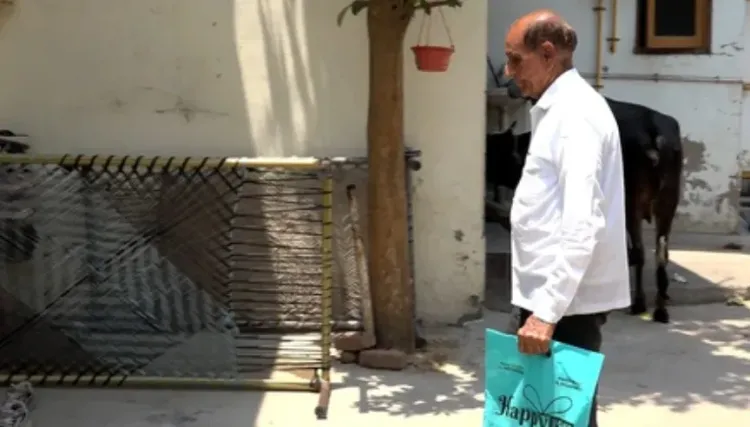
Dhaneshwar Saw, a resident of Pakrar village in Jharkhand's Hazaribagh district, once ran a single modest shop and travelled by bicycle. Today, he owns three shops in Hazaribagh's vegetable market and main road, drives his own car, and has built a home for his family — a transformation he attributes entirely to a ₹5 lakh collateral-free loan secured in 2017 under the Pradhan Mantri Mudra Yojana (PMMY). His story has emerged as one of the more striking human-interest accounts marking the scheme's tenth year of operation.
From One Shop to Three: The Mudra Turning Point
In 2017, Saw approached the Bank of India under the PMMY framework and secured a ₹5 lakh loan — without pledging any collateral or guarantor. At the time, he had a small shop but lacked the capital to scale. The loan changed that equation.
He repaid the entire amount on time, which, according to him, helped him build and sustain a credible relationship with the bank. That financial discipline, he says, opened further doors. Saw now operates across multiple locations in Hazaribagh and his success has drawn direct recognition from Prime Minister Narendra Modi at a public event.
What the Scheme Meant for a Small Trader
Speaking about the scheme's impact, Saw said: 'This serves as a major relief for small traders, as previously, expanding a business was extremely difficult due to a lack of capital and the inability to provide collateral.'
The absence of collateral requirements is widely cited as the PMMY's most significant design feature. For traders and micro-entrepreneurs without land titles or fixed assets to pledge, conventional bank credit had historically been inaccessible. The scheme removed that barrier, according to beneficiaries and local observers.
A Life Visibly Transformed
Beyond the business metrics, the change in Saw's personal circumstances is striking. He has constructed his own home, provided a materially improved life for his family, and funded the weddings of his three daughters — occasions he described as celebrated with 'great pomp and festivity.'
Mohammad Shahid, a local resident who has known Saw for 40 to 45 years, described the Mudra scheme as having brought about a 'monumental change' in his friend's life. Saw's trajectory, from a bicycle-riding shopkeeper to a multi-outlet entrepreneur, has reportedly become a point of reference and inspiration in the surrounding region.
Mudra Yojana at a Decade: Broader Context
The Pradhan Mantri Mudra Yojana completed 10 years of operation on 8 April of last year, having been launched as a flagship initiative of the Modi government to extend formal credit to micro, small, and medium enterprises as well as individual entrepreneurs who fall outside the conventional banking net.
As the scheme crosses the decade mark, success accounts from beneficiaries across states are increasingly coming to the fore. Proponents argue that by simplifying access and eliminating collateral requirements, PMMY has laid the groundwork for a new wave of grassroots entrepreneurship. The scheme's full impact — across disbursement volumes, repayment rates, and sustained business survival — continues to be assessed by researchers and policy observers.
Point of View
A specific loan amount, a verifiable before-and-after. But individual success accounts, however genuine, are not a policy audit. The PMMY's tenth year warrants harder scrutiny: aggregate repayment rates, the share of loans that survived beyond the first cycle, and whether disbursements have reached the most credit-excluded communities or clustered among the already-banked near-poor. The scheme's collateral-free design was always its strongest feature; the open question is whether the volume of disbursements has translated into durable enterprise creation at scale, or whether headline numbers mask a high churn of small borrowers cycling in and out of micro-debt.
NationPress
25 Sept 2026
Frequently Asked Questions
What is the Pradhan Mantri Mudra Yojana (PMMY)?
The Pradhan Mantri Mudra Yojana is a central government scheme that provides collateral-free loans to micro, small, and medium enterprises and individual entrepreneurs. Launched by the Modi government, it completed 10 years of operation on 8 April last year.
How did Dhaneshwar Saw benefit from the Mudra Yojana?
Saw secured a ₹5 lakh loan from Bank of India under PMMY in 2017, which he used to expand his single shop into a three-outlet business in Hazaribagh. He repaid the loan on time and has since built a home and purchased a car.
Why is the collateral-free feature of Mudra Yojana significant?
Small traders and micro-entrepreneurs typically lack the land titles or fixed assets required to access conventional bank credit. By removing the collateral requirement, PMMY opened formal lending to a segment that was previously excluded from the banking system.
Has PM Modi recognised Mudra Yojana beneficiaries?
Yes. Dhaneshwar Saw is among beneficiaries who received direct recognition from Prime Minister Narendra Modi at a public event, according to reports from Hazaribagh.
How long has the Mudra Yojana been in operation?
The Pradhan Mantri Mudra Yojana has been in operation for over a decade, having marked its 10th anniversary on 8 April last year. It was launched as a flagship initiative to extend formal credit access to grassroots entrepreneurs across India.