Jitendra Singh: ₹13 Cr AMRUT 2.0 Water Project for Basohli
Synopsis
Union Minister Dr. Jitendra Singh has announced a ₹13 crore AMRUT 2.0 project for Basohli in Kathua district, J&K, combining overhead tanks, a filtration plant, and a floating pump system on Ranjit Sagar Dam to deliver reliable piped drinking water to every household.
Key Takeaways
A ₹13 crore AMRUT 2.0 drinking water project has been announced for Basohli , Kathua district, Jammu and Kashmir.
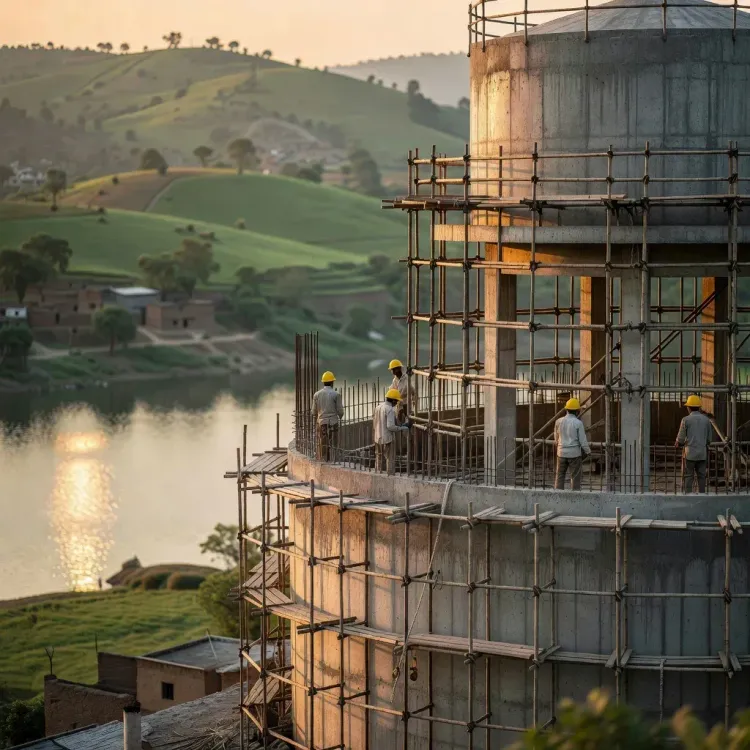
Infrastructure includes overhead storage tanks , a filtration plant , and a floating pump system on Ranjit Sagar Dam.
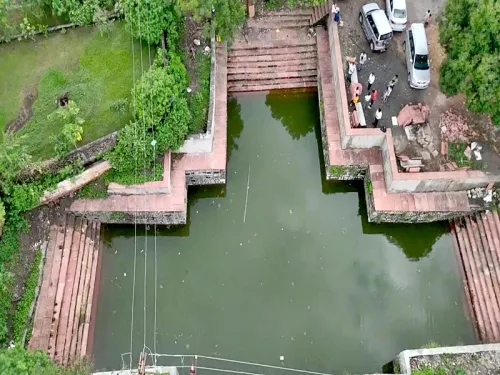
Ranjit Sagar Dam on the Ravi river will serve as the primary water source for the project.
AMRUT 2.0 , approved in 2021 with a ₹2.77 lakh crore national outlay, targets universal piped water supply in smaller urban towns.
The project aims to provide reliable, treated water to every household in Basohli.
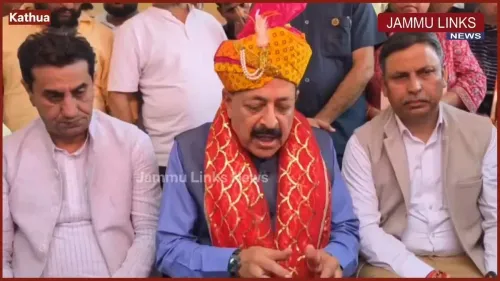
A town that has waited years for reliable drinking water is finally getting its answer. Union Minister Dr. Jitendra Singh announced on Saturday, August 1, 2026, that Basohli in Kathua district, Jammu and Kashmir, will receive a ₹13 crore infrastructure upgrade under the AMRUT 2.0 scheme — bringing overhead tanks, a filtration plant, and a floating pump system on Ranjit Sagar Dam to every household's tap.
What the ₹13 crore project actually builds
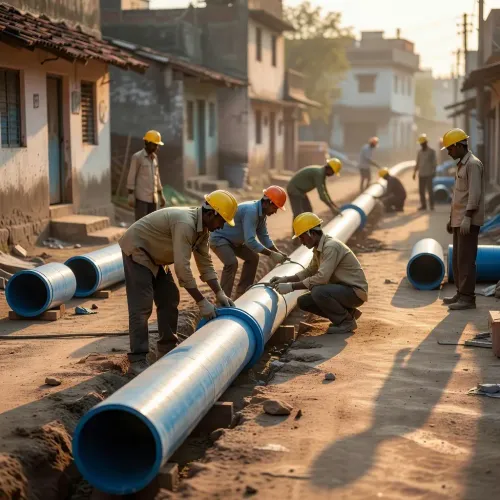
The project is not a single pipe — it is a layered system. Overhead storage tanks will create pressure-fed supply across Basohli's neighbourhoods. A dedicated filtration plant will treat raw water before it reaches homes. And a floating pump system on Ranjit Sagar Dam — the reservoir on the Ravi river in Kathua — will draw and lift water regardless of seasonal fluctuations in the dam's water level. Together, the three components are designed to make supply reliable year-round, not just during monsoon abundance.
AMRUT 2.0 and Jammu and Kashmir's smaller towns
AMRUT 2.0 — the Atal Mission for Rejuvenation and Urban Transformation in its second phase — was approved by the Union Cabinet in 2021 with a national outlay of ₹2.77 lakh crore. Its core mandate: universal piped water supply and sewerage in urban areas, with a deliberate focus on smaller towns that the original 2015 AMRUT mission left underserved. Basohli fits that profile precisely — a sub-district town where piped supply has historically been patchy and dependent on informal sources.
The choice of Ranjit Sagar Dam as the source is significant. The reservoir is one of the largest in the Jammu region and sits close enough to Basohli to make pumping infrastructure viable. A floating pump system — which adjusts to the dam's varying water surface — is the engineering answer to the dam's seasonal depth changes, ensuring intake continuity even in lean months.
What Basohli households stand to gain
For residents of Basohli, the project's promise is straightforward: treated, pressurised water at the tap, without dependence on tankers or hand pumps. Urban local bodies in Kathua will oversee implementation, with the central AMRUT 2.0 framework providing funding and monitoring. The broader pattern across Jammu and Kashmir has seen several such town-level water projects sanctioned under the scheme — Basohli is the latest in that pipeline.
The remaining question is timeline. Sanction is the start, not the finish line. How fast the infrastructure moves from blueprint to brick will determine when Basohli's households actually turn on that tap.
Point of View
Who holds the Udhampur Lok Sabha constituency in J&K, flagging such projects publicly serves a dual purpose: demonstrating central government delivery in a sensitive border region, and building a visible development record. The floating pump design on Ranjit Sagar Dam is a technically considered choice, signalling that planners have accounted for seasonal variability — but the real test will be execution speed, which has been uneven across AMRUT 2.0 projects nationally.
NationPress
1 Aug 2026
Frequently Asked Questions
What is the AMRUT 2.0 project announced for Basohli?
A ₹13 crore project under AMRUT 2.0 will provide Basohli in Kathua district with overhead water tanks, a filtration plant, and a floating pump system on Ranjit Sagar Dam to supply reliable drinking water to every household.
What is AMRUT 2.0 and who funds it?
AMRUT 2.0 — the Atal Mission for Rejuvenation and Urban Transformation, second phase — is a Union Government scheme approved in 2021 with a ₹2.77 lakh crore national outlay, aimed at achieving universal piped water supply and sewerage in urban areas across India.
What is the Ranjit Sagar Dam and why is it used for this project?
Ranjit Sagar Dam is a large reservoir on the Ravi river in Kathua district, Jammu and Kashmir. Its proximity to Basohli makes it a viable source for the water project, and a floating pump system will be installed there to maintain intake even as the dam's water level changes seasonally.
Which minister announced the Basohli water project?
Union Minister of State (Independent Charge) for Science and Technology and Earth Sciences, Dr. Jitendra Singh, announced the project on August 1, 2026, via a post on X.
When will the Basohli AMRUT 2.0 water project be completed?
A specific completion timeline has not been officially confirmed. The project has been announced and is in the pipeline under AMRUT 2.0; implementation will be overseen by urban local bodies in Kathua district.