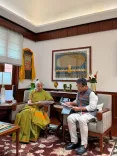
Jitendra Singh closes Lok Sabha debate on exam anti-cheating bill

Synopsis
Union Minister Dr. Jitendra Singh delivered closing remarks in Lok Sabha on July 29, 2026 during debate on the Public Examinations (Prevention of Unfair Means) Amendment Bill, 2026 — the government's follow-up to its 2024 law targeting paper leaks and exam malpractice that roiled national entrance tests.
Key Takeaways
Jitendra Singh delivered closing remarks in Lok Sabha on July 29, 2026 during debate on the exam anti-cheating amendment bill.
The bill amends the Public Examinations (Prevention of Unfair Means) Act, 2024 , India's first dedicated central law against paper leaks and impersonation in public exams.
The original 2024 law was enacted following high-profile paper-leak controversies affecting NEET-UG and UGC-NET in 2024.
Bodies such as the National Testing Agency , which conducts exams for millions of aspirants, are central to the law's enforcement scope.
The next critical step is notification of rules under the amended Act and changes to examination procedures for the 2026-27 cycle.
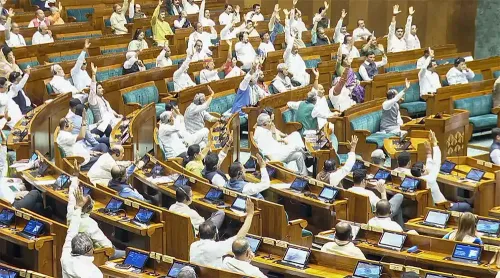
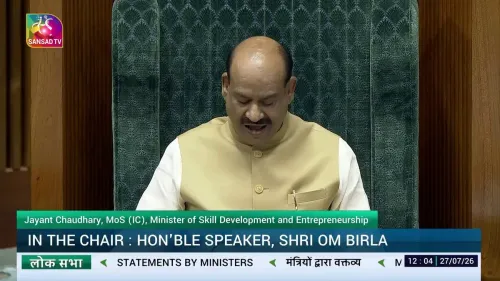
Parliament's lower house took a significant step on Wednesday, July 29, 2026, when Union Minister of State Dr. Jitendra Singh delivered his closing remarks in Lok Sabha during the discussion on 'The Public Examinations (Prevention of Unfair Means) Amendment Bill, 2026' — the government's latest move to fortify India's battered examination integrity framework.
A law born from the paper-leak crisis of 2024
The amendment does not emerge from a vacuum. In 2024, a cascade of paper-leak scandals rocked national examinations — NEET-UG, UGC-NET, and several state-level recruitment tests — triggering student protests, court interventions, and a political firestorm. The government's response was the original Public Examinations (Prevention of Unfair Means) Act, 2024, which criminalised paper leaks, impersonation, and organised malpractice in public examinations for the first time under a dedicated central law.
The 2026 Amendment Bill represents the next legislative iteration — a signal that the government views the original statute as a living framework requiring active reinforcement, not a one-time fix. Bodies such as the National Testing Agency, which conducts entrance exams for millions of aspirants annually, remain at the centre of the credibility question this legislation is designed to answer.
What Singh's closing remarks signal
As the minister presenting closing remarks, Dr. Jitendra Singh — who holds independent charge of Science and Technology and Earth Sciences, and also serves as Minister of State in the Prime Minister's Office — effectively put the government's full weight behind the bill's passage. Closing remarks in a Lok Sabha discussion are the government's final opportunity to rebut opposition arguments, clarify intent, and signal legislative confidence before a vote.
For the millions of students who appear each year in competitive and entrance examinations, the stakes are direct: stronger penalties and tighter investigative powers mean that the years of preparation they invest carry a more credible guarantee of a level playing field.
The road the law must now travel
Passage of the amendment in Lok Sabha would send it toward enactment, but the real test lies in implementation — specifically, the notification of rules under the amended Act and any procedural changes that the Ministry of Education rolls out for the 2026-27 examination cycle. Legislation without enforcement architecture has historically been the weak link in India's exam-integrity chain.
Whether this amendment closes that gap is the question every aspirant in the country is waiting to have answered.
Point of View
A PMO minister, front the closing remarks rather than the Education Minister, the government underscores the bill's cross-ministerial weight. The real credibility test, however, will be whether enforcement rules are notified swiftly and whether the National Testing Agency's operational overhaul keeps pace with the legislative upgrade.
NationPress
29 Jul 2026
Frequently Asked Questions
What is the Public Examinations (Prevention of Unfair Means) Amendment Bill 2026?
It is a 2026 amendment to the Public Examinations (Prevention of Unfair Means) Act, 2024, which criminalised paper leaks, impersonation, and organised malpractice in national recruitment and entrance examinations. The amendment seeks to further strengthen penalties and investigative powers under that framework.
Why was the original Public Examinations Act passed in 2024?
The 2024 Act was enacted following widespread paper-leak scandals affecting major national exams including NEET-UG and UGC-NET, which triggered student protests and judicial scrutiny across India.
What did Dr. Jitendra Singh do in Lok Sabha on July 29, 2026?
Dr. Jitendra Singh delivered the government's closing remarks during the Lok Sabha discussion on the Public Examinations (Prevention of Unfair Means) Amendment Bill, 2026, effectively presenting the government's final case for the legislation before a vote.
Which exam bodies does this law affect?
The law applies to public examinations conducted by central bodies, most notably the National Testing Agency, which administers NEET-UG, UGC-NET, and other major entrance and recruitment tests for millions of candidates annually.
What happens after the bill is passed in Lok Sabha?
After Lok Sabha passage, the bill would proceed through the remaining legislative steps toward enactment. The key follow-up will be the government notifying operational rules under the amended Act and announcing any changes to examination procedures for the 2026-27 cycle.