Jitendra Singh Highlights Kathua's Healthcare Leap Since 2014
Synopsis
Union Minister Dr. Jitendra Singh marked 12 years of the Modi government by highlighting Kathua's healthcare leap — from no orthopaedic surgeon pre-2014 to multi-speciality and Tata Memorial cancer care today, positioning the district as a model for border-region health access.
Key Takeaways
Jitendra Singh posted on 16 June 2026 highlighting healthcare gains in Kathua , Jammu and Kashmir, under the #12YearsOfSeva campaign.
Before 2014 , Kathua patients with basic fractures were referred to Jammu city due to the absence of an orthopaedic surgeon locally.
Cancer care is now accessible in Kathua through the Tata Memorial Centre, Mumbai , a premier oncology institution under the Department of Atomic Energy.
The Ayushman Bharat PM-JAY scheme (launched 2018 ) and new government medical colleges sanctioned from 2018-19 have underpinned the expansion of specialist services in J&K.
Improved medical teaching infrastructure has been cited alongside clinical services, pointing to long-term capacity building in the district.
The post is part of a broader government campaign marking 12 years of the Narendra Modi administration since May 2014 .
Union Science and Technology Minister Dr. Jitendra Singh on Tuesday, 16 June 2026, highlighted the sweeping transformation in healthcare access in Kathua, Jammu and Kashmir, contrasting the district's near-total dependence on Jammu city for even basic orthopaedic care before 2014 with the multi-speciality services now available locally.
Context
Posting under the hashtag #12YearsOfSeva, Dr. Singh recalled that before 2014, patients in Kathua with a simple bone fracture had to travel to Jammu for a plaster cast because no orthopaedic surgeon was posted locally. 'Before 2014 there was a time when, even for a simple bone fracture, to get a plaster the patient was referred to Jammu for want of an Orthopaedic Surgeon,' he wrote. The minister represents the Udhampur constituency, which encompasses Kathua district, giving him a direct political stake in the region's development narrative.
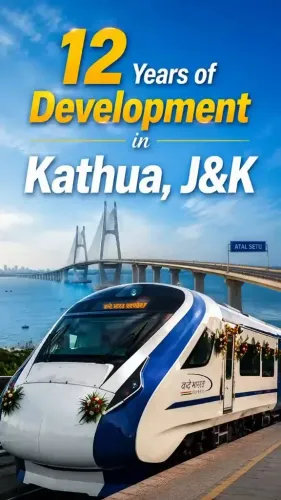
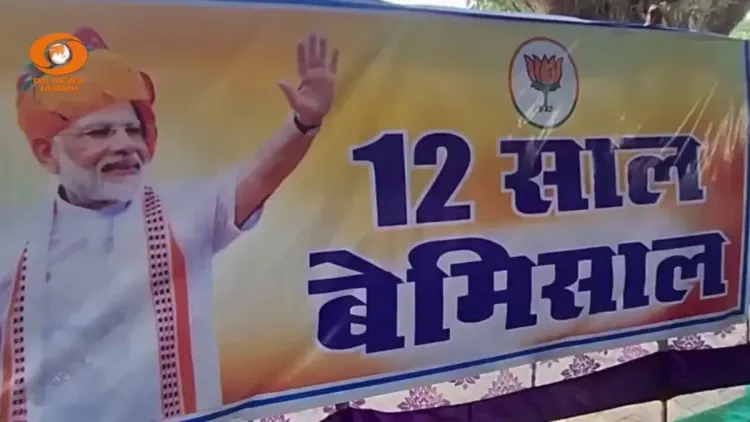
The post is part of a broader government-wide campaign marking 12 years of the Narendra Modi-led administration, which took office in May 2014. Several Union ministers have used the occasion to document sectoral gains in their respective portfolios and home constituencies.
Policy Backdrop
Healthcare expansion in Jammu and Kashmir has been a stated priority of the central government since 2014, and particularly after the reorganisation of J&K into two Union Territories in 2019. The Ayushman Bharat Pradhan Mantri Jan Arogya Yojana, launched in 2018, extended secondary and tertiary care coverage to low-income families across the region, reducing the financial barrier to specialist treatment.
The central government also sanctioned new government medical colleges in several J&K districts from 2018-19 onward as part of post-bifurcation health capacity building. These moves were aimed at reducing the chronic shortage of trained specialists at the district level — the precise gap Dr. Singh referenced in his post.
A particularly notable development cited by the minister is the extension of cancer care to Kathua through the Tata Memorial Centre, Mumbai, the country's premier oncology institution under the Department of Atomic Energy. Tata Memorial has been expanding outreach and satellite facilities to underserved regions across India, making advanced oncology services accessible without patients having to travel to metropolitan centres.
Stakeholders and Impact
The primary beneficiaries of these changes are the residents of Kathua district and surrounding areas in the Jammu division, who historically faced long travel times and high out-of-pocket costs for specialist care. Access to orthopaedic services, multi-speciality facilities, and cancer care at or near the district level represents a significant reduction in both the financial and logistical burden on patients.
Medical teaching has also been cited as an improvement, suggesting capacity-building at the institutional level that could sustain healthcare gains beyond individual scheme cycles. A stronger local medical education ecosystem reduces dependence on outstation postings and helps retain trained personnel in the region.
What's Next
Attention will now turn to the rollout of any additional Tata Memorial satellite facilities or AIIMS-style institutions in the Jammu division, as well as the utilisation of the health budget earmarked for Kathua in upcoming Union Territory appropriations. Dr. Singh's post signals continued political focus on the region's health infrastructure, and further announcements tied to the #12YearsOfSeva campaign are expected in the days ahead. A healthier Kathua, as the minister framed it, is being positioned as a template for district-level health transformation across India's previously underserved border regions.
Point of View
Anchoring abstract governance claims to a tangible, relatable grievance — the absence of a bone-setting doctor in a border district. The invocation of Tata Memorial Centre is strategically significant: it links a prestigious central institution to a small J&K district, reinforcing the government's narrative of equitable development beyond the Hindi heartland. The framing of Kathua as a microcosm of national progress also serves a dual purpose — it speaks to local voters while feeding into the larger argument that J&K's reorganisation in 2019 unlocked accelerated development. Analysts will note that the minister carefully avoids specific statistics, keeping the claims broad enough to be politically durable but difficult to independently audit.
NationPress
15 Sept 2026
Frequently Asked Questions
What healthcare improvements has Kathua seen since 2014?
According to Union Minister Dr. Jitendra Singh, Kathua has seen the addition of orthopaedic and multi-speciality services, improved medical infrastructure, enhanced medical teaching, and access to cancer care through the Tata Memorial Centre, Mumbai — changes he attributes to the Modi government's 12-year tenure.
What is the Tata Memorial Centre and why is it significant for Kathua?
The Tata Memorial Centre is India's premier cancer research and treatment institution based in Mumbai, operating under the Department of Atomic Energy. Its outreach to Kathua means residents can access oncology services locally rather than travelling to major cities, significantly reducing cost and travel burden.
What was healthcare like in Kathua before 2014?
Dr. Jitendra Singh stated that before 2014, even patients with a simple bone fracture had to be referred to Jammu city because Kathua lacked a posted orthopaedic surgeon, reflecting a broader shortage of specialist doctors at the district level in the region.
What is the #12YearsOfSeva campaign?
#12YearsOfSeva is a hashtag campaign used by BJP leaders and Union ministers to mark 12 years of the Narendra Modi government, which took office in May 2014. Ministers are using it to highlight development outcomes in their portfolios and constituencies.
How has Ayushman Bharat helped Jammu and Kashmir?
The Ayushman Bharat Pradhan Mantri Jan Arogya Yojana, launched in 2018, provides financial coverage for secondary and tertiary healthcare to low-income families across India including Jammu and Kashmir, helping residents access specialist care without catastrophic out-of-pocket expenses.