Omar Abdullah Thanks Ministers as J&K Airport Closure Order Suspended
Synopsis
J&K Chief Minister Omar Abdullah on 4 July 2026 thanked Defence Minister Rajnath Singh and Civil Aviation Minister Ram Mohan Naidu for suspending an airport closure order. The order had disrupted regular travellers and forced tour groups to cancel visits, dealing a blow to the Union Territory's tourism-dependent economy.
Key Takeaways
CM Omar Abdullah publicly thanked Rajnath Singh and Ram Mohan Naidu for suspending the airport closure order on 4 July 2026 .
The closure had caused difficulties for regular travellers and led to cancellations by tour groups and tourists visiting Jammu and Kashmir .
The J&K government had formally requested both the Defence and Civil Aviation ministries to reverse the order.
Airports in Jammu and Kashmir operate under shared military-civilian arrangements, making inter-ministerial coordination essential for such decisions.
The suspension is expected to restore air connectivity and allow the 2026 tourism season to recover from short-term disruption.
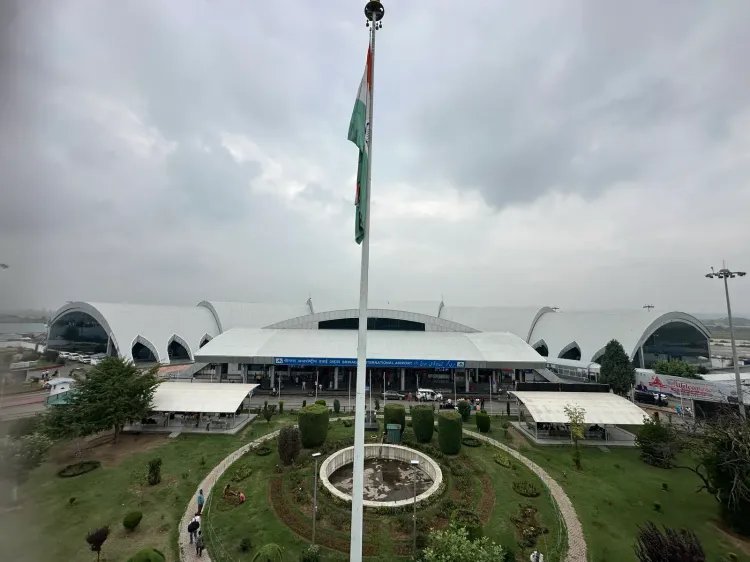
Jammu and Kashmir Chief Minister Omar Abdullah on Saturday, 4 July 2026, publicly thanked Defence Minister Rajnath Singh and Civil Aviation Minister Ram Mohan Naidu for suspending an airport closure order that had disrupted travel and tourism in the Union Territory. Abdullah said the closure had caused significant hardship for regular travellers and forced tour groups and tourists to cancel planned visits to Jammu and Kashmir.
Context
In a post on X, CM Abdullah wrote: 'Grateful to the Defence Minister and Civil Aviation Minister for acceding to our request and suspending the airport closure order. This closure had created a lot of difficulties for regular travellers and forced tour groups/tourists to cancel planned visits.' The statement confirms that the Jammu and Kashmir government had formally approached both ministries with a request for relief, and that the request was granted.
Airports in Jammu and Kashmir operate in a strategically sensitive environment, where defence requirements and civilian air access frequently intersect. Periodic operational restrictions — arising from security protocols or military use — are not uncommon in the region.
Policy Backdrop
Following the 2019 abrogation of Article 370 and the reorganisation of Jammu and Kashmir into a Union Territory, enhanced security protocols have periodically affected civilian infrastructure, including airports. Coordination between the Ministry of Defence and the Ministry of Civil Aviation is routine for airports with shared military-civilian use across India.
Reversing or suspending such closure orders typically follows formal representations from the elected government, which highlights the economic disruption caused to local businesses and the broader tourism ecosystem. The intervention by Rajnath Singh and Ram Mohan Naidu in this instance reflects that established channel of inter-ministerial coordination.
Stakeholders and Impact
Tourism is a cornerstone of Jammu and Kashmir's economy, and air connectivity is critical to sustaining visitor numbers, particularly during peak travel seasons. The closure order had already prompted cancellations by tour operators and individual travellers, signalling tangible economic damage in the short window it remained in effect.
Regular commuters — government employees, business travellers, and residents with medical or family needs — were also affected. The suspension of the order is expected to restore normalcy for these groups and allow tour operators to reinstate cancelled itineraries for the 2026 season.
What's Next
The tourism sector will be watching 2026 season arrival data closely to assess how much damage the closure caused before it was reversed. Stakeholders in the travel and hospitality industry may also push for clearer, advance-notice protocols to prevent similar disruptions in the future.
Any permanent policy adjustment to operating hours or civilian access arrangements at Jammu and Kashmir's airports — balancing defence imperatives with economic needs — will be a key indicator of how the Centre and the elected UT government manage shared infrastructure going forward.
Point of View
Secured through direct representations by CM Omar Abdullah to two senior Union ministers, underscores the elected UT government's growing assertiveness in protecting Jammu and Kashmir's economic interests within the constraints of its Union Territory status. It also highlights the delicate balance between defence imperatives and civilian economic needs at shared-use airports in a security-sensitive region. Abdullah's public acknowledgement of both ministers signals a cooperative Centre-UT dynamic, at least on this issue — a relationship that will be tested again as tourism becomes an ever-larger pillar of the UT's post-Article 370 development narrative. The episode may prompt calls for a more transparent, advance-notice mechanism for future airport restrictions.
NationPress
3 Oct 2026
Frequently Asked Questions
Why was the Jammu and Kashmir airport closed?
The specific reasons for the closure order have not been officially detailed, but airports in Jammu and Kashmir periodically face operational restrictions due to defence requirements, as they operate under shared military-civilian arrangements.
Who suspended the J&K airport closure order?
Defence Minister Rajnath Singh and Civil Aviation Minister Ram Mohan Naidu acceded to a request from J&K Chief Minister Omar Abdullah and suspended the closure order.
How did the airport closure affect tourism in J&K?
The closure forced tour groups and tourists to cancel planned visits to Jammu and Kashmir and created difficulties for regular air travellers, causing short-term economic disruption to the tourism-dependent region.
What is Omar Abdullah's role in Jammu and Kashmir?
Omar Abdullah is the Chief Minister of Jammu and Kashmir (Union Territory) and vice-president of the Jammu and Kashmir National Conference .
Can the J&K government override airport closure orders?
As a Union Territory, Jammu and Kashmir 's elected government cannot unilaterally override orders involving defence infrastructure. CM Abdullah instead formally requested the Defence and Civil Aviation ministries to reconsider, which they did.