J&K Waqf Board chief denies ordering uniform Friday sermons in mosques
Synopsis
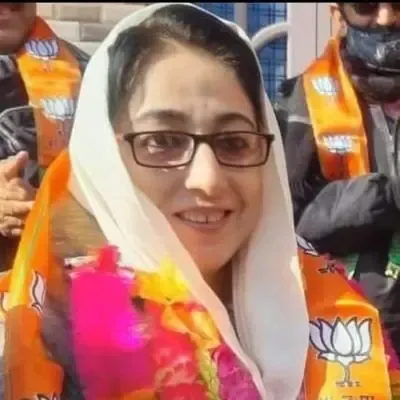
J&K Waqf Board chief Darakhshan Andrabi flatly denied ordering uniform Friday sermons — but the row exposes a deeper fault line: a BJP-appointed Waqf leadership operating in a Union Territory now governed by an elected chief minister from a rival political camp, with religious autonomy squarely in the middle.
Key Takeaways
Darakhshan Andrabi , Chairperson of the J&K Waqf Board , denied on 13 October 2026 that any directive mandating uniform Friday sermons had been issued.
Chief Minister Omar Abdullah had called the reported proposal an 'unacceptable attempt by the BJP to interfere in the religious affairs of Muslims' in a post on X .
Andrabi said religious scholars and preachers remain free to choose sermon topics, and repeated: 'There is no order.
There is no order anywhere.' The proposed core committee, she clarified, would consist solely of religious scholars — she herself would not be a member.
The stated aim of any coordination was to address social issues such as drug abuse , suicide , and mental trauma affecting young people in the Valley.
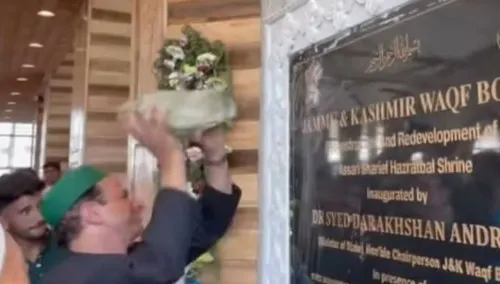
Jammu and Kashmir Waqf Board Chairperson Darakhshan Andrabi on Tuesday, 13 October 2026, categorically denied that the Board had issued any directive mandating uniform Friday sermons across its affiliated mosques and religious institutions in the Union Territory. The denial came in direct response to a political controversy sparked by Chief Minister Omar Abdullah, who had called the reported proposal an unacceptable intrusion into Muslim religious affairs.
What the Controversy Was About
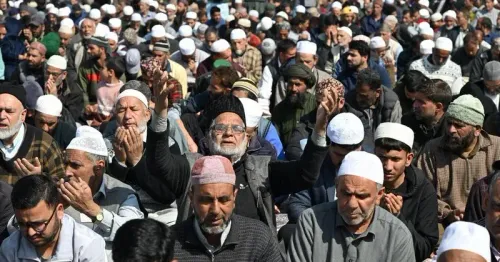
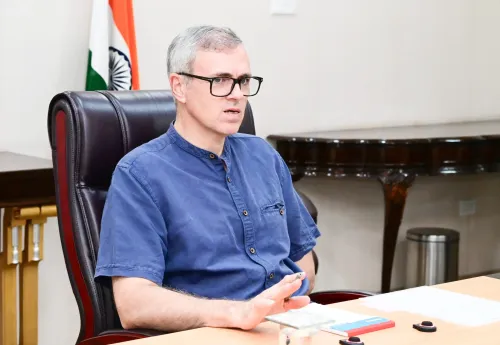
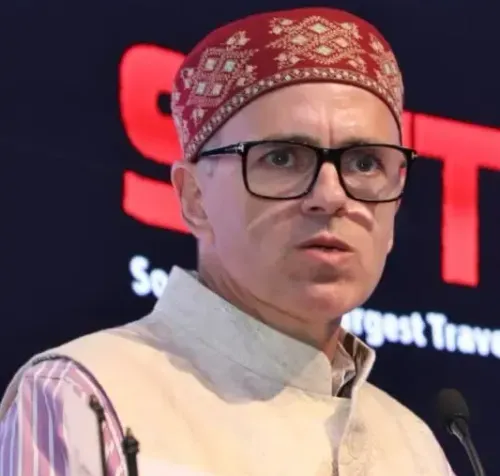
The row erupted after reports emerged of a proposal to introduce common themes for Friday sermons across all Waqf Board-affiliated mosques in Jammu and Kashmir. Chief Minister Omar Abdullah weighed in sharply, tagging a newspaper report in a post on social media platform X. 'This is an unacceptable attempt by the Bharatiya Janata Party (BJP) to interfere in the religious affairs of Muslims and will not be accepted under any circumstances,' Abdullah wrote. He added: 'The BJP-appointed Chairperson must immediately halt this misplaced attempt to please her masters.'
Andrabi's Point-by-Point Rebuttal
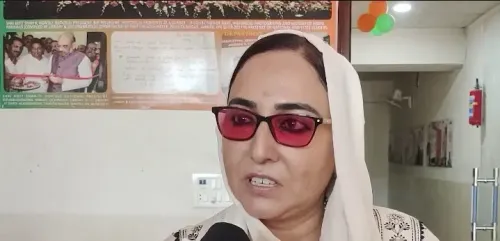
Addressing a press conference in Srinagar, Andrabi said no order mandating uniform sermons had been issued and that religious scholars and preachers retained full freedom to choose the subjects they address. 'Darakhshan Andrabi cannot take any decision, nor can my officer take any decision. It is the decision of the independent scholars, our preachers, our sermonists, that we should try to remove vices in society,' she said.
She was emphatic that no written directive existed anywhere. 'There is no order. There is no order anywhere,' Andrabi told reporters. She also clarified that the proposed core committee — which triggered much of the controversy — would be composed entirely of religious scholars, and that she herself would not be a member of it. 'Who will form the core committee? Religious leaders,' she said, adding that scholars would independently decide both the subjects and the manner of their sermons.
The Stated Social Objective
Andrabi said the initiative behind any proposed coordination was aimed at using sermons as a platform to address pressing social problems, particularly those affecting young people — including drug abuse, family breakdown, suicide, and mental trauma. She drew a comparison with other professionals: just as doctors, engineers, and teachers work in their respective spheres, religious scholars associated with the Board could play a constructive role in tackling social evils.
She urged political leaders to focus on issues affecting ordinary people on the ground rather than opposing efforts directed at social reform. 'Whatever our religious scholars want, they will do it in their own way. There is no interference in that,' she said.
Political and Religious Opposition
The proposal — as initially reported — drew resistance from both political and religious quarters in the Valley. Chief Minister Abdullah's remarks reflect the sensitivity around any perceived attempt to centralise or standardise religious practice in a Muslim-majority region. The controversy also highlights the fractious relationship between the BJP-appointed Waqf leadership and the elected state government, which operates under a different political alignment.
What Happens Next
With Andrabi's denial on record and the proposed scholars' core committee still reportedly under consideration, the focus will shift to whether the Board formalises any framework — even a voluntary one — and how religious bodies respond. The episode underscores the continuing tension between the administrative and political structures governing religious affairs in Jammu and Kashmir as the Union Territory finds its post-reorganisation footing.
Point of View
But it does not resolve the structural tension it exposed. A BJP-appointed Waqf Board chairperson operating in a Union Territory now led by an elected government of a different political persuasion is an inherently combustible arrangement — and any move touching mosque administration will be read through that prism. Andrabi's insistence that the initiative was purely social in intent may be genuine, but the absence of a written, publicly accessible framework left enough ambiguity for the controversy to ignite in the first place. The episode is a reminder that in Jammu and Kashmir, the line between administrative outreach and religious interference remains extraordinarily sensitive, and institutions operating in that space carry an extra burden of transparency.
NationPress
13 Oct 2026
Frequently Asked Questions
Did the J&K Waqf Board issue an order for uniform Friday sermons?
No. Waqf Board Chairperson Darakhshan Andrabi denied at a press conference on 13 October 2026 that any such order had been issued. She stated: 'There is no order. There is no order anywhere,' and said religious scholars and preachers are free to choose their own sermon topics.
Why did Chief Minister Omar Abdullah criticise the Waqf Board?
Omar Abdullah called the reported proposal an 'unacceptable attempt by the BJP to interfere in the religious affairs of Muslims' in a post on social media platform X. He also demanded that the 'BJP-appointed Chairperson' immediately stop what he described as an effort to please her political masters.
What was the stated purpose of the proposed sermon coordination?
According to Andrabi, the idea was to use Friday sermons as a platform to address social problems — particularly drug abuse, family breakdown, suicide, and mental trauma among young people. She framed it as a social welfare initiative, not a religious directive.
Who would form the proposed core committee for sermon themes?
Andrabi clarified that the proposed core committee would consist entirely of independent religious scholars. She said she herself would not be a member and that scholars would independently decide the subjects and manner of their sermons.
Why is this controversy significant for Jammu and Kashmir?
The row highlights the tension between the BJP-appointed Waqf Board leadership and the elected J&K government under Chief Minister Omar Abdullah. Any perceived attempt to standardise religious practice in the Muslim-majority Union Territory is politically charged, especially as J&K continues to navigate its post-reorganisation governance structure.