Joshi Frames Modi's Development Vision Around Resource Respect
Synopsis
Union Minister Pralhad Joshi on 11 June 2026 invoked PM Modi's development philosophy through a Hindi couplet — 'respect for every resource, nation-building through every resource' — linking India's renewable energy and consumer-affairs agenda to a broader ecological ethos rooted in Mission LiFE and the Panchamrit climate commitments.
Key Takeaways
Union Minister Pralhad Joshi posted on X on 11 June 2026 articulating PM Modi's sustainable development philosophy.
The Hindi couplet translates as: 'Respect for every resource.
Nation-building through every resource.' The message echoes Mission LiFE , launched by PM Modi at COP26 in 2021 to promote mindful resource use.
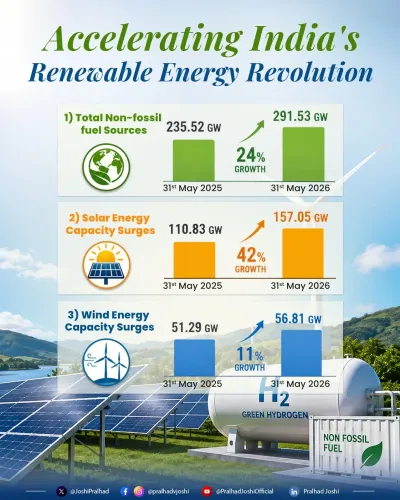
India's Panchamrit pledges include a target of 500 GW non-fossil fuel capacity by 2030 , a target Joshi's ministry is tasked with advancing.
The framing connects individual resource behaviour to national progress — a thread running through Swachh Bharat , renewable energy scaling, and consumer-efficiency drives since 2014 .
Policy watchers will monitor new renewable energy scheme announcements and consumer guidelines in the 2026-27 budget cycle .
Union Consumer Affairs Minister Pralhad Joshi on Thursday, 11 June 2026, invoked Prime Minister Narendra Modi's philosophy of sustainable development in a post on X, articulating it through a Hindi couplet that translates as: 'Respect for every resource. Nation-building through every resource.'
Context
Joshi's post distils a governing principle that has underpinned Indian policy since 2014: that ecological stewardship and economic development are not competing goals but complementary ones. The Hindi lines — 'Har sansaadhan ka sammaan. Har sansaadhan se rashtra nirman.' — frame every natural and material resource as both a national asset to be respected and a building block for the country's future.
The sentiment aligns closely with PM Modi's public messaging, which has consistently linked frugality, efficiency, and environmental consciousness to the larger project of national progress. Joshi, who holds charge of both consumer affairs and renewable energy, is positioned at the intersection of those two policy streams.
Policy Backdrop
The philosophy Joshi articulates has concrete policy anchors. At COP26 in 2021, PM Modi announced Mission LiFE — Lifestyle for Environment — calling on citizens worldwide to adopt mindful, pro-planet behaviours and to treat resource consumption as a moral act, not merely an economic one.
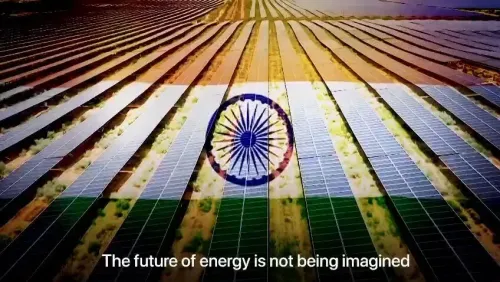
At the same summit, India committed to its Panchamrit climate pledges, including a target of 500 GW of non-fossil fuel electricity capacity by 2030. These commitments reframed India's development narrative: growth would be pursued, but through the disciplined use of resources rather than their exploitation. Joshi's ministry is directly responsible for driving the renewable energy component of that target.
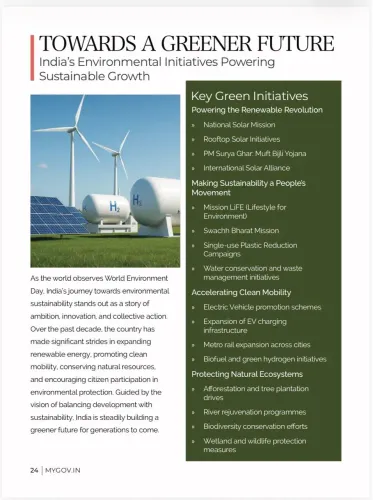
Domestically, the thread runs through programmes such as Swachh Bharat, consumer-efficiency awareness drives, and the scaling of solar and wind capacity — all of which treat resources, whether land, water, or energy, as assets to be managed with care rather than consumed without accountability.
Stakeholders and Impact
The message resonates across two distinct constituencies. For the renewable energy sector, it signals continued political will at the ministerial level for the clean-energy transition, reinforcing investor confidence ahead of any new scheme announcements in the 2026-27 budget cycle. India's installed renewable capacity has grown substantially since the Panchamrit commitments, and ministerial statements of this kind are read as directional cues by project developers and financiers.
For ordinary citizens, the framing connects everyday resource choices — electricity use, water conservation, waste reduction — to a larger national purpose. Mission LiFE was explicitly designed to make individual behaviour part of the climate solution, and Joshi's post reinforces that civic dimension of the government's environmental agenda.
What's Next
Observers will watch for updated consumer awareness guidelines on resource efficiency from Joshi's ministry, as well as any new renewable energy scheme announcements tied to the next budget cycle. The minister's framing of resource respect as the 'heart' of PM Modi's development approach suggests that sustainability messaging will remain central to the government's communication strategy as India advances toward its 2030 climate targets.
With India's renewable energy ambitions drawing global attention and domestic policy increasingly linking consumption behaviour to nation-building, Joshi's post signals that the ideological scaffolding around those targets is being actively reinforced at the highest political levels.
Point of View
Tying the government's technocratic climate targets — gigawatts, percentages, deadlines — to a moral and civilisational frame that resonates with a broader Indian electorate. By invoking Hindi and attributing the philosophy to PM Modi personally, he elevates renewable energy and resource efficiency from policy portfolios to expressions of national character. This kind of ministerial messaging serves a dual purpose: it keeps the BJP's ecological credentials visible between major announcements, and it positions India's climate commitments as culturally rooted rather than externally imposed. The timing, ahead of a new budget cycle, also primes the political ground for fresh scheme launches.
NationPress
26 Oct 2026
Frequently Asked Questions
What did Pralhad Joshi post about PM Modi's development philosophy?
Joshi posted a Hindi couplet on X on 11 June 2026 summarising PM Modi's approach as 'respect for every resource, nation-building through every resource,' framing sustainable development as the core of the Prime Minister's governance vision.
What is Mission LiFE and how does it relate to this post?
Mission LiFE — Lifestyle for Environment — was announced by PM Modi at COP26 in 2021 to encourage mindful, pro-planet behaviour among citizens. Joshi's post echoes its central idea that individual resource choices are linked to national and ecological wellbeing.
What are India's Panchamrit climate commitments?
India's Panchamrit pledges, made at COP26 in 2021, include reaching 500 GW of non-fossil fuel electricity capacity by 2030, among other targets. Joshi's ministry of New and Renewable Energy is directly responsible for advancing this goal.
Why is Pralhad Joshi significant in India's renewable energy policy?
Joshi holds the dual charge of Union Minister for Consumer Affairs, Food and Public Distribution and New and Renewable Energy, placing him at the centre of both India's clean-energy transition and its consumer-efficiency agenda.
What should we watch for after this statement by Joshi?
Analysts will track any new renewable energy scheme announcements and updated consumer resource-efficiency guidelines from Joshi's ministry, particularly as the 2026-27 budget cycle approaches and India advances toward its 2030 climate targets.