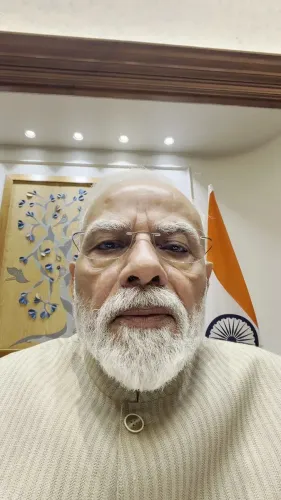
Joshi flags Bill to amend Public Examinations Act in Lok Sabha
Synopsis
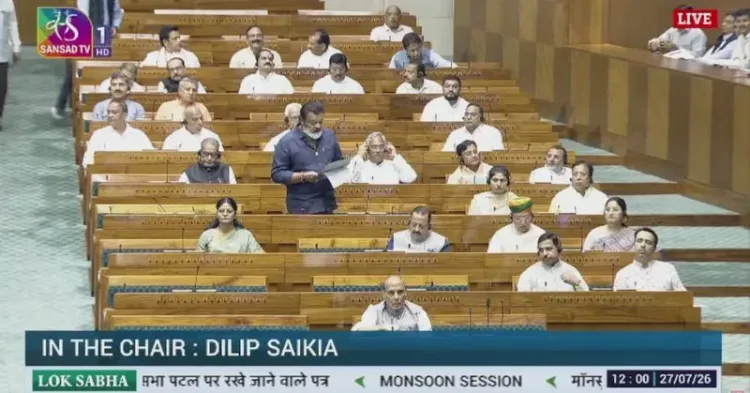
Union Minister Dr. Jitendra Singh introduced a bill in Lok Sabha on 28 July 2026 to amend the Public Examinations (Prevention of Unfair Means) Act, 2024 — the central law enacted to curb paper leaks and cheating in national exams. Minister Pralhad Joshi flagged the development, underscoring the government's continued legislative focus on examination integrity.
Key Takeaways
Jitendra Singh introduced a bill in Lok Sabha on 28 July 2026 to amend the Public Examinations (Prevention of Unfair Means) Act, 2024 .
The original 2024 Act was enacted to penalise malpractices such as paper leaks and impersonation in public examinations.
The amendment bill signals the government's intent to further strengthen the legal framework for examination integrity.
Key stakeholders include millions of students, national exam-conducting bodies, and recruitment agencies.
The bill will undergo parliamentary debate and possible committee scrutiny before it can be passed into law.
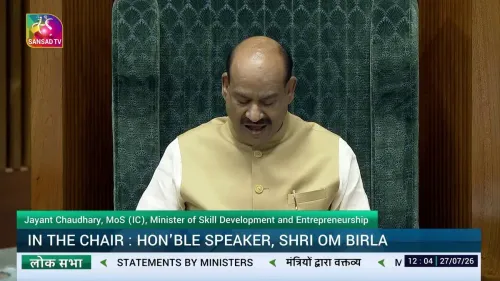
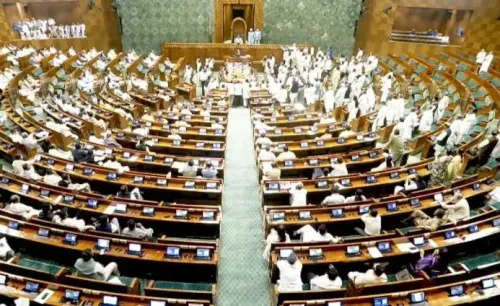
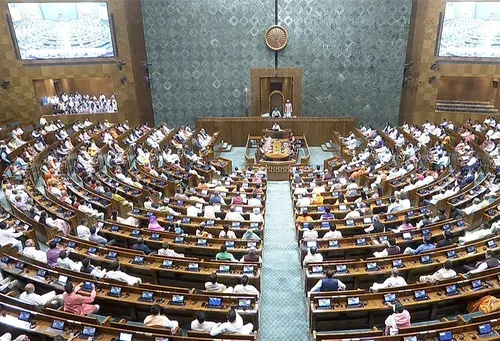
Union Consumer Affairs Minister Pralhad Joshi on Monday, 28 July 2026 drew attention to a significant legislative development in the Lok Sabha, noting that Union Minister Dr. Jitendra Singh had introduced a bill to amend the Public Examinations (Prevention of Unfair Means) Act, 2024.
Context
The introduction of the amendment bill marks a fresh legislative push to strengthen India's legal framework against malpractice in public examinations. Dr. Jitendra Singh, who introduced the bill on the floor of the lower house, oversees key administrative portfolios and has been associated with governance reform initiatives. The move signals the government's intent to revisit and tighten provisions of the original 2024 law.
Policy Backdrop
The Public Examinations (Prevention of Unfair Means) Act, 2024 was enacted by Parliament to establish a dedicated legal architecture targeting unfair practices — including paper leaks, impersonation, and organised cheating rings — in recruitment and entrance examinations conducted by central bodies. The law introduced stringent criminal penalties for offenders and placed institutional obligations on exam-conducting agencies. India has witnessed repeated paper-leak scandals over the years affecting high-stakes examinations for government jobs and higher education seats, eroding public trust in the system. The 2024 legislation was itself a direct legislative response to that pattern of systemic failure.
Successive governments have incrementally strengthened examination-integrity laws, but enforcement gaps and the scale of organised cheating networks have prompted demands for periodic legislative revision. The amendment bill introduced in the Lok Sabha is the latest step in that ongoing effort to close loopholes and sharpen deterrence.
Stakeholders and Impact
The legislation directly affects millions of students who appear annually in competitive examinations conducted by bodies such as national recruitment agencies and university entrance commissions. Exam-conducting organisations are also key stakeholders, as the law places compliance and security obligations on them. Stricter provisions, if enacted, could reshape how these bodies design, print, and distribute question papers, as well as how they handle digital security.
For aspirants — many of whom spend years preparing for a single government job or college seat — the credibility of the examination process is foundational. Any strengthening of anti-cheating law is therefore closely watched by student communities and civil society groups advocating for fair recruitment.
What's Next
The amendment bill will now be subject to parliamentary scrutiny, including potential referral to a standing committee, floor debates, and clause-by-clause examination before it can be passed and sent to the Rajya Sabha. Specific provisions of the amendment — including any changes to penalty structures or enforcement mechanisms — will come into sharper focus during these deliberations. The outcome of the legislative process will determine how significantly the 2024 Act is reshaped in its bid to make public examinations more secure and credible.
Point of View
2024 so soon after the original legislation points to the government's acknowledgement that the 2024 law may need sharper teeth or broader scope to effectively deter organised cheating networks. This fits a broader pattern where legislative action on examination integrity has followed public outrage over high-profile paper leaks, reflecting both genuine policy concern and political signalling to a vast aspirant class. The speed of the amendment also suggests that enforcement experience since 2024 may have revealed specific gaps that the government now wants to address. Parliamentary scrutiny will be the real test of whether the changes are substantive or incremental.
NationPress
27 Jul 2026
Frequently Asked Questions
What is the Public Examinations (Prevention of Unfair Means) Act, 2024?
The Public Examinations (Prevention of Unfair Means) Act, 2024 is a central law enacted by the Indian Parliament to establish a legal framework against malpractices — including paper leaks, impersonation, and organised cheating — in public examinations conducted by national bodies. It introduced criminal penalties for offenders and compliance obligations for exam-conducting agencies.
Why is the government amending the Public Examinations Act so soon after it was passed?
The government has introduced an amendment bill to address gaps or strengthen provisions identified since the 2024 Act came into force. India has seen repeated paper-leak scandals, and the amendment is aimed at further tightening deterrence and enforcement mechanisms.
Who introduced the amendment bill in Lok Sabha?
Union Minister Dr. Jitendra Singh introduced the bill to amend the Public Examinations (Prevention of Unfair Means) Act, 2024 in the Lok Sabha on 28 July 2026.
How does the exam integrity law affect students in India?
The law directly protects students who appear in competitive examinations for government jobs and higher education by criminalising paper leaks and cheating. Stronger provisions aim to ensure that merit, not malpractice, determines outcomes in these high-stakes exams.
What happens after a bill is introduced in Lok Sabha?
After introduction, a bill typically undergoes debate in the Lok Sabha, may be referred to a parliamentary standing committee for detailed scrutiny, and is then voted upon. If passed, it moves to the Rajya Sabha before receiving Presidential assent to become law.