Pralhad Joshi hails Modi's 12 years of global diplomacy
Synopsis
Union Minister Pralhad Joshi marked 12 years of PM Modi's leadership by highlighting India's rise as a Global South voice, citing the New Delhi G20 Summit consensus and development ties with 160 countries as proof of India's transformed global stature.
Key Takeaways
Pralhad Joshi posted on 19 June 2026 crediting PM Modi's 12 years in office with reshaping India's global role.
India hosted the G20 presidency from December 2022 to November 2023 , culminating in a landmark New Delhi Leaders' Declaration in September 2023 .
The New Delhi G20 Summit produced rare consensus language on the Russia-Ukraine conflict , seen as a diplomatic achievement.
India hosted the first Voice of Global South Summit in January 2023 , coordinating positions of developing nations ahead of the G20.
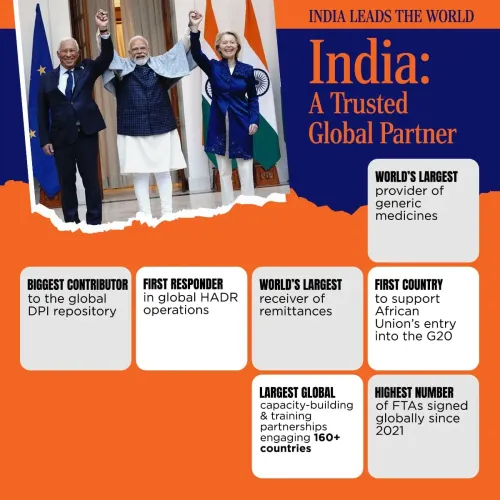
Joshi cited development partnerships across 160 countries as evidence of India's expanded global footprint since 2014.
The post is part of the BJP's #12YearsOfIndiaFirst campaign marking a decade-plus of the Modi government.
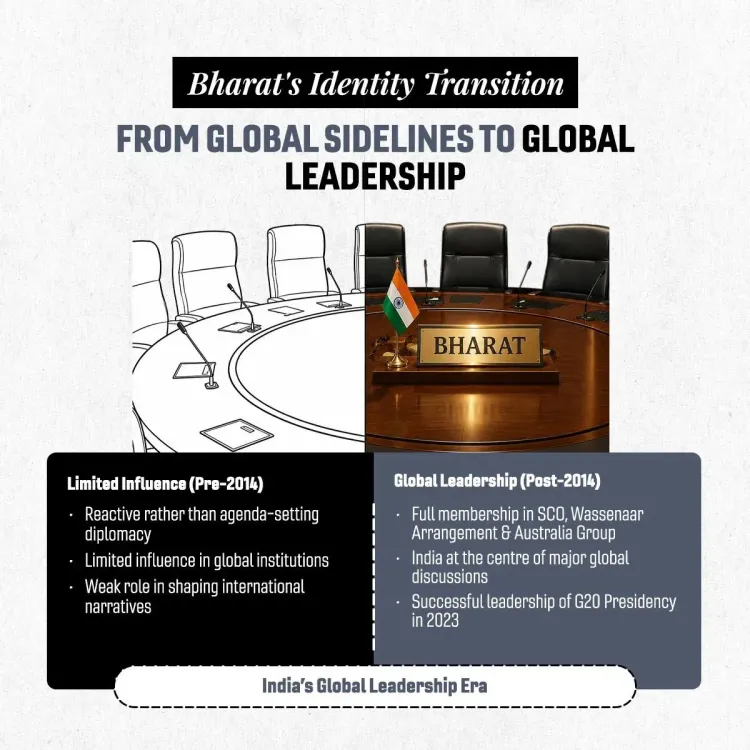
Union Consumer Affairs Minister Pralhad Joshi on Friday, 19 June 2026, credited a decade-plus of Prime Minister Narendra Modi's leadership with fundamentally reshaping India's standing in global affairs, saying the country has moved from being a participant in international conversations to actively shaping them.
Context
Marking the occasion under the hashtag #12YearsOfIndiaFirst, Joshi pointed to two pillars of this transformation: the historic consensus achieved at the New Delhi G20 Summit and the forging of development partnerships spanning 160 countries. 'Bharat today stands as a trusted voice of the Global South and a key driver of progress, innovation and international cooperation,' he wrote on X.
The post arrives as the ruling Bharatiya Janata Party marks twelve years since Narendra Modi first assumed office as Prime Minister in May 2014, with senior party leaders across the country amplifying the anniversary narrative on social media.
Policy Backdrop
India's G20 presidency ran from 1 December 2022 to November 2023, culminating in the New Delhi Leaders' Declaration of September 2023 — widely noted for producing consensus language on the Russia-Ukraine conflict, a feat that had eluded earlier G20 presidencies. The summit was seen as a diplomatic high-water mark, demonstrating India's ability to bridge Western and developing-nation blocs.
Earlier, in January 2023, India hosted the first Voice of Global South Summit, bringing together developing countries to coordinate positions ahead of the G20. That initiative reinforced New Delhi's self-positioning as a representative and amplifier of the Global South's interests within multilateral forums.
Since 2014, India has expanded its footprint across institutions including BRICS, the Shanghai Cooperation Organisation (SCO), and the Quad, while extending bilateral lines of credit and development assistance to partner nations across Asia, Africa, and Latin America.
Stakeholders and Impact
The framing of India as the 'voice of the Global South' carries direct implications for developing nations seeking representation on issues such as climate finance, debt relief, and equitable access to technology. India's diplomatic posture since 2014 has sought to position New Delhi as a bridge between the industrialised G7 bloc and the wider developing world.
For the Indian diplomatic establishment, the anniversary messaging reinforces a narrative of institutional continuity and strategic ambition — one that ministers like Joshi are projecting both domestically and to international audiences. The Ministry of External Affairs has consistently cited the G20 presidency as evidence of India's elevated multilateral standing.
What's Next
With the #12YearsOfIndiaFirst campaign underway, further statements from BJP leaders and Union Ministers are expected through the week, each highlighting specific policy achievements under the Modi government. Internationally, India's engagement with Global South priorities — including follow-up on G20 commitments on debt restructuring and climate finance — will be a key test of whether the diplomatic gains of the 2023 presidency translate into durable outcomes. India's continued role in multilateral forums and its development partnership agenda will remain central to how the government defines its foreign policy legacy heading into the next phase of its tenure.
Point of View
Using foreign policy milestones — rather than domestic welfare metrics — to assert the government's legacy. The choice to anchor the message in the G20 consensus and Global South leadership reflects a broader party strategy of projecting India's international prestige as a non-partisan, pride-evoking achievement. By invoking '160 countries' and the language of 'rule-shaper rather than rule-taker,' the messaging connects to a long-running BJP narrative that positions Modi as the architect of a confident, post-colonial Indian foreign policy. The durability of that narrative will depend on whether multilateral commitments on debt relief and climate finance yield tangible outcomes for the developing nations India claims to represent.
NationPress
18 Sept 2026
Frequently Asked Questions
What is the #12YearsOfIndiaFirst campaign about?
The #12YearsOfIndiaFirst hashtag marks twelve years since Narendra Modi became Prime Minister in May 2014, with BJP leaders using it to highlight policy and diplomatic achievements of the Modi government across social media.
What was significant about the New Delhi G20 Summit in 2023?
The New Delhi G20 Summit in September 2023, held during India's G20 presidency, produced a joint leaders' declaration that included consensus language on the Russia-Ukraine conflict — an outcome that earlier G20 presidencies had failed to achieve.
When did India hold the G20 presidency?
India held the G20 rotating presidency from 1 December 2022 to November 2023, hosting the leaders' summit in New Delhi in September 2023.
What is the Voice of the Global South Summit?
The Voice of the Global South Summit was first hosted by India in January 2023 to bring together developing nations and coordinate their priorities ahead of the G20, reinforcing India's claim to represent the interests of the developing world.
What has India done to expand its global influence since 2014?
Since 2014, India has deepened engagement through multilateral forums including BRICS, the SCO, and the Quad, extended development partnerships and lines of credit to partner nations, and used the 2023 G20 presidency to position itself as a bridge between the G7 and the Global South.