Pralhad Joshi marks PM Modi's 12 years in office
Synopsis
Union Consumer Affairs Minister Pralhad Joshi on 26 May 2026 marked 12 years since PM Narendra Modi's first oath, citing Seva, Sushasan, Garib Kalyan, Aatmanirbhar Bharat, and the Viksit Bharat vision as defining pillars of the period.
Key Takeaways
26 May 2014 was the date PM Narendra Modi first took the oath of office; 26 May 2026 marks 12 years.
Minister Pralhad Joshi framed the period around four pillars: Seva, Sushasan, Garib Kalyan , and Aatmanirbhar Bharat .
The Aatmanirbhar Bharat Abhiyan , launched in May 2020 , carried a Rs 20 lakh crore economic package and covered 14 sectors under PLI schemes.
The Pradhan Mantri Garib Kalyan Anna Yojana has extended free foodgrain to vulnerable households since 2020 .
The Viksit Bharat goal — India as a developed nation by 2047 — is the overarching frame Joshi links the 12-year record to.
Budget allocations for renewable energy and food security in 2026-27 will be the next concrete test of these stated priorities.
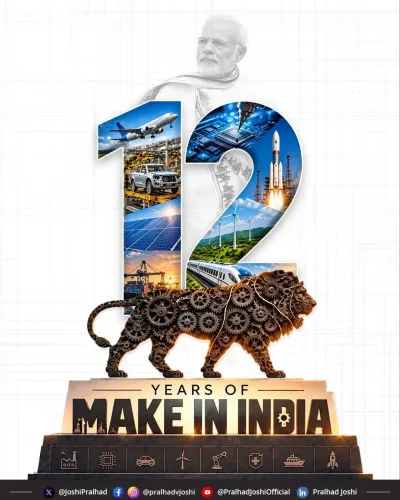
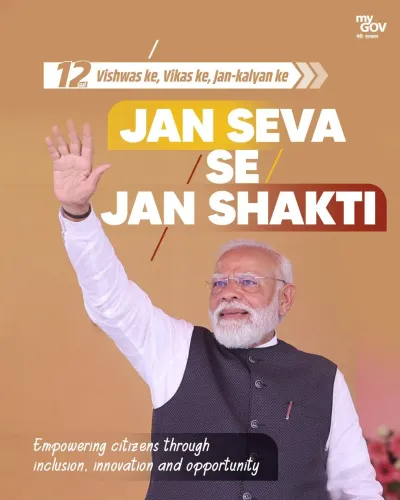
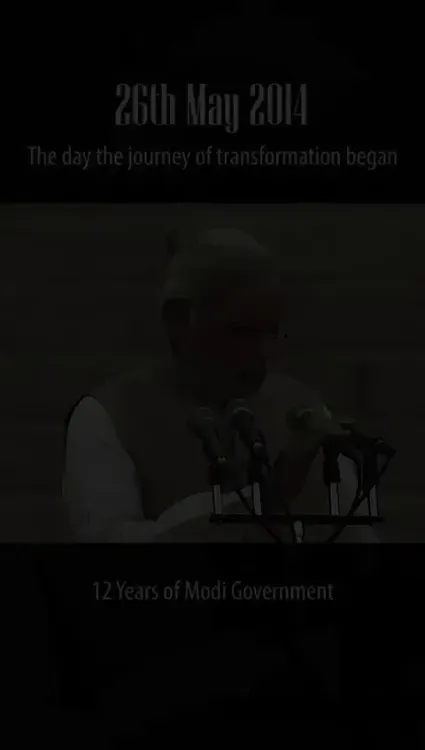
Union Consumer Affairs Minister Pralhad Joshi on Tuesday, 26 May 2026 took to X to mark the completion of 12 years since Prime Minister Narendra Modi first took the oath of office, calling the period one of 'service, good governance and transformative nation-building.'
Context
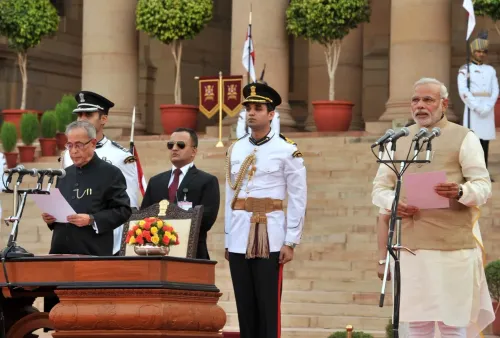
On 26 May 2014, Narendra Modi was sworn in as Prime Minister for the first time, marking the start of what the Bharatiya Janata Party-led National Democratic Alliance government has consistently described as a decisive shift in India's governance approach. Joshi's post, carrying the hashtags #12YearsOfSeva and #ViksitBharat, reflects the ruling party's annual practice of using the oath anniversary as a platform to underline continuity of its core priorities. The minister described Modi as the nation's 'Pradhan Sevak' — pradhan sevak (prime servant) — a formulation Modi himself has used throughout his tenure.
Policy Backdrop
Joshi's tribute specifically invokes four pillars: Seva (service), Sushasan (good governance), Garib Kalyan (welfare of the poor), and Aatmanirbhar Bharat (self-reliant India). The Aatmanirbhar Bharat Abhiyan, announced on 12 May 2020 with a Rs 20 lakh crore economic package, combined fiscal stimulus with policies designed to boost domestic manufacturing and reduce import dependence. Complementing this, Production Linked Incentive schemes were rolled out from 2020 across 14 sectors to strengthen India's manufacturing base. On food security, the Pradhan Mantri Garib Kalyan Anna Yojana has provided free foodgrain to vulnerable households in multiple phases since 2020, directly addressing the Garib Kalyan dimension the minister highlights.
The reference to a 'Green Energy revolution' aligns with Joshi's own portfolio as Minister of New and Renewable Energy, a ministry that has overseen significant capacity addition targets over the past decade. The government has also sought to project India's rising stature in multilateral forums, including its presidency of the G20 in 2023, as evidence of an elevated global voice.
Stakeholders and Impact
The anniversary messaging is directed at a broad domestic audience — welfare beneficiaries, industry, and voters — reinforcing the government's narrative ahead of budget and legislative cycles. For Joshi specifically, invoking renewable energy and food security connects his ministerial responsibilities directly to the larger governance story the BJP is building around the Viksit Bharat vision, which targets India becoming a developed nation by 2047. Civil society groups and opposition parties have periodically contested the scale and reach of welfare claims, though such assessments fall outside the scope of this post.
What's Next
With the 2026-27 Union Budget cycle underway, allocations for renewable energy capacity and food security schemes will be closely watched as tangible markers of the priorities Joshi lists. The upcoming monsoon session of Parliament is expected to see debates on consumer protection legislation and green energy targets — both areas squarely within Joshi's ministerial remit. How the government translates the anniversary messaging into legislative and budgetary action will determine whether the Viksit Bharat milestones cited remain aspirational or gain measurable policy traction.
Point of View
Food security) to the larger Modi governance narrative, thereby reinforcing both the party's record and his own ministerial identity simultaneously. The invocation of 'Pradhan Sevak' and the four Hindi-language pillars signals that the communication is calibrated for a Hindi-belt and pan-India base rather than a niche policy audience. Placing this within the Viksit Bharat frame is a deliberate long-arc move: it shifts the evaluation benchmark from the present to 2047, insulating the government from near-term performance scrutiny. Such anniversary posts also serve as internal party signals, consolidating loyalty and framing the coming legislative and budget season around continuity rather than course correction.
NationPress
9 Oct 2026
Frequently Asked Questions
When did PM Modi first take oath as Prime Minister?
PM Narendra Modi first took the oath of office on 26 May 2014 , marking the start of the BJP-led NDA government's first term.
What is Viksit Bharat?
Viksit Bharat is the government's vision for India to become a fully developed nation by 2047 , the centenary of independence; it has been a recurring theme in official communications since 2023.
What is Aatmanirbhar Bharat?
Aatmanirbhar Bharat (Self-Reliant India) is an initiative launched on 12 May 2020 with a Rs 20 lakh crore package to boost domestic manufacturing, reduce import dependence, and stimulate the economy.
What is Pradhan Mantri Garib Kalyan Anna Yojana?
The Pradhan Mantri Garib Kalyan Anna Yojana is a free foodgrain scheme that has provided subsidised rations to vulnerable households in multiple phases since 2020 , forming a key plank of the government's welfare agenda.
Who is Pralhad Joshi?
Pralhad Joshi is a senior BJP leader from Karnataka and currently serves as Union Minister of Consumer Affairs, Food and Public Distribution, and Minister of New and Renewable Energy.