Pralhad Joshi Launches CBDC-Based Food Subsidy DBT in Chandigarh
Synopsis
Union Minister Pralhad Joshi launched India's first CBDC-based food subsidy DBT under the PDS in Chandigarh and Dadra & Nagar Haveli on 14 August 2026, combining the RBI's digital rupee with PMGKAY's 80-crore beneficiary base to bring programmable, leakage-resistant welfare transfers into the digital age.
Key Takeaways
India's first CBDC-based food subsidy DBT under the Public Distribution System was launched on 14 August 2026 in Chandigarh .
Urban areas of Dadra and Nagar Haveli joined the initiative on the same day, expanding the pilot beyond a single Union Territory.
The initiative builds on PMGKAY , which provides free foodgrains to nearly 80 crore citizens .
The RBI's retail CBDC (e-Rupee) pilot was first launched in December 2022 ; this is its first application in food welfare delivery.
Programmable digital currency allows food subsidies to be earmarked exclusively for food purchases, reducing diversion.
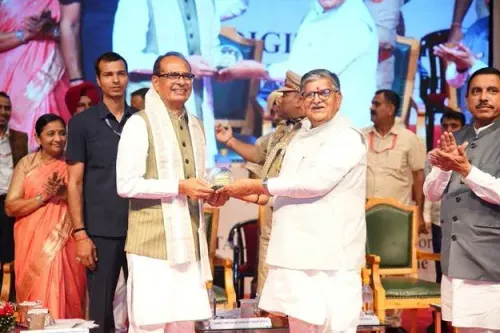
Union Agriculture Minister Shivraj Singh Chouhan and MoS Nimu Bambhaniya were among senior officials present at the launch.
India's food welfare system crossed a digital threshold on Friday, 14 August 2026, when Union Consumer Affairs Minister Pralhad Joshi launched the world's first Central Bank Digital Currency (CBDC)-based Direct Benefit Transfer (DBT) of food subsidies under the Public Distribution System (PDS) — starting with Chandigarh and extending simultaneously to urban areas of Dadra and Nagar Haveli.
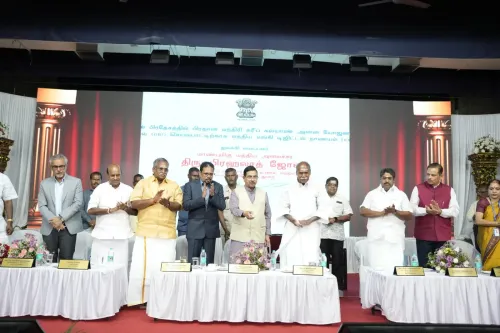
The launch, held in Chandigarh, brought together Union Agriculture Minister Shivraj Singh Chouhan, Governor of Haryana Prof. Ashim Kumar Ghosh, Governor of Punjab and Administrator of UT Chandigarh Gulab Kataria, and Minister of State for Consumer Affairs, Food and Public Distribution Nimu Bambhaniya — a cross-institutional gathering that signals how seriously the Centre is treating this pilot.
What CBDC-DBT Actually Changes for Ration Card Holders
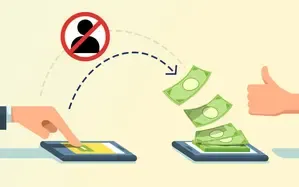
Under the conventional PDS, food subsidies flow through a chain of government accounts, fair-price shop dealers, and cash intermediaries — each link a potential point of leakage. The new model replaces that chain with programmable e-Rupee transfers directly credited to beneficiaries, using the Reserve Bank of India's retail CBDC — the digital rupee whose pilot was first launched in December 2022. Because the currency is programmable, it can be earmarked exclusively for food purchases, closing off diversion at the point of transfer rather than after the fact.
Joshi framed the initiative as building on the foundation of Pradhan Mantri Garib Kalyan Anna Yojana (PMGKAY), the free-foodgrain scheme that has covered nearly 80 crore citizens since its launch during the COVID-19 pandemic in March 2020. 'Building on the success of PMGKAY,' he wrote, 'this initiative takes India's welfare delivery into the digital age.'
Chandigarh and Dadra & Nagar Haveli: Why Union Territories First
The choice of Union Territories for the pilot is deliberate and administratively logical. UTs fall under direct central administration, making them faster testing grounds for technology integration than states with their own PDS bureaucracies. Chandigarh is implementing the CBDC-DBT framework for all PDS beneficiaries within its jurisdiction — a full-coverage rollout, not a sample. Urban areas of Dadra and Nagar Haveli joined the same day, widening the initial footprint beyond a single territory.
The DBT architecture itself is not new — Aadhaar-linked direct transfers across food and fertiliser subsidies have been progressively rolled out since 2013. What CBDC adds is a layer of programmability and traceability that Aadhaar-linked bank transfers alone cannot guarantee. Every rupee of food subsidy can now carry instructions on how it may be spent.
The Bigger Test: Can the Pilot Scale?
The real question is whether the architecture holds when it moves beyond compact Union Territories to large, complex states with millions of PDS beneficiaries and uneven digital infrastructure. Beneficiary adoption metrics, technical integration with state PDS portals, and the RBI's capacity to scale its retail CBDC network will all determine whether this remains a showcase pilot or becomes the backbone of India's welfare delivery system.
For now, the launch marks a concrete convergence of three pillars the Modi government has built separately over a decade — PMGKAY's coverage, Aadhaar-linked DBT's targeting, and the RBI's digital currency infrastructure. Whether that convergence can be replicated at national scale is the next chapter.
Point of View
Where PDS infrastructure is vast and beneficiary digital literacy is uneven. If adoption metrics from Chandigarh are strong, expect rapid expansion announcements ahead of the next election cycle.
NationPress
29 Sept 2026
Frequently Asked Questions
What is CBDC-based DBT for food subsidy in India?
CBDC-based DBT uses the Reserve Bank of India's digital rupee (e-Rupee) to transfer food subsidies directly to beneficiaries' digital wallets under the Public Distribution System, replacing conventional cash or bank-transfer chains with programmable digital currency that can only be spent on food.
Where was the CBDC food subsidy DBT first launched in India?
The initiative was first launched in Chandigarh on 14 August 2026 by Union Consumer Affairs Minister Pralhad Joshi, with urban areas of Dadra and Nagar Haveli also joining on the same day.
What is PMGKAY and how does it relate to the CBDC launch?
Pradhan Mantri Garib Kalyan Anna Yojana (PMGKAY) is a government scheme that provides free foodgrains to nearly 80 crore citizens . The CBDC-DBT initiative builds on PMGKAY's coverage by digitising the subsidy transfer mechanism to improve transparency and reduce leakage.
What is India's digital rupee or e-Rupee?
The e-Rupee is India's Central Bank Digital Currency issued by the Reserve Bank of India. Its retail pilot was launched in December 2022 to test digital currency in everyday transactions; the Chandigarh food subsidy launch is its first application in welfare delivery.
Why were Union Territories chosen for the CBDC food subsidy pilot?
Union Territories are under direct central administration, making them faster and simpler testing grounds for new technology compared to states, which have their own PDS bureaucracies and political dynamics.