Joshi inaugurates Smart Warehousing System for CWC & FCI

Synopsis
Union Consumer Affairs Minister Pralhad Joshi on June 18, 2026, inaugurated a Smart Warehousing System and felicitated the best-performing warehouses of CWC and FCI, advancing India's push to modernise foodgrain storage through real-time monitoring and automation.
Key Takeaways
Union Consumer Affairs Minister Pralhad Joshi inaugurated the Smart Warehousing System on June 18, 2026 .
The event felicitated the best-performing warehouses of CWC and FCI , India's two principal public-sector foodgrain storage bodies.
The initiative aligns with the National Food Security Act framework and the Agriculture Infrastructure Fund launched in 2020-21 .
Primary beneficiaries include foodgrain farmers and an estimated 80 crore PDS beneficiaries nationwide.
A phase-wise rollout across additional FCI and CWC depots is anticipated as the next step.
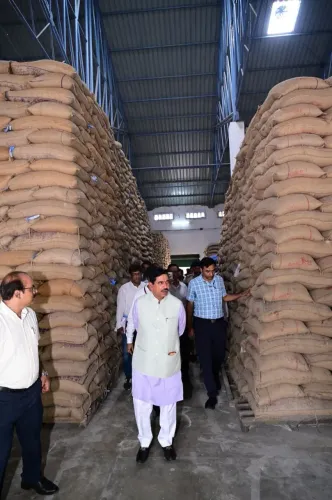
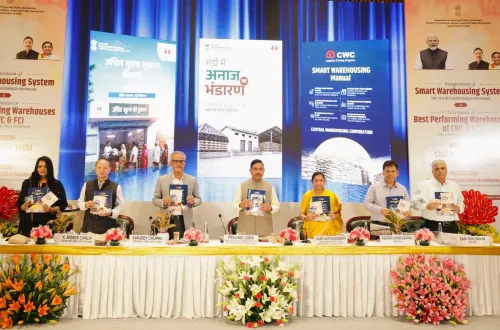
Union Consumer Affairs Minister Pralhad Joshi on Thursday, June 18, 2026, addressed the inauguration of a Smart Warehousing System and felicitated the best-performing warehouses of the Central Warehousing Corporation (CWC) and the Food Corporation of India (FCI), marking a significant step in the government's push to modernise India's foodgrain storage infrastructure.
Context
Minister Joshi shared a live broadcast of the event on his official social media handle, announcing that he was addressing the inauguration ceremony in real time. The event brought together officials from both CWC and FCI — the two principal public-sector bodies responsible for the scientific storage and distribution of foodgrains across India. The felicitation of best-performing warehouses signals an intent to incentivise operational excellence within these agencies.
Policy Backdrop
India's foodgrain storage ecosystem has been undergoing a phased technology overhaul since the 2010s, driven by the imperatives of the National Food Security Act and successive budget commitments to reduce post-harvest losses. The Agriculture Infrastructure Fund, announced in 2020-21, channelled dedicated allocations toward upgrading storage facilities at FCI and CWC depots. The introduction of a Smart Warehousing System fits squarely within this lineage, aiming to integrate real-time inventory monitoring and automation into the national foodgrain supply chain.
FCI is the nodal agency for procurement, storage, and distribution under the Public Distribution System (PDS), while CWC manages scientific storage of foodgrains and other commodities as a public-sector entity. Together, they form the backbone of India's food security architecture, collectively managing hundreds of depots and millions of metric tonnes of grain annually.
Stakeholders and Impact
The primary beneficiaries of a modernised warehousing system are foodgrain farmers and PDS beneficiaries — the two ends of India's food supply chain. For farmers, reduced post-harvest storage losses translate directly into better realisation of their produce. For the estimated 80 crore beneficiaries covered under the National Food Security Act, improved inventory management means more reliable and timely grain distribution through fair-price shops.
Warehouse staff and logistics operators at CWC and FCI depots are also key stakeholders, as smart systems typically involve new digital workflows, sensor-based monitoring, and automated record-keeping that change day-to-day operations on the ground.
What's Next
The government is expected to pursue a phase-wise rollout of the Smart Warehousing System across additional FCI and CWC depots nationwide. Performance data from the felicitated warehouses may serve as benchmarks for the broader deployment. Parliamentary oversight bodies and audit institutions are likely to track efficiency gains — including measurable reductions in storage losses and inventory discrepancies — as the system scales up. Minister Joshi's public address at the inauguration underscores the political priority being assigned to food storage modernisation ahead of further budgetary cycles.
Point of View
The ministry is deploying a performance-incentive signal to a bureaucratic ecosystem not traditionally known for competitive benchmarking. The move also carries political weight for the BJP in Karnataka and nationally, linking the ruling party's governance narrative to tangible supply-chain modernisation. The real test, however, will be whether phase-wise rollout translates into independently audited reductions in storage losses — a metric that has historically lagged behind announcement timelines.
NationPress
17 Sept 2026
Frequently Asked Questions
What is the Smart Warehousing System inaugurated by Pralhad Joshi?
The Smart Warehousing System is a technology-driven initiative to introduce real-time inventory monitoring and automation into foodgrain storage facilities operated by CWC and FCI, aimed at reducing post-harvest losses and improving supply-chain efficiency.
What is CWC and what does it do?
The Central Warehousing Corporation (CWC) is a public-sector entity responsible for the scientific storage of foodgrains and other commodities at depots across India, operating under the Union Ministry of Consumer Affairs, Food and Public Distribution.
What is FCI's role in India's food security?
The Food Corporation of India (FCI) is the nodal government agency for the procurement, storage, and distribution of foodgrains under the Public Distribution System, serving approximately 80 crore beneficiaries covered by the National Food Security Act.
Why is warehouse modernisation important for India?
India has historically faced significant post-harvest grain losses due to inadequate storage infrastructure. Modernising CWC and FCI warehouses with smart technology reduces these losses, improves inventory accuracy, and ensures more reliable food distribution to PDS beneficiaries.
What is the Agriculture Infrastructure Fund and how does it relate to this initiative?
The Agriculture Infrastructure Fund, announced in 2020-21, allocated dedicated resources for upgrading storage and logistics infrastructure in India's agricultural supply chain, providing the policy and financial foundation for projects like the Smart Warehousing System.