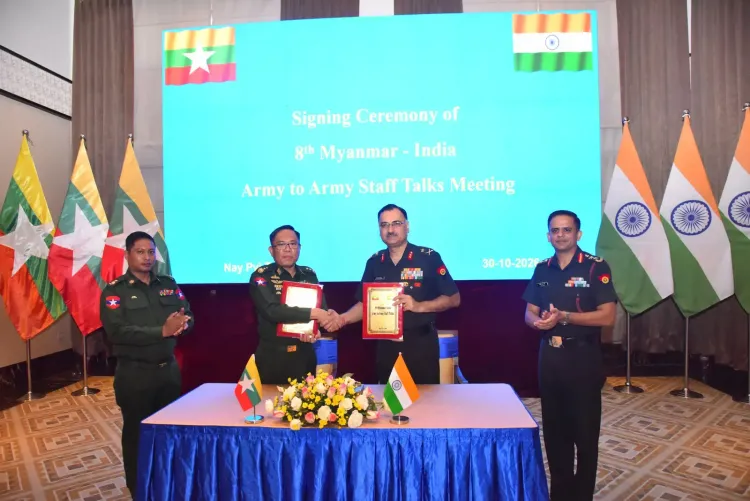
India, Myanmar hold 8th Army Staff Talks in Naypyidaw, boost military ties
Synopsis
India and Myanmar held their eighth Army-to-Army Staff Talks in Naypyidaw on 1 November 2026, with New Delhi handing over training simulators and reaffirming its defence partnership. The talks come just weeks after a high-level Defence Cooperation Meeting in Guwahati — signalling a deliberate push to deepen institutional military ties even as Myanmar's internal situation remains fraught.
Key Takeaways
India and Myanmar held the 8th Army-to-Army Staff Talks in Naypyidaw on 1 November 2026 .
The Indian delegation handed over training simulators to the Myanmar Army as part of capacity-building efforts.
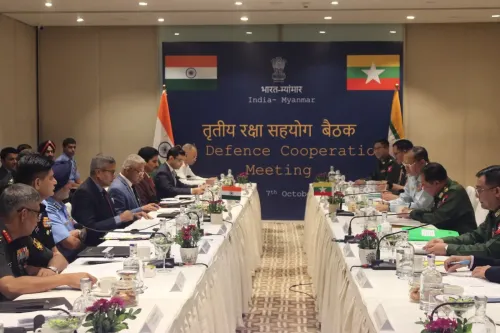
A 3rd India-Myanmar Defence Cooperation Meeting was held in Guwahati on 7 October 2026 , co-chaired by Defence Secretary Rajesh Kumar Singh and Lt Gen Pyae Sone Linn .
Both sides reviewed progress on defence initiatives from the 2025 Yangon meeting and discussed new cooperation avenues.
India's humanitarian response through Operation Brahma following Myanmar's earthquake was acknowledged and appreciated by the Myanmar side.
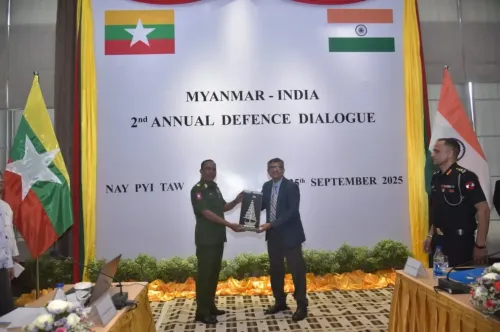
India and Myanmar convened the eighth Army-to-Army Staff Talks in Naypyidaw on 1 November 2026, with both sides focusing on strengthening bilateral military cooperation through joint training, exercises, capacity building, and professional exchanges. The Indian delegation also handed over training simulators to the Myanmar Army, underscoring New Delhi's sustained commitment to defence partnership with its eastern neighbour.
Key Outcomes of the Talks
During the talks, the Indian Army delegation met with the Chief of Armed Forces Training, Myanmar Army, to consolidate ongoing collaboration and identify new avenues of engagement. The handover of training simulators was highlighted as a concrete step in India's capacity-building commitment to Myanmar, reinforcing mutual trust between the two armed forces.
The Indian Army's Additional Directorate General of Public Information confirmed in a post on X that the talks were 'focused on enhancing bilateral military cooperation through joint training, exercises, capacity building and professional exchanges.'
Defence Cooperation Meeting in Guwahati
The Naypyidaw staff talks follow a third India-Myanmar Defence Cooperation Meeting held in Guwahati on 7 October 2026. The meeting was co-chaired by Defence Secretary Rajesh Kumar Singh and Myanmar's Chief of Armed Forces Training Lieutenant General Pyae Sone Linn. Both sides reviewed progress on bilateral defence initiatives agreed upon at the previous Defence Cooperation Meeting held in Yangon in 2025.
New initiatives were discussed with special emphasis on training, capacity building, and enhancing mutual security. The meeting also acknowledged India's humanitarian outreach through Operation Brahma, New Delhi's relief effort in the aftermath of a devastating earthquake in Myanmar, which the Myanmar side reportedly appreciated.
India's Strategic Posture Toward Myanmar
The eighth round of army-level talks signals continuity in India's 'Neighbourhood First' policy, even as Myanmar navigates a complex internal political situation following the 2021 military takeover. New Delhi has maintained institutional defence engagement with Naypyidaw, prioritising border security, counter-insurgency cooperation, and humanitarian ties. This comes amid growing regional interest from China, which also shares a border with Myanmar and has deepened its own military and economic links with the country.
Notably, the India-Myanmar land border stretches over 1,600 kilometres across four northeastern states — Arunachal Pradesh, Nagaland, Manipur, and Mizoram — making Myanmar a critical security partner for India's northeast.
What Comes Next
The two countries are expected to continue implementing the initiatives agreed upon at the Guwahati meeting, with further joint training programmes and professional exchanges on the horizon. The frequency of high-level defence engagements — two significant bilateral meetings within a month — points to a deliberate effort to institutionalise the defence relationship ahead of potential shifts in the regional security environment.
Point of View
However, hinges on how India manages the inherent tension between its democracy-promotion narrative and its pragmatic ties with a military junta.
NationPress
1 Nov 2026
Frequently Asked Questions
What were the 8th India-Myanmar Army-to-Army Staff Talks about?
The 8th India-Myanmar Army-to-Army Staff Talks, held in Naypyidaw on 1 November 2026, focused on enhancing bilateral military cooperation through joint training, exercises, capacity building, and professional exchanges. The Indian delegation also handed over training simulators to the Myanmar Army to reinforce capacity-building efforts.
What was decided at the India-Myanmar Defence Cooperation Meeting in Guwahati?
The 3rd India-Myanmar Defence Cooperation Meeting, held in Guwahati on 7 October 2026, reviewed progress on bilateral defence initiatives agreed at the 2025 Yangon meeting. Both sides discussed new initiatives with emphasis on training, capacity building, and mutual security enhancement.
Who co-chaired the India-Myanmar Defence Cooperation Meeting?
The meeting was co-chaired by Indian Defence Secretary Rajesh Kumar Singh and Myanmar's Chief of Armed Forces Training Lieutenant General Pyae Sone Linn.
What is Operation Brahma and why was it mentioned?
Operation Brahma is India's humanitarian relief operation launched in the aftermath of a devastating earthquake in Myanmar. The Myanmar side at the Guwahati meeting reportedly appreciated India's swift response as a 'First Responder' and close neighbour, reflecting New Delhi's use of humanitarian outreach to strengthen bilateral ties.
Why does India maintain military ties with Myanmar despite its political situation?
India shares a border of over 1,600 kilometres with Myanmar across four northeastern states, making it a critical security partner for counter-insurgency cooperation and border management. New Delhi's 'Neighbourhood First' policy prioritises stable institutional defence ties regardless of political changes in neighbouring countries.