India-Australia 13th Army Staff Talks conclude in New Delhi, defence ties deepen
Synopsis
In the span of a single month, India and Australia have held Army-to-Army Staff Talks in New Delhi, a naval chief's visit to Canberra and Sydney, and launched their fifth Young Officers Exchange Programme — a simultaneous three-domain military push that signals the India-Australia defence partnership is shifting from aspiration to operational reality, with joint exercises locked in for 2027.
Key Takeaways
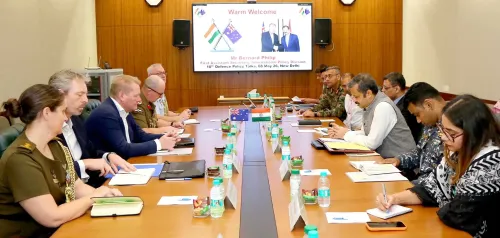
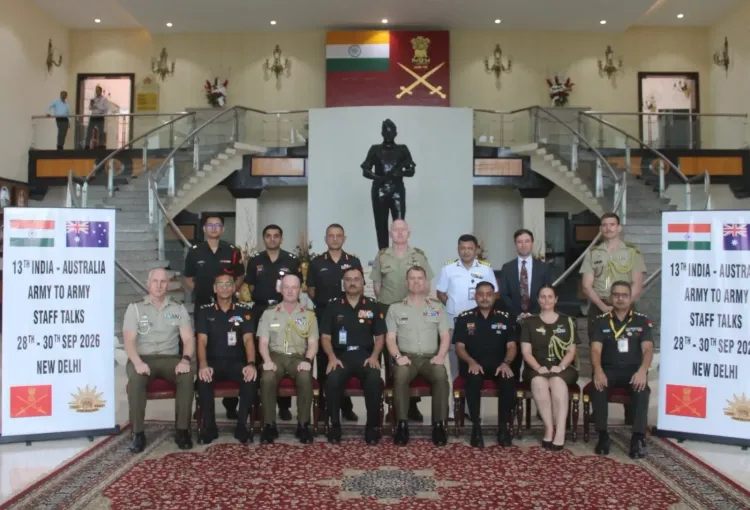
The 13th India-Australia Army-to-Army Staff Talks concluded in New Delhi on 30 September 2026 , spanning 28–30 September .
The Australian delegation visited CLAWS for security discussions and paid homage at the National War Memorial .
15 Indian officers are participating in the fifth General Rawat India-Australia Young Officers Exchange Programme over two weeks.
Admiral Krishna Swaminathan visited Australia earlier in September, meeting navy and defence chiefs in Canberra and Sydney .
Both sides discussed joint naval exercises in 2027 and advancing the Maritime Security Collaboration Roadmap .
Talks with Admiral Mark Hammond emphasised translating strategic convergence into 'tangible outcomes' for a stable Indo-Pacific .
India and Australia wrapped up the 13th Army-to-Army Staff Talks in New Delhi on 30 September 2026, capping a three-day engagement that centred on strengthening bilateral defence cooperation and broadening the scope of military-to-military interaction across areas of shared strategic interest. The talks, held from 28–30 September 2026, are part of a structured institutional dialogue that has grown steadily in ambition alongside the wider India-Australia Comprehensive Strategic Partnership.
What the Talks Covered
The Indian Army's Additional Directorate General of Public Information (ADGPI) confirmed on X that the discussions witnessed 'meaningful exchanges on further strengthening bilateral defence cooperation and expanding the scope and scale of engagement across areas of shared interest.' The Australian delegation also visited the Centre for Land Warfare Studies (CLAWS) for discussions on contemporary security challenges, and paid their respects at the National War Memorial in New Delhi.
Young Officers Exchange Programme Gains Momentum
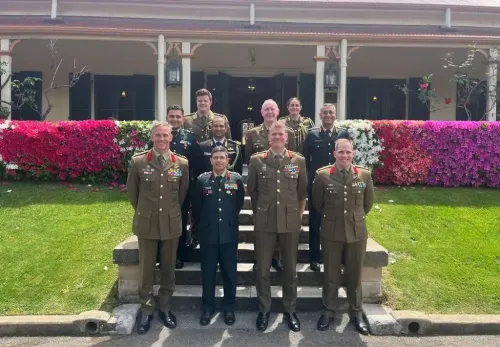
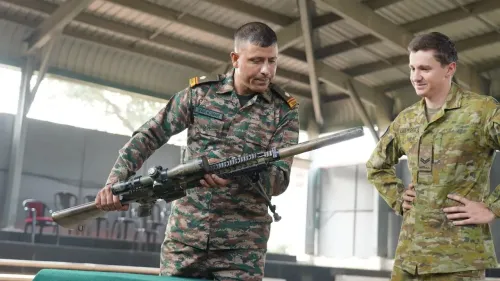
Separately, on Wednesday, India's High Commissioner to Australia Nagesh Singh met officers from both the Indian Armed Forces and the Australian Defence Force participating in the fifth edition of the General Rawat India-Australia Young Officers Exchange Programme. The Indian High Commission in Australia confirmed that 15 Indian officers are taking part in the two-week programme alongside their Australian counterparts, underlining the growing people-to-people dimension of the defence relationship.
Naval Chiefs Hold Strategic Talks in Canberra and Sydney
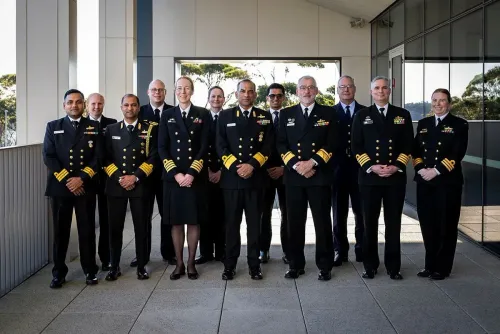
Earlier this month, Chief of the Naval Staff Admiral Krishna Swaminathan undertook a three-day official visit to Australia, marking a significant high-level naval engagement. In Canberra, he met Australian Navy Chief Vice Admiral Matthew Buckley at the Russell Office — the administrative headquarters of the Australian Defence Force — where the two sides reviewed bilateral naval cooperation and discussed pathways to deepen interoperability, including multiple joint exercise opportunities in 2027.
Admiral Swaminathan also held talks with Admiral Mark Hammond, Chief of the Australian Defence Force, focusing on advancing the implementation of the Maritime Security Collaboration Roadmap and identifying opportunities to enhance cooperation across the maritime domain. 'The interaction also reflected a shared commitment to translating strategic convergence into tangible outcomes that contribute to a secure, stable and prosperous Indo-Pacific,' the Indian Navy stated.
In Sydney, Admiral Swaminathan met Rear Admiral Anita William, Commander of Australian Fleet, at the historic naval facility HMAS Kuttabul, with discussions centred on the evolving maritime capabilities of the Australian Navy and avenues for deeper operational cooperation between the two navies.
Strategic Context and What It Signals
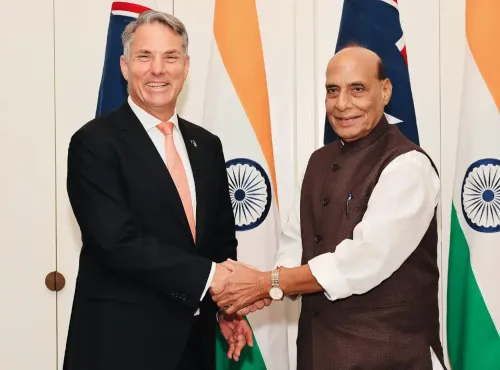
This cluster of engagements — Army staff talks, a naval chief's visit, and an officer exchange programme — reflects the accelerating institutional depth of the India-Australia defence relationship. Notably, the meetings span land, sea, and institutional-education domains simultaneously, suggesting a deliberate broadening beyond bilateral exercises alone. This comes amid a broader Indo-Pacific security calculus that has brought India and Australia closer through frameworks such as the Quad, with both nations seeking to operationalise strategic alignment into concrete military interoperability. The emphasis on joint exercises in 2027 and the Maritime Security Collaboration Roadmap points to a near-term uptick in on-water coordination.
Point of View
A CNS visit, and an officer exchange — in a single month is not routine diplomatic choreography; it is a deliberate acceleration. What mainstream coverage tends to underplay is that the Maritime Security Collaboration Roadmap and the 2027 joint exercise pipeline are the real deliverables here, not the talks themselves. India's Indo-Pacific posture has long been criticised for strategic hedging; the pace of these Australia engagements, alongside Quad commitments, suggests New Delhi is increasingly comfortable with visible, institutionalised military alignment. The test will be whether the 2027 exercise calendar translates into genuine interoperability or remains a photo-opportunity at sea.
NationPress
30 Sept 2026
Frequently Asked Questions
What were the 13th India-Australia Army-to-Army Staff Talks about?
The 13th Army-to-Army Staff Talks, held in New Delhi from 28–30 September 2026, focused on strengthening bilateral defence cooperation and expanding military-to-military engagement across areas of shared interest. The Australian delegation also visited CLAWS for security discussions and paid respects at the National War Memorial.
What is the General Rawat India-Australia Young Officers Exchange Programme?
It is a bilateral officer exchange initiative, now in its fifth edition, involving officers from the Indian Armed Forces and the Australian Defence Force. The current cohort includes 15 Indian officers participating over two weeks alongside their Australian counterparts, deepening personal and professional ties between the two militaries.
What did Indian Navy Chief Admiral Swaminathan discuss during his Australia visit?
Admiral Krishna Swaminathan held talks with Australian Navy Chief Vice Admiral Matthew Buckley, Australian Defence Force Chief Admiral Mark Hammond, and Fleet Commander Rear Admiral Anita William. Key outcomes included plans for multiple joint naval exercises in 2027 and advancing the Maritime Security Collaboration Roadmap.
Why is the India-Australia defence partnership significant for the Indo-Pacific?
India and Australia are both Quad members and share strategic interests in a free and open Indo-Pacific. Their deepening defence ties — spanning naval interoperability, joint exercises, and officer exchanges — are designed to translate shared strategic outlook into concrete military coordination, particularly at sea.
What is the Maritime Security Collaboration Roadmap between India and Australia?
The Maritime Security Collaboration Roadmap is a bilateral framework aimed at enhancing cooperation between the Indian Navy and the Royal Australian Navy. It covers interoperability, operational engagement, and joint exercises, with both sides identifying 2027 as a key year for expanding on-water collaboration.