Joshi: Solar to beat coal as India's top power source by 2035-36

Synopsis
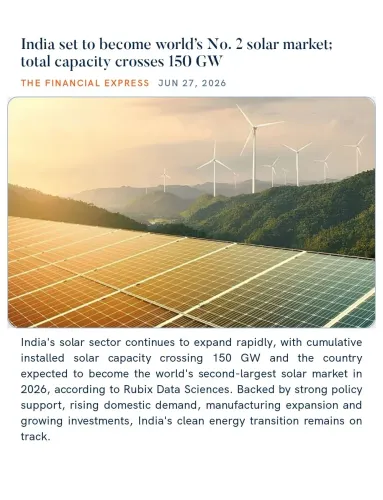
Union Minister Pralhad Joshi has cited a Central Electricity Authority projection that solar energy will surpass coal as India's largest source of installed power capacity by 2035-36, pointing to the government's energy storage programme and PM Modi's Panchamrit climate commitments as key enablers of the transition.
Key Takeaways
The Central Electricity Authority (CEA) projects solar energy will overtake coal as India's largest source of installed power capacity by 2035-36 .
Union Minister Pralhad Joshi cited the projection on 22 July 2026 , linking it to PM Modi's renewable energy agenda.
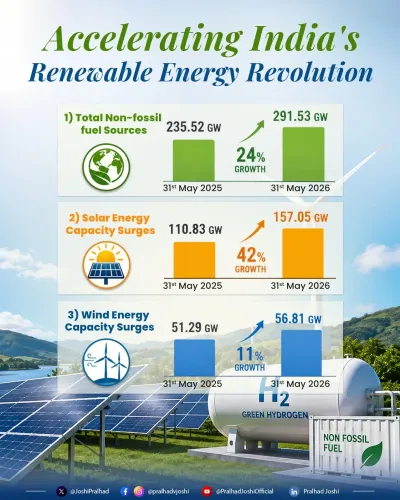
India committed to 500 GW of non-fossil fuel capacity by 2030 under the Panchamrit pledges made at COP26 in 2021 .
The PLI scheme for Advanced Chemistry Cells , approved in 2021 , supports domestic battery storage manufacturing central to the transition.
State discoms, coal mining regions, and renewable developers are the primary stakeholders affected by the projected energy mix shift.
Upcoming CEA National Electricity Plan updates and central tenders for battery and pumped hydro storage will be key milestones to watch.
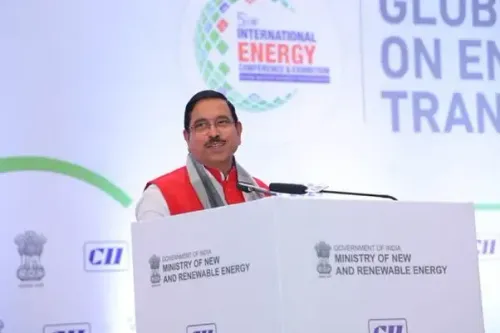
Union Minister for New and Renewable Energy Pralhad Joshi on Wednesday, 22 July 2026 cited a projection by the Central Electricity Authority (CEA) that solar energy is set to overtake coal as India's largest source of installed power capacity by 2035-36, calling it a milestone backed by what he described as 'one of the world's most ambitious energy storage programmes.'
Context
In his post on X, Joshi wrote that 'India's energy future is taking shape,' pointing to the CEA projection as evidence of a structural shift underway in the country's electricity sector. He attributed the trajectory to 'the visionary leadership' of Prime Minister Narendra Modi. The CEA is the statutory body under the Ministry of Power responsible for preparing the National Electricity Plan and long-term capacity projections.
Policy Backdrop
India's push toward renewables has deep policy roots. The Jawaharlal Nehru National Solar Mission, launched in 2010, set an initial solar target of 20 GW by 2022 — a figure that was revised sharply upward in subsequent years. At COP26 in 2021, PM Modi announced the Panchamrit commitments: 500 GW of non-fossil fuel capacity by 2030 and net-zero emissions by 2070.
On the storage side, the government approved the Production Linked Incentive (PLI) scheme for Advanced Chemistry Cells in 2021 to seed domestic battery manufacturing capacity. Successive National Electricity Plans have steadily raised renewable targets while introducing storage mandates to address the intermittency challenge that has historically slowed solar scale-up.
Stakeholders and Impact
The projected crossover carries significant consequences across multiple sectors. Renewable energy developers stand to benefit from sustained policy support and large central tenders, while state electricity distribution companies (discoms) face the operational challenge of integrating variable generation into the grid. Coal mining regions — many concentrated in states such as Jharkhand, Chhattisgarh, and Odisha — face a longer-term transition question around employment and revenue as the fuel's share of new capacity additions declines.
India's trajectory also carries international weight. The country's Paris Agreement commitments require a credible domestic decarbonisation path, and the CEA's long-term projections serve as a key reference point for climate diplomacy and sovereign green-bond frameworks.
What's Next
The next update to the CEA National Electricity Plan will be closely watched for revised capacity forecasts and storage mandates. Outcomes of central government tenders for battery storage and pumped hydro projects will indicate how quickly the infrastructure needed to support a solar-dominant grid is being commissioned. If the crossover timeline holds, it would mark one of the fastest energy transitions recorded among large emerging economies.
Point of View
Timed to reinforce the BJP government's credentials on energy transition ahead of ongoing international scrutiny of India's Paris Agreement commitments. By anchoring the claim to a CEA projection rather than a political promise, the communication borrows institutional credibility while keeping the political credit firmly with PM Modi. The solar-overtakes-coal framing is significant because it shifts the domestic conversation from 'coal phase-down' — a diplomatically sensitive term India has resisted — to a market-driven capacity crossover, a subtler but politically safer formulation. If the CEA timeline holds, it would represent a structural vindication of the Panchamrit framework and significantly strengthen India's hand in future climate negotiations.
NationPress
22 Jul 2026
Frequently Asked Questions
When will solar energy overtake coal in India?
According to a projection cited by Union Minister Pralhad Joshi from the Central Electricity Authority, solar energy is expected to surpass coal as India's largest source of installed power capacity by 2035-36.
What is the CEA and why does its projection matter?
The Central Electricity Authority is a statutory body under India's Ministry of Power that prepares the National Electricity Plan and official long-term capacity forecasts; its projections are the primary reference for grid planning and energy policy decisions.
What is India's renewable energy target by 2030?
India committed at COP26 in 2021 to achieving 500 GW of non-fossil fuel installed capacity by 2030 as part of its Panchamrit climate pledges announced by PM Narendra Modi.
What is the PLI scheme for Advanced Chemistry Cells?
The Production Linked Incentive scheme for Advanced Chemistry Cells, approved in 2021, is a central government programme designed to incentivise domestic manufacturing of battery storage technology critical to supporting a renewable-heavy electricity grid.
How does coal's decline affect workers and states in India?
Coal mining regions concentrated in states such as Jharkhand, Chhattisgarh, and Odisha face long-term questions around employment and state revenues as coal's share of new power capacity additions declines, making a managed energy transition a key policy challenge.