One Nation One Election JPC chief: Simultaneous polls boost regional parties, not weaken them
Synopsis
The dominant fear about 'One Nation, One Election' — that it will crush regional parties — has been directly challenged at the JPC itself. Economists told the panel on Friday that India's own electoral history from 1967 to 2024 shows the opposite: staggered elections let a powerful Centre steamroll state politics, while simultaneous polls give regional forces a fairer fight.
Key Takeaways
Chaudhary said simultaneous elections strengthen, not weaken, regional parties — citing expert testimony at the panel's 31 October 2026 session.
Economist Swaminathan Gurumurthy argued that staggered elections allow a dominant Centre to 'override' regional parties in state contests.
The expert panel analysed India's electoral history from 1967 to 2024 , including the Coalition Era (1989–2014) , to support the claim.
Chaudhary noted that four simultaneous general elections were held from 1952 to 1967 , and eight or nine Assemblies were dissolved prematurely to maintain synchrony thereafter.
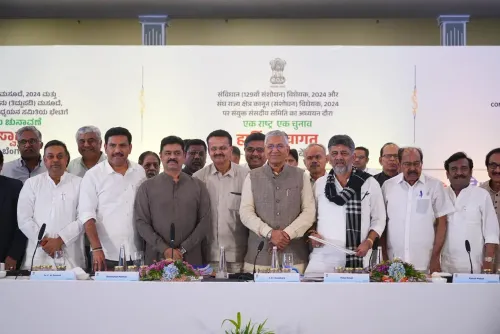
The One Nation, One Election Bill is under review by a 41-member JPC , which is still holding stakeholder consultations.
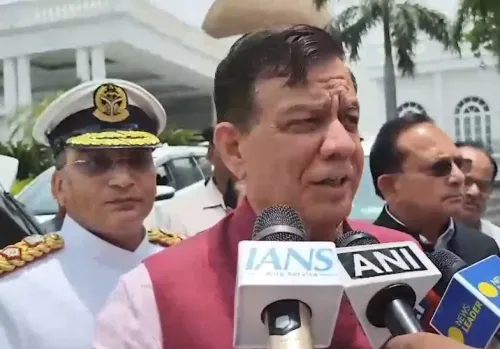
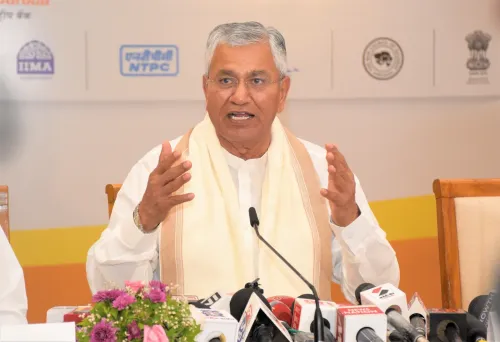
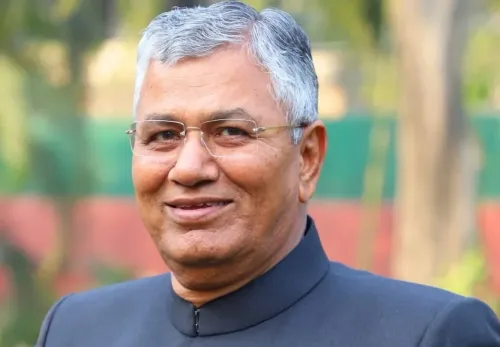
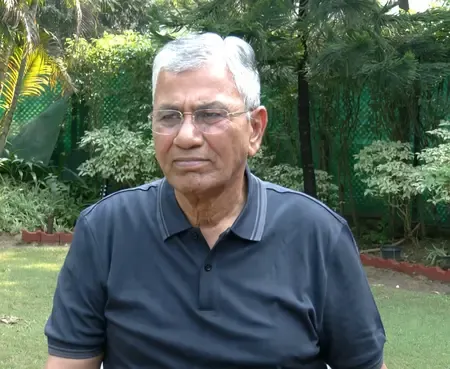
Joint Parliamentary Committee (JPC) Chairman P.P. Chaudhary on Saturday, 31 October 2026, said that holding simultaneous elections to the Lok Sabha and state Assemblies would actually strengthen regional parties — directly countering the dominant concern that the 'One Nation, One Election' proposal would marginalise them. Chaudhary attributed the argument to eminent economist and journalist Swaminathan Gurumurthy, who presented this view at a JPC meeting in New Delhi on Friday.
What the Experts Told the JPC
Friday's JPC session saw a high-profile panel of political scientists and economists share their assessments of the Bill's implications. Besides Swaminathan Gurumurthy, the panel included Professor S. Mahendra Dev — Chairman of the Economic Advisory Council to the Prime Minister (EAC-PM) — Professor Pami Dua, and Dr Shamika Ravi. According to Chaudhary, their collective view was that simultaneous elections would 'strengthen and promote regional parties, the federal structure, and the basic constitutional framework.'
The experts reportedly drew on India's electoral record spanning 1967 to 2024 — covering the fragmented mandates of 1971, 1977, 1980, and 1984, the Coalition Era from 1989 to 2014, and the single-party majority elections of 2014, 2019, and 2024 — to build their case.
The Historical Argument: Separate Elections Hurt Regional Parties
Chaudhary explained the core thesis: when Lok Sabha and Assembly elections are staggered, a dominant ruling party at the Centre tends to ride its national wave into state contests, 'overriding' regional issues and parties. 'When elections to the state and Centre are held separately, in case of conflict between strong Centre and regional issues, the nation's electoral history shows that a strong Centre will have an overriding effect,' he said.
Conversely, the panel argued that simultaneous polls force voters to weigh state and national issues independently within the same exercise, giving regional outfits a more level playing field. Chaudhary described Gurumurthy's presentation as 'an eye opener for everybody.'
Constitutional Precedent: 1952 to 1967
The JPC Chairman also pointed to India's own founding-era practice as precedent. 'Under One Nation, One Election, four general elections from 1952 to 1967 were held together,' he noted. He added that after the synchronised cycle broke down, eight or nine Legislative Assemblies were dissolved prematurely specifically to restore simultaneity — a step he said reflected the intent of Constituent Assembly members who believed the Constitution's spirit pointed toward unified elections.
About the One Nation, One Election Bill
The Bill seeks to synchronise the electoral cycles of the Lok Sabha and all state Legislative Assemblies. It has been referred to a 41-member Joint Parliamentary Committee, which is currently studying the legal, logistical, and constitutional mechanisms needed for implementation. Critics — including several Opposition parties and constitutional scholars — have long argued that the reform could dilute federalism and sideline smaller, state-specific political forces. Friday's expert session appears to be the JPC's most direct engagement with that specific concern so far.
What Comes Next
The JPC is expected to continue its consultations with stakeholders across political, academic, and civil society groups before submitting its final report. The committee's findings will be closely watched by regional parties — many of whom remain sceptical — as well as by the ruling Bharatiya Janata Party (BJP), which has championed the reform as a means to reduce governance disruption caused by near-continuous election cycles.
Point of View
In effect, attempted a political judo move — reframing 'One Nation, One Election' as a protector of federalism rather than a threat to it. But the argument rests heavily on a reading of electoral history that conflates correlation with causation: regional parties may have fared better in simultaneous elections for reasons unrelated to the format itself. More critically, the panel of experts was invited by the JPC, not chosen by Opposition parties, which raises questions about the balance of perspectives being placed on record. The real test of the committee's credibility will be whether it gives equal platform to constitutional scholars and regional party leaders who hold the contrary view.
NationPress
31 Oct 2026
Frequently Asked Questions
What did JPC Chairman P.P. Chaudhary say about One Nation, One Election and regional parties?
Chaudhary said that simultaneous elections to the Lok Sabha and state Assemblies would benefit regional parties, not weaken them. He cited expert testimony from economist Swaminathan Gurumurthy at a JPC meeting on 31 October 2026, who argued that staggered elections allow a dominant Centre to 'override' regional parties in state contests.
What is the One Nation, One Election Bill?
It is a legislative proposal to synchronise the electoral cycles of the Lok Sabha and all state Legislative Assemblies so that they are held simultaneously. The Bill has been referred to a 41-member Joint Parliamentary Committee, which is conducting consultations before submitting its final report.
What historical evidence did experts cite at the JPC session?
The expert panel analysed India's electoral record from 1967 to 2024, covering the Coalition Era from 1989 to 2014 and single-party majority elections in 2014, 2019, and 2024. They argued that when elections were staggered, a strong ruling party at the Centre typically swept state polls, marginalising regional outfits.
Who attended the JPC expert session on 31 October 2026?
The session was attended by economist and journalist Swaminathan Gurumurthy, Professor S. Mahendra Dev (Chairman of the Economic Advisory Council to the Prime Minister), Professor Pami Dua, and Dr Shamika Ravi.
Has India held simultaneous elections before?
Yes. India held four simultaneous general elections between 1952 and 1967. After the synchronised cycle broke down, several state Assemblies were dissolved prematurely to restore simultaneity — a practice Chaudhary cited as evidence that the Constitution's framers intended unified elections.