One Nation One Election: UP Speaker backs bill, Congress and SP object at Lucknow JPC meet
Synopsis
The JPC examining India's most ambitious electoral reform held consultations in Lucknow on 14 July, where UP's own Speaker backed simultaneous polls while Congress and SP pushed back — exposing the deep political fault lines the government must navigate before the Constitution (129th Amendment) Bill can become law.
Key Takeaways
UP Assembly Speaker Satish Mahana backed the 'One Nation, One Election' proposal before the JPC in Lucknow on 14 July .
The 39-member JPC , chaired by BJP MP P.P.
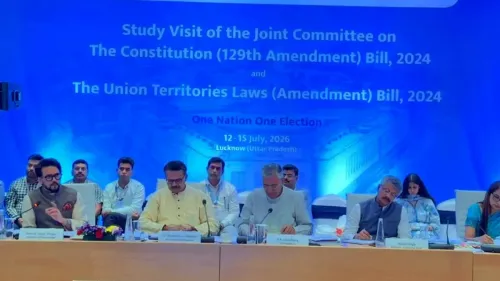
Chaudhary , is examining the Constitution (129th Amendment) Bill, 2024 and the Union Territories Laws (Amendment) Bill, 2024 .
UP Congress President Ajay Rai told the panel the Congress is 'definitely against' the proposal.
SP MLA Lal Bihari Yadav raised concerns about practicality and called for uniform education reform first.
The JPC has now consulted at least nine states , including Maharashtra, Karnataka, and Gujarat, ahead of submitting its final report.
Simultaneous elections were last held in India between 1952 and 1967 , according to Agriculture Minister Surya Pratap Shahi .
Uttar Pradesh Assembly Speaker Satish Mahana on Tuesday, 14 July voiced strong support for the 'One Nation, One Election' proposal before the Joint Parliamentary Committee (JPC) visiting Lucknow, arguing that simultaneous polls to the Lok Sabha and state Assemblies would conserve time, public money, and administrative bandwidth. Opposition parties — the Indian National Congress and the Samajwadi Party (SP) — used the same platform to register firm objections to the constitutional reform.
What the JPC Is Examining
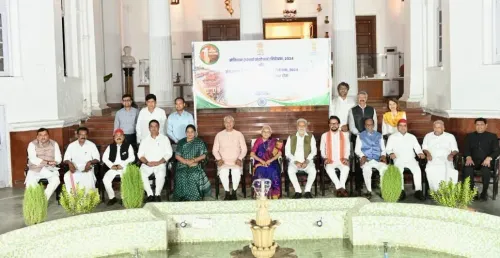
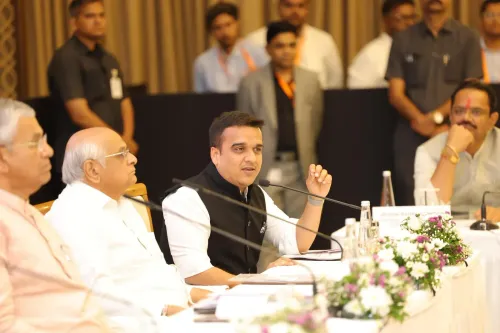
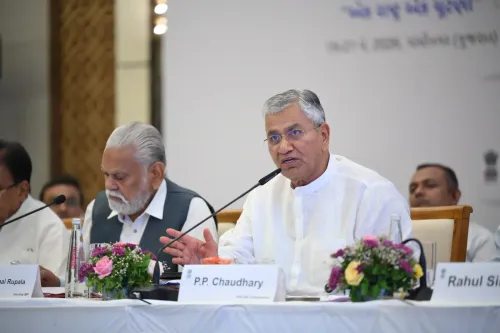
The 39-member parliamentary panel, chaired by Bharatiya Janata Party (BJP) MP P.P. Chaudhary, is on a three-day visit to Lucknow as part of a multi-state consultation exercise on the Constitution (129th Amendment) Bill, 2024 and the Union Territories Laws (Amendment) Bill, 2024 — the two legislative vehicles designed to enable simultaneous elections nationwide. The committee met government representatives, opposition leaders, constitutional experts, and other stakeholders at a hotel in Gomti Nagar, Lucknow.
The panel has already held consultations in Maharashtra, Uttarakhand, Haryana, Himachal Pradesh, Karnataka, Gujarat, and Goa before arriving in Uttar Pradesh.
UP Speaker and State Ministers Back the Proposal
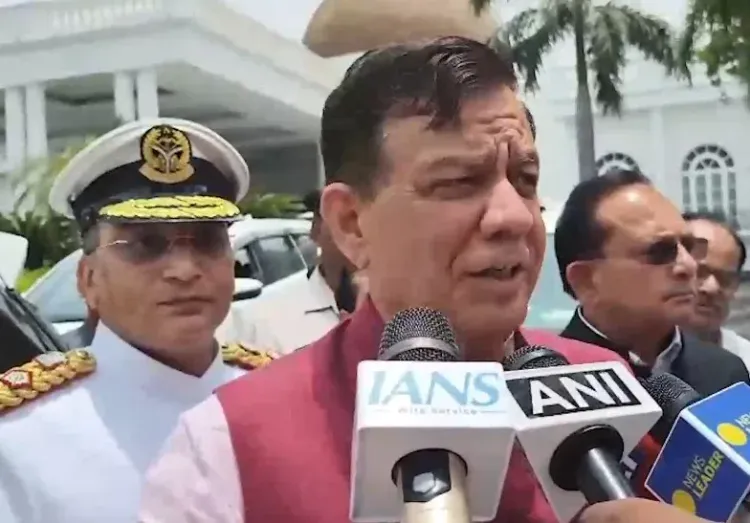
Addressing the committee, Speaker Mahana said the concept had been in public discourse for a long time and would benefit political parties, elected representatives, and ordinary citizens alike. He argued that recurring elections impose a heavy burden on lawmakers, security forces, and the administrative machinery, keeping them locked in perpetual campaign mode rather than focused on governance.
'Simultaneous elections will enable elected representatives to devote more time to governance and public welfare instead of being constantly engaged in election campaigns,' Mahana said.
Uttar Pradesh Agriculture Minister Surya Pratap Shahi welcomed the JPC and drew on historical precedent, noting that from 1952 to 1967, Lok Sabha and all state Assembly elections were held together. 'That system saved time and significantly reduced the financial burden caused by repeated elections,' he said. State Cabinet Minister Arvind Kumar Sharma described the proposal as a 'visionary initiative' of Prime Minister Narendra Modi and called for its earliest implementation, dismissing opposition criticism as lacking substance.
Congress and SP Register Objections
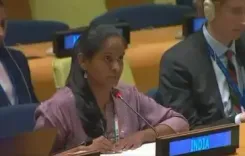
Uttar Pradesh Congress President Ajay Rai told the committee that the Congress remains categorically opposed to the bill. 'The Congress party is definitely against 'One Nation, One Election' because the government wants to implement the entire process according to its own framework and arrangements. We have clearly registered our objections and stated that we oppose this amendment Bill,' Rai said.
SP MLA Lal Bihari Yadav raised a different set of concerns, arguing that the country should first address systemic inequalities in education before pursuing electoral synchronisation. 'Before implementing 'One Nation, One Election', the country should introduce 'One Nation, One Education'. Different boards and curricula exist across the country, and the poor and the rich have different education systems,' he said. Yadav also questioned the practical viability of the proposal in scenarios where a state Assembly is dissolved before completing its term.
What Happens Next
The views and recommendations gathered across all state consultations will feed into the JPC's final report on the proposed electoral reform. The committee's findings are expected to shape the legislative path of the two bills before they return to Parliament for debate and voting. The breadth of the consultation — spanning at least nine states — signals the government's intent to build a wide stakeholder record, even as political opposition to the bills remains sharp.
Point of View
One Election: the ruling party's allies endorse it with historical footnotes, while the opposition frames it as a power grab dressed in efficiency language. What the JPC hearings have not yet produced is a credible answer to the SP's pointed question — what happens when a state government falls mid-term? That is not a rhetorical objection; it is a constitutional gap the bills must address. Gathering views across nine states builds a stakeholder record, but record-building is not consensus-building, and the government will need the latter if it wants the amendment to survive judicial scrutiny.
NationPress
13 Oct 2026
Frequently Asked Questions
What is the 'One Nation, One Election' proposal?
'One Nation, One Election' refers to the proposal to synchronise elections to the Lok Sabha and all state Assemblies so they are held simultaneously. It is being pursued through the Constitution (129th Amendment) Bill, 2024 and the Union Territories Laws (Amendment) Bill, 2024, currently under examination by a 39-member Joint Parliamentary Committee.
Why is the JPC visiting Lucknow?
The JPC, chaired by BJP MP P.P. Chaudhary, is on a three-day visit to Lucknow as part of a multi-state consultation exercise to gather views from government officials, opposition leaders, constitutional experts, and other stakeholders before finalising its report on the two bills.
Why does the Congress oppose One Nation, One Election?
UP Congress President Ajay Rai told the JPC that the Congress opposes the proposal because, in the party's view, the government intends to implement the process entirely on its own terms. The Congress has formally registered its objections to the amendment bills before the committee.
What concerns did the Samajwadi Party raise?
SP MLA Lal Bihari Yadav questioned the practicality of simultaneous elections, particularly in scenarios where a state Assembly is dissolved before its term ends. He also argued that the country should first address inequality in education — through a 'One Nation, One Education' policy — before pursuing electoral synchronisation.
When were simultaneous elections last held in India?
According to UP Agriculture Minister Surya Pratap Shahi, simultaneous elections to the Lok Sabha and all state Assemblies were last held between 1952 and 1967. The practice ended as various state governments fell before completing their terms, breaking the synchronised cycle.