Karnataka Cabinet Clears Adivasi Corporation, Tribal University Near Chitradurga

Synopsis
The Karnataka Cabinet has approved a dedicated Adivasi Development Corporation and resolved to establish a Tribal University near Chitradurga, signalling a structural shift in the state's approach to tribal welfare, education, and empowerment.
Key Takeaways
The Karnataka Cabinet has approved a separate Adivasi Development Corporation for the comprehensive development, education, and empowerment of tribal communities.
A Tribal University is to be established near Chitradurga in central Karnataka to expand higher education access for Adivasi students.
The decisions were announced by the Chief Minister's Office of Karnataka on 31 October 2026 .
The government framed both moves under the principle of social justice — ensuring development benefits reach the 'last community.' Key implementation watchpoints include budget allocations , land identification near Chitradurga, and operational guidelines for the new corporation.
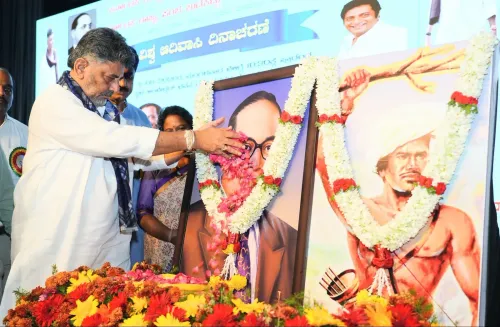
Two decisions from the Karnataka Cabinet are set to reshape the developmental landscape for the state's most marginalised communities: a dedicated Adivasi Development Corporation has been approved, and a Tribal University is to be established near Chitradurga in central Karnataka — a twin push that places education and institutional empowerment at the centre of the government's tribal welfare agenda.
The Chief Minister's Office of Karnataka announced the decisions on 31 October 2026, posting in Kannada: 'Sarvara eḷigege samāna avakāsha' — 'equal opportunity for the progress of all.' The post affirmed the government's commitment to 'comprehensive development, education and empowerment of Adivasi and tribal communities,' with the goal of ensuring that 'the benefits of development reach even the last community, in the spirit of social justice.'
What the Adivasi Development Corporation Will Do
A separate development corporation dedicated to Adivasi communities fills a structural gap that tribal welfare advocates have long pointed to: without a focused institutional vehicle, funding and schemes for Scheduled Tribe populations often get dispersed across multiple departments with diffuse accountability. The new corporation is designed to consolidate that effort under a single, purpose-built body.
Karnataka already operates similar corporations for other marginalised groups — the model is proven in the state's administrative playbook. The key questions now are budget allocations and the operational guidelines that will define the corporation's mandate, lending powers, and reach into remote tribal habitations.
A University Anchored in Tribal Knowledge, Near Chitradurga
Chitradurga district, in the Kalyana Karnataka region, is home to significant tribal populations and sits at the geographic heart of the state — making it a deliberate, symbolic, and logistically sound choice for the proposed Tribal University. The institution is envisioned not just as a degree-granting body but as a hub for expanding 'new opportunities in education and knowledge' specifically tailored to Adivasi communities.
Tribal universities — rare in South India — can serve as anchors for preserving indigenous languages, traditional ecological knowledge, and cultural heritage alongside mainstream curricula. If adequately funded and autonomously governed, such an institution could draw tribal students who currently migrate to distant urban campuses, often at great social and economic cost to their families.
The Social Justice Frame — and the Road to Implementation
The announcement is explicitly framed around constitutional social-justice principles, aligning with Articles 15, 46, and 338A of the Indian Constitution, which mandate special protection and promotion of the educational and economic interests of Scheduled Tribes. Karnataka's move mirrors national conversations about whether welfare schemes alone are sufficient, or whether dedicated institutional infrastructure — corporations, universities, dedicated budgets — is the more durable answer.
The immediate watchpoints: land identification and acquisition near Chitradurga, state-budget line items for the corporation's seed capital, and the appointment of leadership for both bodies. Announcements without follow-through funding are a familiar pattern in tribal welfare; the credibility of these decisions will be tested in the next state budget session.
For Karnataka's Adivasi and tribal communities — long at the margins of economic growth — a dedicated corporation and a university on their doorstep would be more than policy. It would be proof that the state's development story has finally turned a page.
Point of View
As Karnataka's tribal belt has historically been a competitive zone. The real test will come at the next budget session: seed capital figures and land notifications will separate genuine policy commitment from announcement-cycle politics.
NationPress
31 Oct 2026
Frequently Asked Questions
What is the Adivasi Development Corporation approved by Karnataka Cabinet?
It is a newly approved, separate government corporation dedicated to the comprehensive development, education, and empowerment of Adivasi and tribal communities in Karnataka, announced on 31 October 2026.
Where will the Tribal University in Karnataka be located?
The Tribal University is proposed to be established near Chitradurga, a district in central Karnataka, to provide higher education and knowledge opportunities to tribal communities.
Why is a separate corporation needed for Adivasi communities in Karnataka?
A dedicated corporation consolidates tribal welfare funding and programmes under a single accountable body, addressing the gap left when schemes are dispersed across multiple government departments.
What is the significance of placing the Tribal University near Chitradurga?
Chitradurga sits at the geographic heart of Karnataka and has a significant tribal population, making it a strategic and symbolic location to maximise access for Adivasi students across the region.
What should we watch for after Karnataka's Adivasi Corporation and Tribal University announcement?
Key developments to watch include budget allocations for the corporation, land acquisition near Chitradurga for the university, and the appointment of leadership for both institutions in upcoming cabinet and budget sessions.