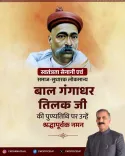
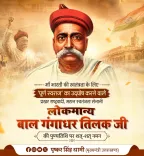
Karnataka CM Office Honours Bal Gangadhar Tilak on Death Anniversary
Synopsis
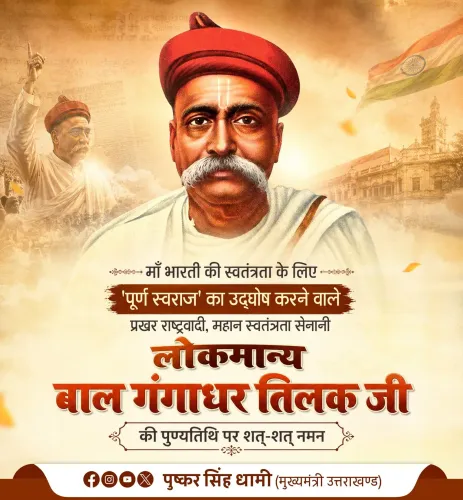
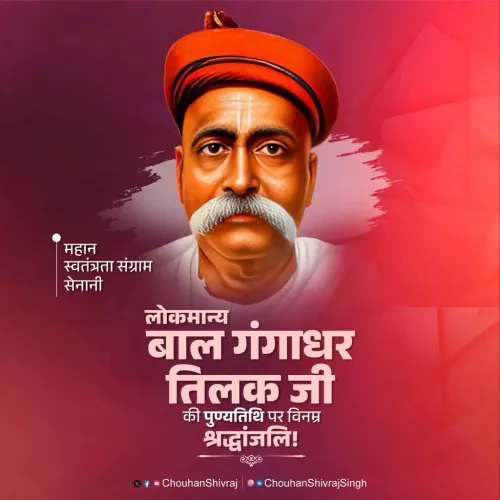
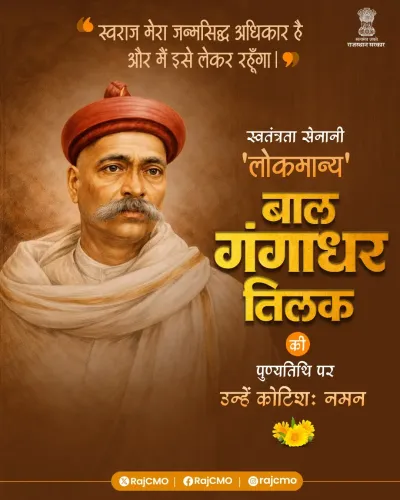
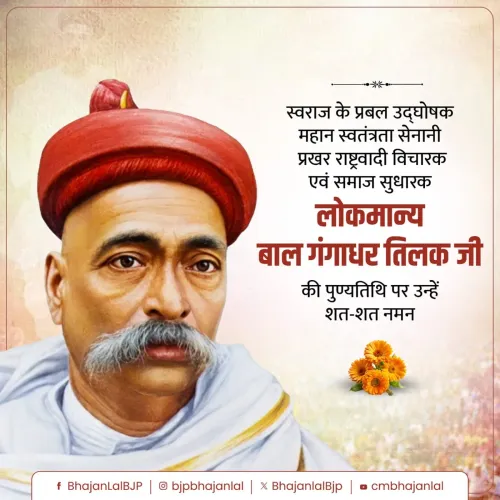
The Chief Minister's Office of Karnataka honoured Lokmanya Bal Gangadhar Tilak on his death anniversary on 1 August 2026, invoking his iconic declaration that Swaraj — self-rule — is every Indian's birthright, and saluting his legacy as a journalist, thinker, and nationalist leader.
Key Takeaways
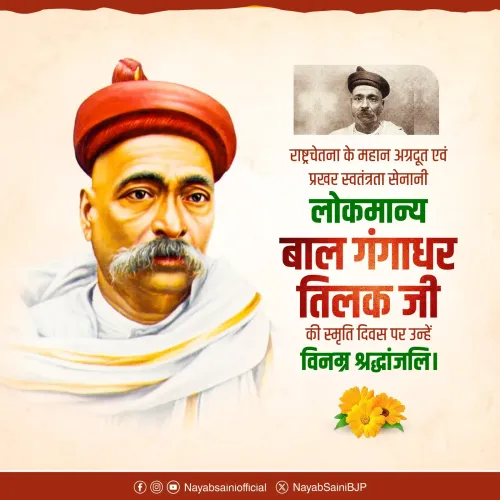
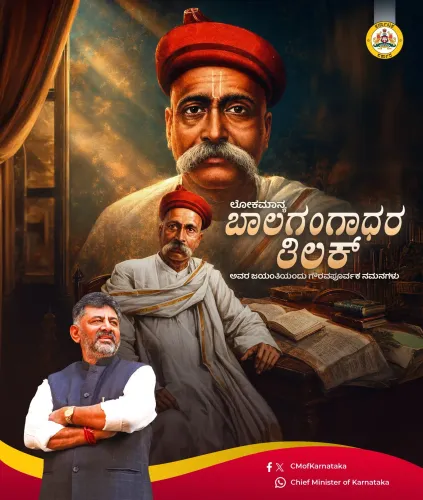
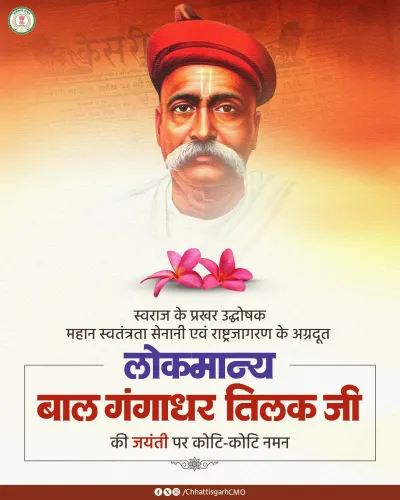
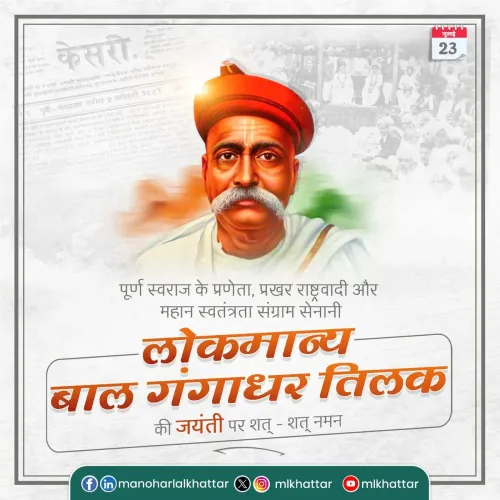
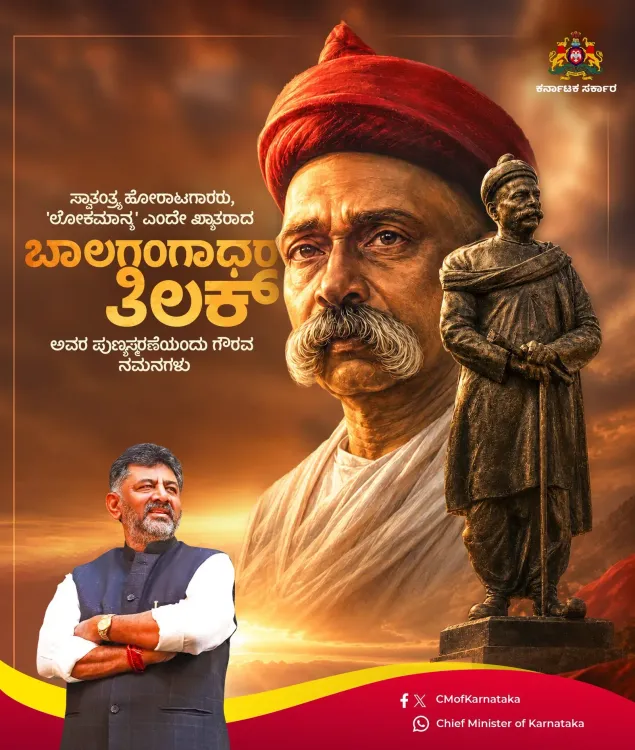
The Chief Minister's Office of Karnataka posted a tribute to Lokmanya Bal Gangadhar Tilak on his death anniversary, 1 August 2026 .
The post invoked Tilak's iconic slogan: 'Swaraj is my birthright, and I shall have it.' Tilak died on 1 August 1920 ; his punya smarane has been observed nationally ever since.
The tribute praised his contributions through journalism (notably the newspaper Kesari ), sharp intellect, and mass mobilisation against British rule.
The Karnataka CMO tribute is part of a broader pattern of state governments honouring independence-era leaders in the lead-up to Independence Day on 15 August .
A rallying cry that echoed across a colonised nation still rings out more than a century later. On 1 August 2026, the Chief Minister's Office of Karnataka paid solemn tribute to Lokmanya Bal Gangadhar Tilak on his death anniversary — punya smarane — honouring the man who armed Indians not with weapons, but with the conviction that freedom was their birthright.
The post, shared in Kannada, invoked Tilak's immortal declaration: 'Swarajya nanna janmasiddha hakku, adannu nanu padede teerutten' — 'Swaraj is my birthright, and I shall have it' — the slogan that galvanised a generation into action against British rule.
The man behind the battle cry
Bal Gangadhar Tilak, known by the honorific Lokmanya ('accepted by the people'), was among the earliest and most forceful voices of Indian nationalism. A journalist, mathematician, and mass mobiliser, he used his newspapers — most notably Kesari — as weapons of political awakening, reaching ordinary Indians in their own language at a time when the independence movement was still finding its footing. His philosophy was uncompromising: self-rule was not a favour to be negotiated, but a right to be seized. Tilak passed away on 1 August 1920, and the date has been observed as a day of national remembrance ever since.Karnataka's place in the remembrance tradition
State governments across India mark the birth and death anniversaries of independence-era leaders as part of an enduring official remembrance culture — one that intensifies in the weeks leading up to Independence Day on 15 August. The Karnataka CMO's tribute follows this pattern, reflecting the continued relevance of Tilak's legacy in public memory and political discourse. The post specifically saluted his 'fierce intellect, journalism, and unparalleled leadership' in the struggle against the British, calling his patriotism and sacrifice chirasthayiyagiruttade — eternally inscribed in history. As the nation moves toward another Independence Day, Tilak's insistence that liberty is non-negotiable — not a petition, but a demand — remains the sharpest reminder of how that freedom was won.Point of View
When the freedom struggle is most publicly foregrounded. State governments across the political spectrum invoke Tilak, but the specific emphasis on his journalism and mass mobilisation carries a subtle contemporary resonance at a time when the relationship between press freedom and political power remains contested. Tilak's model — using vernacular media to build a mass political consciousness — is a template that retains its instructive force well beyond the colonial era. The tribute signals institutional continuity in honouring the freedom struggle, while the choice of Tilak, a figure associated with assertive, non-petitionary nationalism, reflects a particular strand of that inheritance.
NationPress
1 Aug 2026
Frequently Asked Questions
When did Bal Gangadhar Tilak die?
Bal Gangadhar Tilak died on 1 August 1920 , and his death anniversary is observed annually as punya smarane across India.
What is the famous slogan of Bal Gangadhar Tilak?
Tilak's most famous slogan is 'Swaraj is my birthright, and I shall have it' — a declaration that became a defining rallying cry of the Indian independence movement.
What newspaper did Bal Gangadhar Tilak run?
Tilak edited and published Kesari , a Marathi-language newspaper that became a powerful instrument of nationalist awakening and resistance to British rule.
Why is Tilak called Lokmanya?
The honorific Lokmanya means 'accepted by the people' and was conferred on Tilak in recognition of his extraordinary popular appeal and leadership during the freedom struggle.
Why did the Karnataka CMO post a tribute to Tilak?
The Chief Minister's Office of Karnataka issued the tribute on Tilak's death anniversary, 1 August , as part of the customary official remembrance of independence-era leaders that intensifies ahead of Independence Day on 15 August .