Karnataka CM Shivakumar grants electricity exemption for buildings completed by May 31, 2026
Synopsis
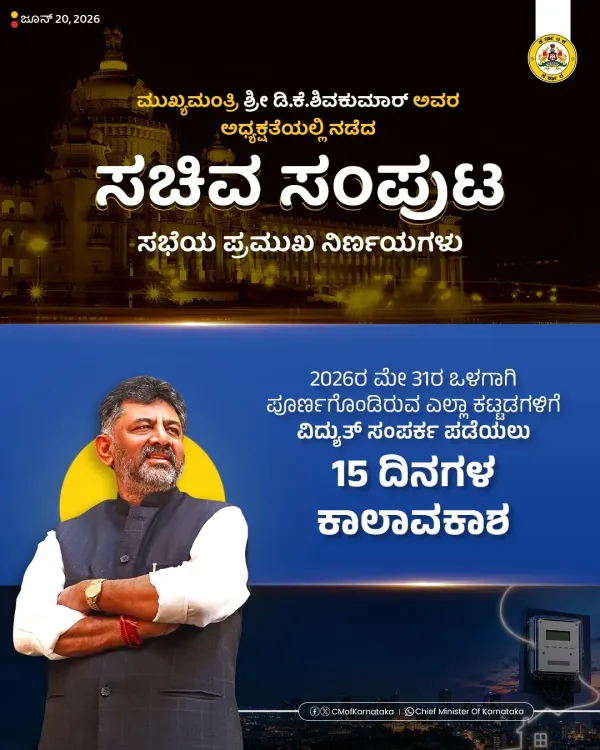
The Karnataka cabinet, chaired by CM D.K. Shivakumar, has approved electricity connection exemptions for all buildings completed by May 31, 2026, with a mandatory 15-day GPS-photo application window. Rural sericulture structures also get relief, but newly built units are excluded.
Key Takeaways
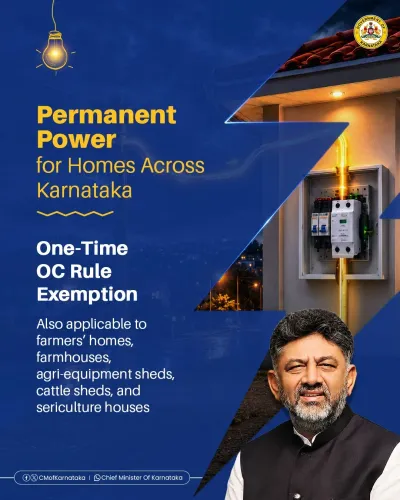
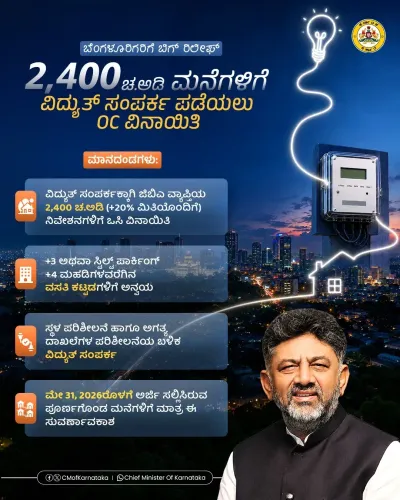
The Karnataka cabinet approved electricity connection exemptions for all buildings completed on or before May 31, 2026 .
Building owners will have 15 days from the date of the formal government order to submit their applications.
Applicants must mandatorily submit a photograph and GPS-tagged record of their building.
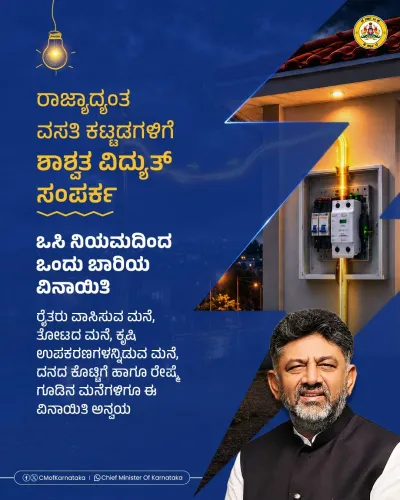
Rural sericulture structures — silk-rearing houses and cattle sheds — are specifically included in the exemption for existing buildings.
Newly constructed sericulture units will not be eligible for the exemption.
The decision was announced by CM D.K.
Shivakumar to the media following the cabinet meeting on June 20, 2026 .
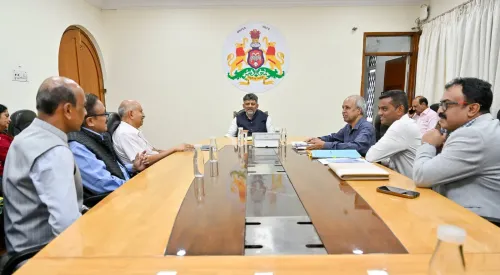
The Chief Minister's Office of Karnataka announced on Saturday, June 20, 2026, that the state cabinet, chaired by Chief Minister D.K. Shivakumar, has approved an exemption allowing all buildings completed on or before May 31, 2026, to obtain electricity connections under a time-bound relaxation scheme. The decision was communicated to the media by CM Shivakumar following the cabinet meeting.
Context
The cabinet resolution grants building owners a 15-day window from the date of the formal government order to apply for the electricity connection exemption. Applicants are required to mandatorily submit a photograph of the building along with GPS-tagged documentation as part of the application process. No exemption will be available for structures newly constructed after the cut-off date.
In addition, the cabinet extended a specific exemption to rural sericulture structures — including silk-rearing houses and cattle sheds used in silk farming — allowing them to obtain electricity connections. However, this exemption applies only to existing structures; newly built sericulture units will not qualify.
Policy Backdrop
Karnataka has a history of issuing time-bound exemptions to manage electricity access amid the dual challenge of regulating unauthorised construction and bridging rural infrastructure gaps. Such cabinet-level decisions are typically followed by formal government orders issued through the energy or revenue departments, which trigger the countdown for public applications.
The requirement for photo and GPS documentation reflects a broader state push toward digitised, verifiable last-mile delivery in the power sector, reducing the scope for fraudulent or duplicate claims. This approach aligns with the state's ongoing efforts to bring unelectrified or under-served structures into the formal grid without compromising regulatory oversight.
Stakeholders and Impact
Building owners across Karnataka whose structures were completed on or before May 31, 2026 stand to benefit directly, provided they act within the 15-day application window after the government order is published. The mandatory GPS and photo submission requirement adds a verification layer intended to prevent misuse of the exemption.
Rural sericulture farmers are a distinct beneficiary group under this decision. Karnataka is one of India's largest producers of raw silk, and many traditional silk-rearing households and cattle sheds in rural areas have historically struggled to access formal electricity connections due to documentation or regulatory hurdles. The exemption for existing structures directly addresses this gap, though it draws a firm line against incentivising fresh construction under the scheme.
What's Next
The critical next step is the issuance of the formal government order, which will set the official start date of the 15-day submission window. Electricity supply companies across Karnataka will then be responsible for processing applications and verifying the photo-GPS documentation submitted by building owners.
The volume and geographic spread of applications — particularly from rural districts with high sericulture activity — will be an early indicator of how effectively the exemption reaches its intended beneficiaries. Any delays in issuing the government order could compress the effective time available to applicants.
Point of View
Which has historically been a weak link in such schemes. For CM Shivakumar, the decision also carries political utility ahead of any upcoming local-body cycles, as it directly benefits both urban property owners and the rural farming constituency that the Congress government in Karnataka has prioritised. The firm exclusion of newly built structures is a meaningful regulatory guardrail that will test the state's enforcement capacity once the government order is issued.
NationPress
19 Sept 2026
Frequently Asked Questions
Who is eligible for the Karnataka electricity connection exemption announced in June 2026?
All building owners whose structures were completed on or before May 31, 2026, are eligible, provided they apply within 15 days of the formal government order and submit mandatory photo and GPS documentation.
What documents are required to apply for the Karnataka electricity exemption?
Applicants must submit a photograph of the building along with GPS-tagged location records. These are mandatory and must be filed within the 15-day window after the government order is issued.
Are newly built sericulture units covered under the Karnataka electricity exemption?
No. The exemption for rural silk-rearing houses and cattle sheds applies only to existing structures. Newly constructed sericulture units are explicitly excluded from the scheme.
When does the 15-day application window for Karnataka's electricity exemption begin?
The 15-day window starts from the date the formal government order is issued by the Karnataka government, not from the date of the cabinet announcement on June 20, 2026.
Which Karnataka cabinet meeting approved the electricity connection exemption?
The exemption was approved at a cabinet meeting chaired by Chief Minister D.K. Shivakumar on June 20, 2026, and announced by him directly to the media after the meeting.