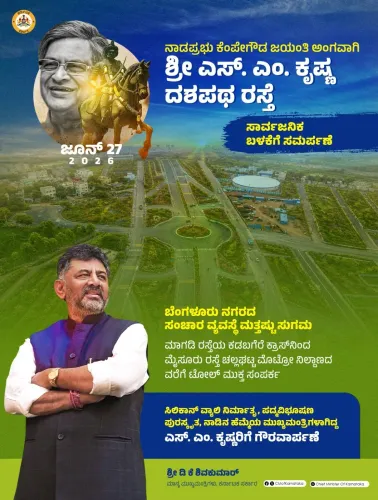
CM Siddaramaiah launches 10-lane S.M. Krishna Road, unveils Wall of Gratitude
Synopsis
Karnataka CM Siddaramaiah inaugurated a 10-lane S.M. Krishna Road in Bengaluru at the 517th Kempegowda Jayanti, announced a 'Wall of Gratitude' for landowners, a BDA drive planting 15 lakh saplings, and a Kempegowda Study Centre at Bangalore University on 9.5 acres donated by K.H. Muniyappa.
Key Takeaways
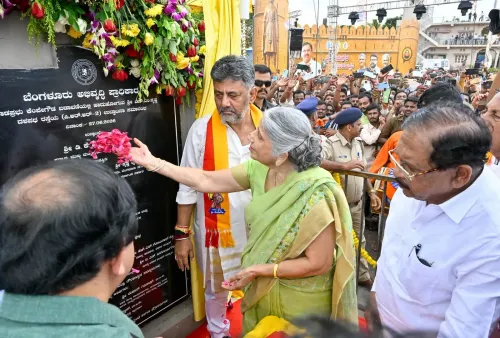
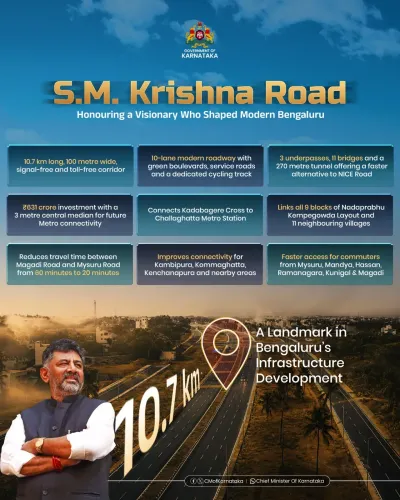
The Karnataka government inaugurated a 10-lane road named after former CM S.M.
Krishna , currently 11 km long and planned for extension to 123 km .
A Wall of Gratitude will permanently inscribe the names of landowners who give up land without dispute for public projects such as roads, schools, and industrial zones.
The BDA planted 15 lakh saplings on 27 June 2026 as part of a 'Green Bengaluru' initiative invoking the legacy of Nadaprabhu Kempegowda .
A Kempegowda Study Centre will be established at Bangalore University on 9.5 acres donated by Congress leader K.H.
A Rs 10 crore development programme has been announced for Hutridurga .
Every school in Bengaluru is to adopt a neighbourhood for sapling planting, with inter-school competitions organised by the GBA .
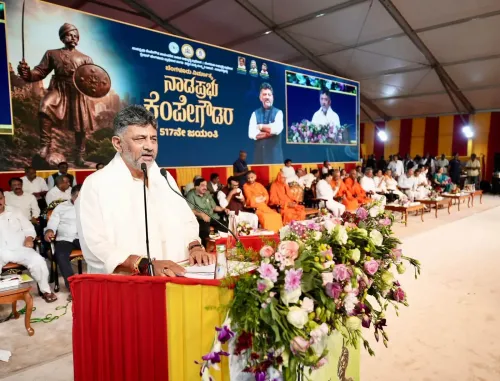
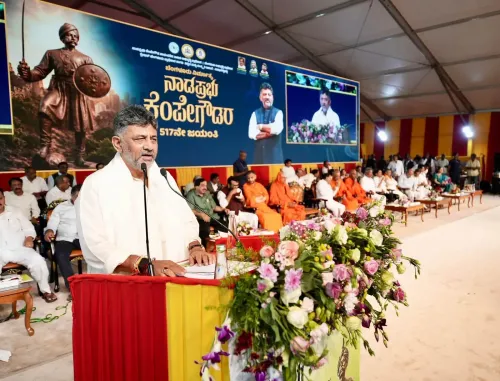
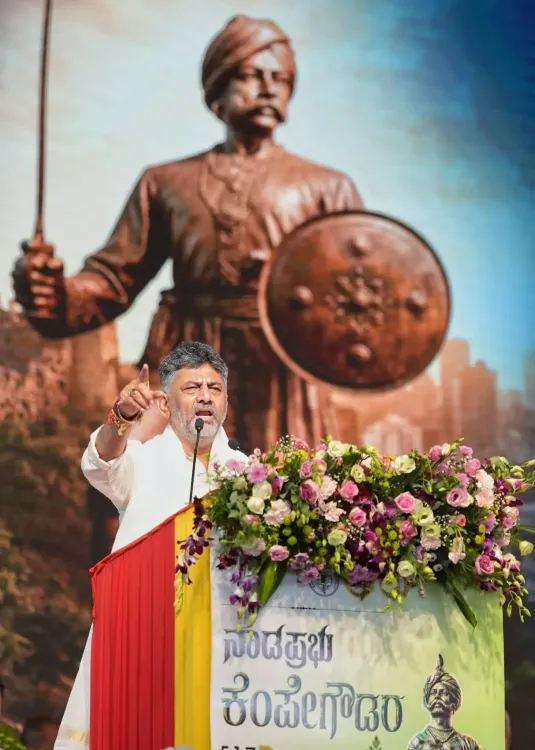
The Chief Minister's Office of Karnataka announced on Saturday, 27 June 2026 that the state government has inaugurated a new 10-lane road named after former Chief Minister S.M. Krishna and unveiled plans for a 'Wall of Gratitude' to permanently honour landowners who give up land without dispute for public projects. The announcement was made by Chief Minister D.K. Siddaramaiah at the 517th Kempegowda Jayanti celebrations held in Kempegowda Layout, Bengaluru, organised by the Bangalore Development Authority (BDA).
Context
Speaking at the Jayanti event, CM Siddaramaiah said the government has decided to include on a 'Wall of Gratitude' (Krutajnata Phalaka) the names of landowners who voluntarily give up land — without objection — for public projects such as industrial zones, schools, lakes, and roads. 'The sacrifice of landowners will be remembered through this,' he stated. The 10-lane road inaugurated today stretches 11 km and is planned for extension to 123 km, along which the Wall of Gratitude panels will be built.
Paying tribute to the late S.M. Krishna, the Chief Minister said, 'A life without ideals is an insult to life; a death without achievement is an insult to death.' He credited Krishna with building Arkavathi Layout, Kempegowda Layout, Shivarama Karantha Layout, and the Vikas Soudha during his tenure as Chief Minister from 1999 to 2004.
Policy Backdrop
Karnataka governments have historically paired land acquisition for roads and urban layouts with symbolic gestures to reduce resistance from affected landowners. The Wall of Gratitude initiative formalises this approach by offering permanent, public recognition as an incentive for voluntary, dispute-free land transfer. The BDA has also planted 15 lakh saplings today as part of a 'Green Bengaluru' drive invoking the vision of Nadaprabhu Kempegowda, the 16th-century founder of Bengaluru.
The Chief Minister recalled that Balagangadharanatha Swamiji had pledged to plant 5 crore saplings during S.M. Krishna's chief ministership, framing today's plantation drive as a continuation of that legacy. He called for every school in Bengaluru to adopt a neighbourhood and involve students in planting and nurturing saplings, with competitions to be organised by the Greater Bengaluru Authority (GBA).
Stakeholders and Impact
The initiative directly benefits Bengaluru residents who stand to gain faster delivery of public infrastructure with less litigation-related delay. Landowners whose properties are acquired for the 123-km road corridor will have their names permanently inscribed on the Wall of Gratitude panels along the route. The Chief Minister offered 'prostrate salutations' (sashtanga namana) to all those who gave up land for the 10-lane road.
On the institutional front, the government has decided to establish a Kempegowda Study Centre at Bangalore University. Senior Congress leader K.H. Muniyappa has donated 9.5 acres from his constituency for the centre. Separately, a Rs 10 crore development programme has been announced for Hutridurga. Deputy Chief Minister D.K. Parameshwara was also mentioned as moving ahead with a township project in Tumakuru.
What's Next
The BDA is expected to begin the physical rollout of the 123-km road corridor and construct Wall of Gratitude panels along it in the coming months. The Kempegowda Study Centre on the 9.5-acre site donated by K.H. Muniyappa is also set to be formally established at Bangalore University. The GBA will organise inter-school sapling competitions to sustain the greening momentum beyond the one-day plantation drive.
If implemented at scale, the Wall of Gratitude model could reshape how Karnataka handles land acquisition for public projects across the state — replacing prolonged legal disputes with voluntary transfers anchored in civic pride and public recognition.
Point of View
The Siddaramaiah government is threading a careful needle — honouring a Congress predecessor while projecting developmental continuity in Bengaluru. The Wall of Gratitude is a politically astute instrument: it converts a friction-heavy process (land acquisition) into a civic honour, potentially reducing costly litigation that has historically stalled infrastructure timelines in Karnataka. The 15-lakh sapling drive and proposed school-level greening competitions signal an attempt to pair hard infrastructure with an environmental narrative, addressing growing public concern over Bengaluru's declining green cover and urban heat. Taken together, these announcements position the Congress government as the custodian of Bengaluru's founding vision — a framing that will be tested when the 123-km road corridor moves from announcement to ground-level acquisition.
NationPress
26 Sept 2026
Frequently Asked Questions
What is the Wall of Gratitude announced by the Karnataka government?
The Wall of Gratitude ( Krutajnata Phalaka ) is a permanent public installation where the Karnataka government will inscribe the names of landowners who voluntarily give up their land — without any dispute — for public projects such as roads, schools, lakes, and industrial zones. It will first be built along the new S.M. Krishna Road in Bengaluru.
What is the S.M. Krishna Road inaugurated in Bengaluru?
The S.M. Krishna Road is a newly inaugurated 10-lane road in Bengaluru, currently 11 km long. The Karnataka government plans to extend it to 123 km . It is named after former Karnataka Chief Minister S.M. Krishna , who served from 1999 to 2004.
How many saplings did BDA plant on Kempegowda Jayanti 2026?
The Bangalore Development Authority (BDA) planted 15 lakh saplings on 27 June 2026 as part of a 'Green Bengaluru' initiative during the 517th Kempegowda Jayanti celebrations.
What is the Kempegowda Study Centre and where will it be set up?
The Kempegowda Study Centre is a proposed academic institution dedicated to the study of Nadaprabhu Kempegowda , the 16th-century founder of Bengaluru. It will be established at Bangalore University on 9.5 acres of land donated by Congress leader K.H. Muniyappa from his constituency.
What development work is planned for Hutridurga?
The Karnataka government has announced a Rs 10 crore development programme for Hutridurga , as stated by CM Siddaramaiah at the Kempegowda Jayanti event on 27 June 2026 .