Karnataka on high alert after WHO declares Ebola outbreak global emergency
Synopsis
The WHO's declaration of the DRC-Uganda Ebola outbreak as a global health emergency has triggered Karnataka's full preparedness machinery — isolation centres, rapid response teams, and airport surveillance — even as India reports zero cases. The state's response is a stress-test of India's post-COVID public health infrastructure, and how quickly it can close gaps at ports of entry.
Key Takeaways
The WHO declared the Ebola outbreak in DRC and Uganda a Public Health Emergency of International Concern (PHEIC) on 17 May 2026 .
No Ebola cases have been reported in India as of 22 May 2026 .
RGICD Bengaluru and Wenlock District Hospital Mangaluru have been designated as isolation and treatment centres.
Returnees from Ebola-affected countries must undergo 21-day self-monitoring after arriving in India.
Samples from suspected cases will be sent to NIV Pune for confirmatory testing via NIV Bengaluru.
Rapid Response Teams (RRTs) are on alert; PPE stocks and referral ambulances have been readied statewide.
The Karnataka Health Department has intensified surveillance and preparedness measures statewide after the World Health Organization (WHO) declared the ongoing Ebola Disease (ED) outbreak in the Democratic Republic of Congo (DRC) and Uganda a Public Health Emergency of International Concern (PHEIC) on 17 May 2026. Health authorities have confirmed that no Ebola cases have been reported in India so far, but precautionary steps have been sharply scaled up given the volume of international travel.
Designated Facilities Across Karnataka
In Bengaluru, the Rajiv Gandhi Institute of Chest Diseases (RGICD) has been designated as the isolation centre, while the Epidemic Diseases Hospital has been identified as the quarantine and treatment facility. In Mangaluru, the Srinivas Port Hospital under the New Mangalore Port Authority (NMPA) will serve as the quarantine centre, with Wenlock District Hospital designated as the isolation and treatment facility.
Testing and Surveillance Protocol
Samples from any suspected Ebola cases will be collected and routed through the National Institute of Virology (NIV), Bengaluru, for confirmatory testing at NIV Pune. The state has also strengthened monitoring of suspected cases under the Integrated Disease Surveillance Programme (IDSP) and enhanced coordination with airports and Points of Entry (PoEs).
Officials have directed persons returning from Ebola-affected countries to undergo self-monitoring and health observation for 21 days after arriving in India. Anyone developing symptoms has been advised to immediately report to the nearest health facility.
What Ebola Is and How It Spreads
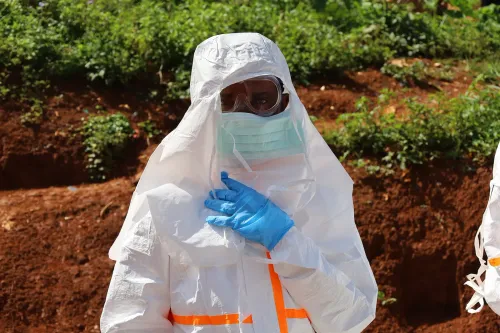
Ebola is a severe viral disease whose symptoms include fever, weakness, muscle pain, sore throat, headache, vomiting, diarrhoea, stomach pain, rash, and red eyes. The disease spreads through direct contact with the blood, organs, or body fluids of infected persons, as well as contaminated materials such as bedding, clothes, and syringes. Healthcare workers and close family members of infected individuals are considered to be at higher risk.
State Preparedness Measures
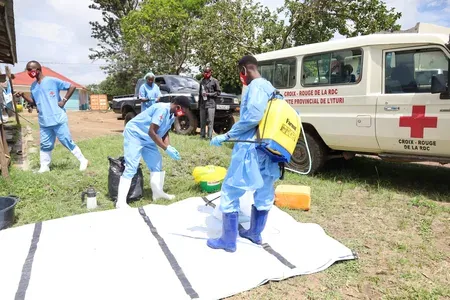
The department has confirmed that dedicated quarantine and isolation facilities are in place, referral ambulance services have been kept on standby, and Rapid Response Teams (RRTs) have been placed on alert. Training of healthcare personnel and infection prevention and control protocols have been intensified. Adequate stocks of personal protective equipment (PPE), medicines, and laboratory supplies are being ensured across the state.
Authorities have appealed to the public not to panic and to rely only on official information issued by health agencies. The department said it is continuously monitoring the global situation and will take further action as warranted.
Point of View
Where screening capacity and trained personnel remain uneven. The WHO's PHEIC declaration for an outbreak centred in DRC and Uganda carries genuine risk for India given direct and connecting flight routes through East Africa. The 21-day self-monitoring advisory is only as effective as the compliance and reporting infrastructure behind it, which has historically been difficult to enforce. If this outbreak follows the trajectory of the 2018-2020 DRC Ebola crisis — the second-largest on record — India's preparedness will be tested well before any confirmed case arrives.
NationPress
7 Oct 2026
Frequently Asked Questions
Has Ebola been detected in India?
No Ebola cases have been reported in India as of 22 May 2026, according to Karnataka health authorities. Precautionary measures have been activated given the volume of international travel between India and affected regions.
Why did the WHO declare Ebola a global health emergency in May 2026?
The WHO declared the Ebola outbreak in the Democratic Republic of Congo and Uganda a Public Health Emergency of International Concern (PHEIC) on 17 May 2026, citing the spread of the disease across international borders and the risk of further global transmission. A PHEIC is the WHO's highest level of alert.
What should travellers returning from DRC or Uganda do?
Persons returning from Ebola-affected countries are advised to undergo self-monitoring and health observation for 21 days after arriving in India. If any symptoms such as fever, vomiting, or muscle pain develop, they should immediately report to the nearest health facility.
Which hospitals in Karnataka are designated for Ebola cases?
In Bengaluru, RGICD is the isolation centre and the Epidemic Diseases Hospital is the quarantine and treatment facility. In Mangaluru, Srinivas Port Hospital under NMPA is the quarantine centre and Wenlock District Hospital is the isolation and treatment facility.
How does Ebola spread and who is most at risk?
Ebola spreads through direct contact with the blood, organs, or body fluids of infected persons, and through contaminated materials such as bedding, clothes, and syringes. Healthcare workers and close family members of infected individuals are considered to be at the highest risk of exposure.