Karnataka signs ₹2,500 crore ADB deal to upgrade 500 public schools by 2030
Synopsis
Karnataka has signed a ₹2,500 crore deal with the ADB to overhaul 500 public schools by 2030 — promising AI education, free transport, and career guidance from Class 6. With 70% of the funding coming from the ADB, this is one of the largest externally backed school infrastructure bets any Indian state has made in recent memory.
Key Takeaways
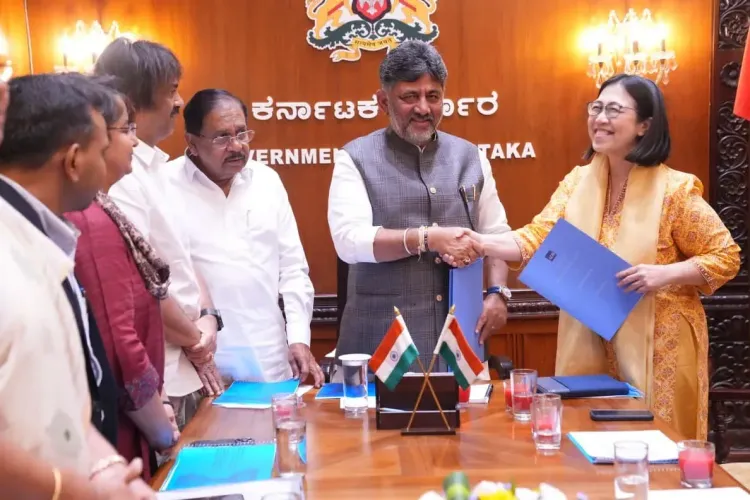
Karnataka and the Asian Development Bank (ADB) signed a ₹2,500 crore agreement on 21 August 2025 at Vidhana Soudha, Bengaluru .
The project will redevelop 500 Karnataka Public Schools (KPS) between 2026 and 2030 .
ADB contributes ₹1,750 crore ; the Karnataka government funds the remaining ₹750 crore .
Each school will be built to serve at least 1,200 students , offering free education from LKG to Class 12 on a single campus.
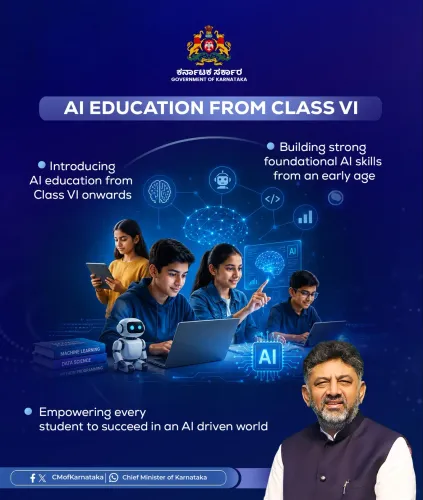
Key features include AI education , bilingual learning, free transportation, and career guidance from Class 6 .
The initiative specifically targets children in rural Karnataka , aiming to equip them with global-level competitive skills.
The Karnataka government on 21 August 2025 signed a landmark agreement with the Asian Development Bank (ADB) for a ₹2,500 crore project to comprehensively redevelop 500 Karnataka Public Schools (KPS), with Chief Minister D.K. Shivakumar present at the signing ceremony held at Vidhana Soudha, Bengaluru. The initiative, set to run from 2026 to 2030, is among the largest state-level school infrastructure investments in recent years.
Funding and Key Signatories
Of the total outlay, the ADB will contribute ₹1,750 crore while the Karnataka government will fund the remaining ₹750 crore. The agreement was executed in the presence of Deputy Chief Minister G. Parameshwara, Primary and Secondary Education Minister Madhu Bangarappa, and Additional Chief Secretary of the School Education and Literacy Department Rashmi Mahesh. Senior ADB officials — including National Director Mio Oka, Principal Portfolio Management Specialist Kai Wei Yeo, Principal Education Project Officer Poonam S. Bhambri, and Principal Communications Officer Rajesh Kumar Deol — were also present.
What the KPS Model Promises
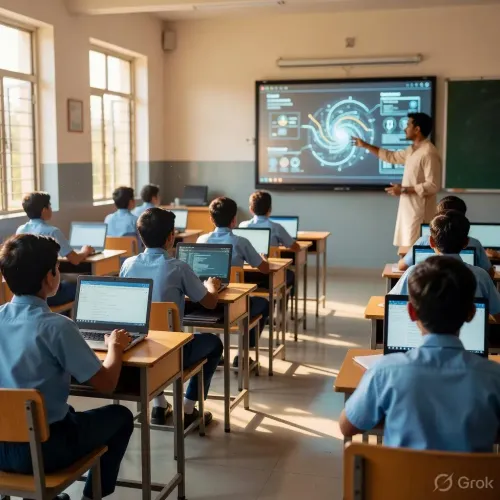
Each upgraded school will be built to accommodate a minimum of 1,200 students and will offer free, quality education from LKG to Class 12 on a single campus. The project will introduce bilingual education, computer and artificial intelligence (AI) learning, skill development, career guidance, and structured exposure to music, literature, and sports. Free student transportation is also part of the plan.
Notably, career guidance and competitive examination preparation will begin as early as Class 6 — a departure from the conventional approach of introducing such support only at the senior secondary level. Parent-teacher engagement will be formalised through meetings held every two months, and systems to continuously monitor academic progress will be deployed across campuses.
Focus on Rural Karnataka
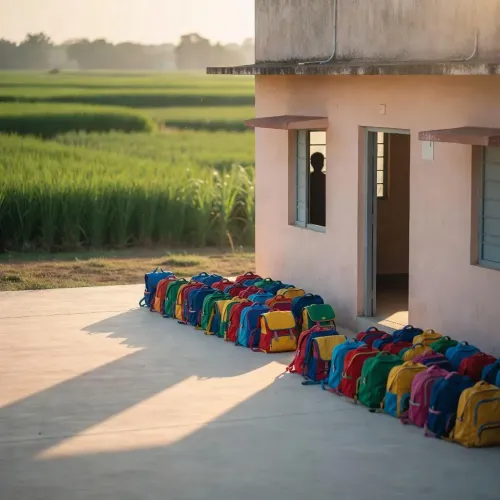
A stated priority of the project is equipping children from rural Karnataka with 21st-century skills to compete at the global level. Officials say the KPS model is designed to bridge the urban-rural education divide by consolidating infrastructure, faculty capacity, and digital learning resources under one roof. A special action plan to enhance teacher capacity will be formulated, with particular attention to improving student outcomes in Class 10 and Class 12 board examinations.
What the Government Said
Chief Minister Shivakumar framed the project in generational terms. "This is not merely a project to develop schools. It is a project to build the future of Karnataka for the next 50 years," he said at the signing. The government has positioned the KPS overhaul as a flagship education reform, with implementation milestones expected to be tracked against the 2030 deadline.
What Comes Next
With the agreement now signed, the project moves into the planning and procurement phase. Disbursements from the ADB are expected to be phased across the four-year implementation window. How effectively the model scales across geographically dispersed rural schools — and whether teacher recruitment keeps pace with infrastructure — will be closely watched by education observers.
Point of View
500 crore commitment to 500 schools sounds transformative, but the arithmetic is sobering: that works out to roughly ₹5 crore per school over four years — a figure that must cover construction, technology, teacher training, and transportation simultaneously. Karnataka's public school system has historically struggled less with funding announcements and more with implementation: teacher vacancies, irregular attendance, and the gravitational pull of private schools in aspirational rural households. The ADB's involvement brings disbursement discipline, but the real test is whether the KPS model can retain students once infrastructure is in place. If career guidance from Class 6 and AI education are delivered with fidelity, this could shift the needle. If they remain on paper, it joins a long line of well-funded state education schemes that moved buildings but not outcomes.
NationPress
5 Oct 2026
Frequently Asked Questions
What is the Karnataka ADB school project?
It is a ₹2,500 crore agreement signed on 21 August 2025 between the Karnataka government and the Asian Development Bank to comprehensively redevelop 500 Karnataka Public Schools (KPS) by 2030. The project aims to provide free, quality education from LKG to Class 12 on a single campus, with a focus on AI learning, skill development, and rural student empowerment.
How is the ₹2,500 crore project funded?
The ADB will contribute ₹1,750 crore, while the Karnataka government will fund the remaining ₹750 crore. Disbursements are expected to be phased across the four-year implementation period from 2026 to 2030.
Which schools are covered under the KPS project?
The project covers 500 Karnataka Public Schools (KPS) spread across the state, with a particular emphasis on improving educational access and quality in rural Karnataka. Each school will be developed to accommodate at least 1,200 students.
What new features will KPS schools offer students?
Students will have access to bilingual education, computer and AI learning, free transportation, career guidance starting from Class 6, competitive exam preparation, and extracurricular activities in music, literature, and sports. Parent-teacher meetings will be held every two months to track progress.
Why is this project significant for Karnataka's education system?
It is one of the largest externally backed school infrastructure investments in Karnataka's history, targeting the urban-rural education gap. The KPS model consolidates infrastructure, technology, and teacher capacity under one roof, with the stated goal of equipping rural children with globally competitive 21st-century skills by 2030.