Karnataka CM's Office: ₹355 Cr CSR Push for 112 Govt Schools
Synopsis
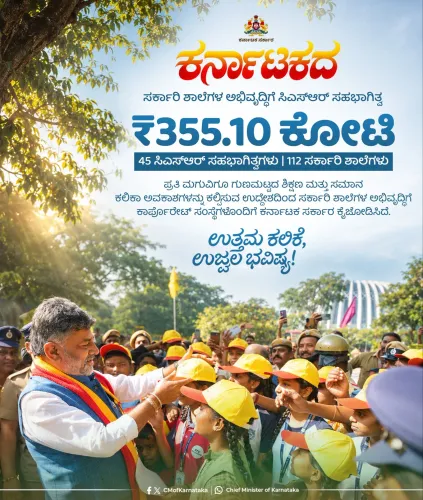
The Chief Minister's Office of Karnataka announced 45 CSR partnerships involving 112 government schools with a ₹355.10 crore total commitment to improve school infrastructure and learning facilities across the state.
Key Takeaways
45 CSR partnerships have been formalised under the CSR Initiative for Karnataka Public Schools.
112 government schools are covered under these partnerships.
Total funding commitment stands at ₹355.10 crore from corporate and philanthropic organisations.
Funds are directed specifically at school infrastructure and learning facilities , not general education budgets.
The initiative reflects a broader national pattern of states using structured CSR frameworks to supplement public education spending.
Implementation progress and measurable improvements in learning outcomes will determine the initiative's real impact.
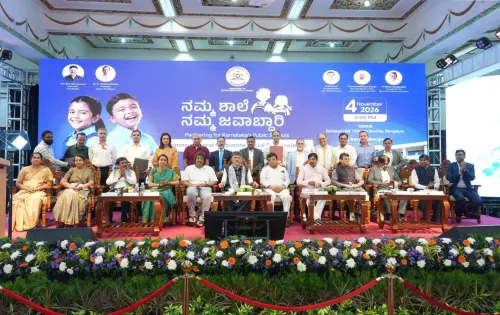
A ₹355.10 crore corporate and philanthropic commitment is now flowing into 112 government schools across Karnataka — and the Chief Minister's Office is calling it a structural shift, not a one-off donation drive. The Chief Minister's Office of Karnataka announced on Friday, November 6, 2026, that 45 partnerships have been formalised under the CSR Initiative for Karnataka Public Schools, targeting infrastructure upgrades and improved learning facilities across the state's public education network.
45 Partners, 112 Schools, One Big Number
The headline figure — ₹355.10 crore — represents the aggregate commitment secured from corporate and philanthropic organisations under a structured CSR framework. These are not ad hoc grants; they are formalised partnerships, each channelled specifically toward government school infrastructure and learning facilities. The CMO's statement framed it plainly: 'Our government is strengthening the public education system through meaningful partnerships with corporate and philanthropic organisations.'
Forty-five such partnerships covering 112 schools signals an average commitment well above token CSR spending — an indication that the state is positioning itself as a credible, structured partner for private capital in the education space.
Why States Are Turning to CSR for Classrooms
Karnataka's move fits a wider national pattern. Across India, state governments have increasingly turned to corporate social responsibility contributions to close the infrastructure and quality gap in public schools — not as a replacement for core government funding, but as an accelerant. The public school system, which serves millions of students who have no alternative, has historically struggled with ageing infrastructure, inadequate sanitation, and limited digital learning resources.
Structured state-level CSR frameworks — where the government acts as a facilitator and accountability anchor — have shown more durable results than uncoordinated corporate donations. Karnataka's model, with named partnerships and a disclosed funding total, suggests exactly that kind of institutional architecture.
What Comes Next for the 112 Schools
The real measure of this initiative will be implementation — whether the ₹355.10 crore translates into completed classrooms, functional labs, and better learning outcomes rather than stalled construction or unspent funds. The CMO's office signalled continued commitment: 'We remain committed to strengthening government schools and ensuring quality education and better opportunities for every child.' Progress reports on the 112 schools, and any tracked changes in enrollment or student performance, will be the benchmark that matters.
For the children in those government schools, the number on paper has to become a desk, a library shelf, or a working toilet. That is the only scorecard that counts.
Point of View
Spread across 45 partnerships, suggests the government has successfully pitched its school network as an accountable investment destination for private capital. This aligns with a national trend of state administrations increasingly blending public budgets with structured private contributions to accelerate infrastructure delivery. The initiative's credibility will ultimately rest on transparent implementation tracking and demonstrable outcomes across the 112 schools.
NationPress
7 Nov 2026
Frequently Asked Questions
What is the CSR Initiative for Karnataka Public Schools?
It is a structured government programme that formalises partnerships between corporate and philanthropic organisations and Karnataka government schools, channelling CSR funds toward school infrastructure and learning facilities. As of November 2026, it covers 45 partnerships across 112 schools with a total commitment of ₹355.10 crore.
How many government schools are covered under Karnataka's CSR school initiative?
A total of 112 government schools are covered under the initiative, through 45 formalised CSR partnerships announced by the Chief Minister's Office of Karnataka.
How much money has been committed to Karnataka government schools under CSR?
Corporate and philanthropic partners have committed a total of ₹355.10 crore toward improving infrastructure and learning facilities in Karnataka public schools.
Why are Indian state governments using CSR funds for school improvement?
States use CSR contributions to supplement public education budgets and address infrastructure gaps — such as classrooms, sanitation, and digital resources — without replacing core government funding. Structured partnerships with disclosed commitments have proven more accountable than uncoordinated donations.
What will determine the success of Karnataka's school CSR programme?
Success will hinge on implementation — whether the ₹355.10 crore commitment results in completed infrastructure upgrades and measurable improvements in learning outcomes and enrollment across the 112 schools.