CM Shivakumar signs ₹206 cr CSR deals for 56 Karnataka schools
Synopsis
Karnataka CM D.K. Shivakumar signed ₹206.10 crore CSR agreements with 15 organisations for 56 government schools at Vidhana Soudha on November 4, 2026, taking the state's total school-CSR pipeline to ₹355.10 crore across 112 schools and 45 corporate partners.
Key Takeaways
₹206.10 crore in fresh CSR agreements signed with 15 organisations for the development of 56 government schools in Karnataka.
Earlier in 2026 , ₹85 crore had been committed by 18 organisations for 33 schools .
Proposals worth ₹64 crore involving 12 more organisations for 23 schools are currently under process.
Cumulative pipeline: 45 organisations , 112 government schools , total investment of ₹355.10 crore .
The programme, 'Namma Shale Namma Javabdari' , channels corporate CSR mandates under the Companies Act into a structured state-managed school development fund.
Senior ministers M.B.
Patil, Madhu Bangarappa, and Priyank Kharge, alongside Chief Secretary Dr.
Shalini Rajneesh, attended — signalling high-level cross-departmental commitment.
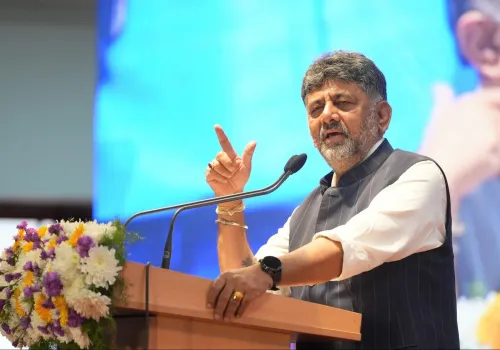
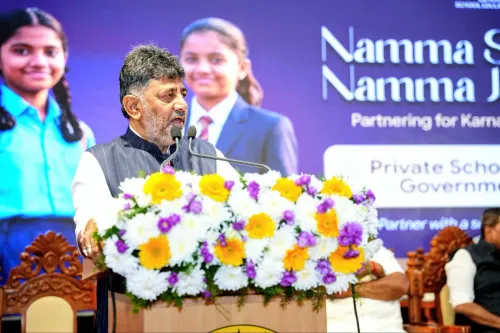
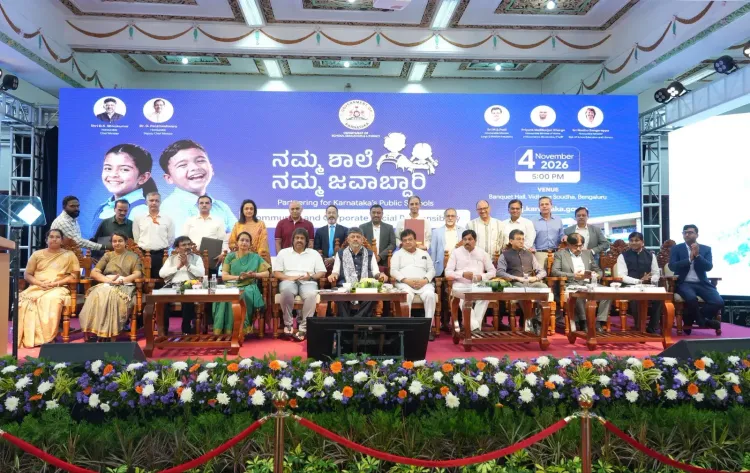
Three hundred and fifty-five crore rupees and 45 corporate partners — that is the scale Karnataka is now betting on to transform its government school network. Chief Minister D.K. Shivakumar attended the 'Namma Shale Namma Javabdari' Individual CSR Programme at the iconic Vidhana Soudha in Bengaluru on Wednesday, November 4, 2026, where the state government formalised agreements that bring corporate India into the classrooms of its most underserved students.
₹206 crore, 56 schools, 15 new partners
The centrepiece of the event was the signing of fresh agreements worth ₹206.10 crore with 15 organisations for the development of 56 government schools across Karnataka. The Chief Minister's Office described the initiative as a reflection of the government's commitment to bringing together public and private sector participation to strengthen school infrastructure and create better learning environments for students statewide.
The numbers signal a sharp acceleration. Earlier in 2026, agreements worth ₹85 crore had already been signed with 18 organisations covering 33 schools. Add to that proposals involving another 12 organisations for 23 schools worth ₹64 crore that are currently under process, and the cumulative picture becomes striking: partnerships and proposals spanning 45 organisations, 112 government schools, and a total committed investment of ₹355.10 crore.
What 'Namma Shale Namma Javabdari' actually means
Namma Shale Namma Javabdari — 'Our School, Our Responsibility' in Kannada — is the state's structured mechanism for routing corporate CSR funds directly into government school development. Rather than leaving individual companies to pick isolated projects, the programme aggregates commitments, pairs corporates with specific schools, and creates a pipeline of upgrades from physical infrastructure to learning quality. The School Education Department Karnataka, led by Additional Chief Secretary Smt. V. Rashmi Mahesh and Commissioner Dr. K. Vidyakumari, oversees the partnerships and tracks delivery.
The model plugs into India's broader CSR architecture under the Companies Act, which mandates that qualifying firms spend a portion of profits on social development — but Karnataka's approach goes a step further by institutionalising education as a priority vertical and creating a government-managed deal pipeline rather than relying on ad-hoc donations.
The cabinet weight behind the classroom push
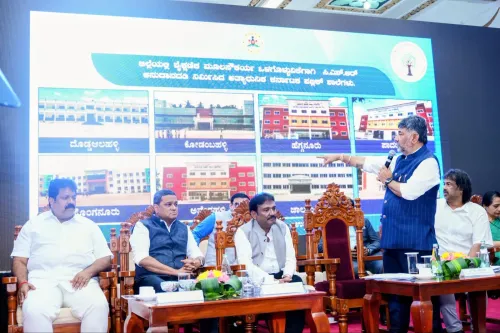
The seniority of officials present underlined how seriously the state is treating this initiative. Ministers M.B. Patil, Madhu Bangarappa, and Priyank Kharge attended alongside Chief Secretary Dr. Shalini Rajneesh and Chief Minister's Principal Advisor G.C. Chandrashekhar. That is not the guest list for a routine signing ceremony — it signals cross-departmental ownership at the highest level.
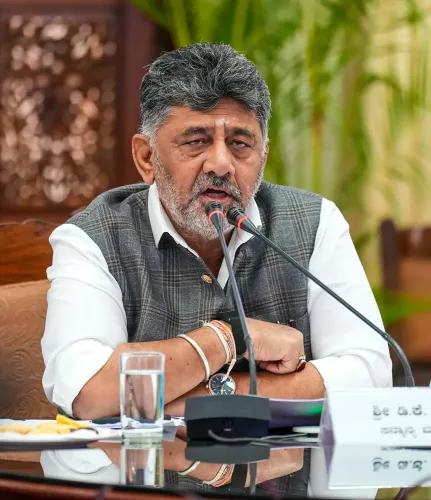
CM Shivakumar used the platform to emphasise collaborative effort as the governing principle: no single budget line can retool over a hundred schools at once, but a structured public-private compact, executed at scale, can. The question now is whether the 23 schools still in the proposal pipeline — and the 12 organisations behind them — convert to signed agreements before the academic year turns.
With ₹355.10 crore in motion and 112 schools in the pipeline, Karnataka has drawn a clear line: corporate India's CSR obligations and the state's classroom deficit are no longer parallel tracks — they are the same track.
Point of View
The government is also creating political accountability: delivery failures are now measurable against signed agreements. The presence of three cabinet ministers and the Chief Secretary suggests this is being positioned as a flagship governance narrative ahead of future electoral cycles. The key test is whether the 23 schools still in the proposal stage close — and whether the completed schools demonstrate quality outcomes rather than cosmetic upgrades.
NationPress
4 Nov 2026
Frequently Asked Questions
What is the Namma Shale Namma Javabdari scheme in Karnataka?
'Namma Shale Namma Javabdari' — meaning 'Our School, Our Responsibility' in Kannada — is a Karnataka government programme that channels corporate CSR funds into the development of government schools, pairing companies with specific schools for infrastructure and quality improvements.
How much CSR funding has Karnataka raised for government schools in 2026?
Including the latest agreements, Karnataka has set in motion a total investment of ₹355.10 crore across 45 organisations and 112 government schools through the Namma Shale Namma Javabdari initiative.
How many schools will benefit from the November 2026 CSR agreements?
The agreements signed on November 4, 2026 at Vidhana Soudha cover 56 government schools , backed by ₹206.10 crore from 15 organisations .
Who attended the Namma Shale Namma Javabdari event at Vidhana Soudha?
Chief Minister D.K. Shivakumar presided over the event. Ministers M.B. Patil, Madhu Bangarappa, and Priyank Kharge, Chief Secretary Dr. Shalini Rajneesh, and senior school education officials were also present.
How does Karnataka use corporate CSR funds for government schools?
Karnataka leverages the CSR mandate under India's Companies Act by creating a structured pipeline through its School Education Department, where eligible corporations are matched with specific government schools for targeted infrastructure and quality-improvement projects.