Why Did Night Temperatures Rise Above Freezing Point Across Kashmir Valley Except for Gulmarg?
Synopsis
The Kashmir Valley has experienced a rise in night temperatures above freezing, except for Gulmarg, due to extensive cloud cover. As the region anticipates its first snowfall, the importance of winter conditions for agriculture and water supply becomes evident. Celebrations and local cuisine highlight the cultural significance of this seasonal change.
Key Takeaways
Night temperatures rose above freezing across Kashmir Valley, except for Gulmarg.
The region awaits its first snowfall eagerly.
The Chillai Kalan period began on December 21.
Snowfall is critical for replenishing water resources in the summer.
The first snowfall is celebrated with local traditions and feasts.
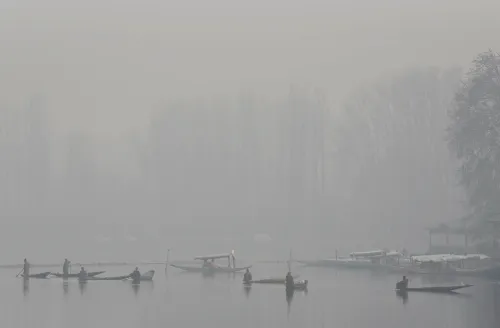
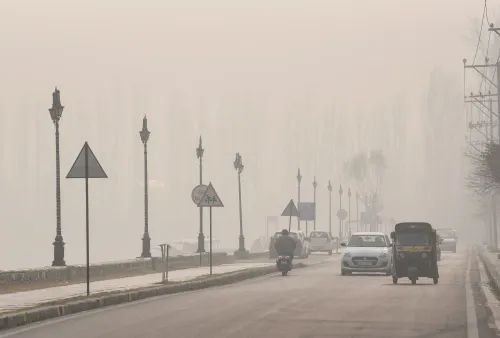
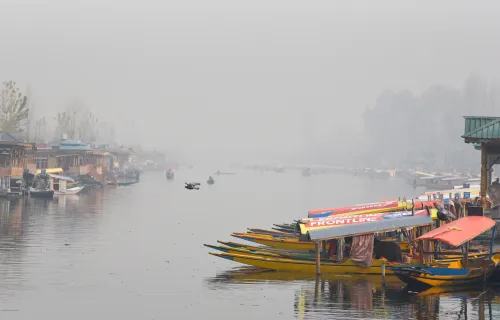
Srinagar, Dec 29 (NationPress) Due to a significant overnight cloud cover, night temperatures increased above the freezing level across the Kashmir Valley on Monday, with the exception of the ski destination of Gulmarg, according to weather officials.
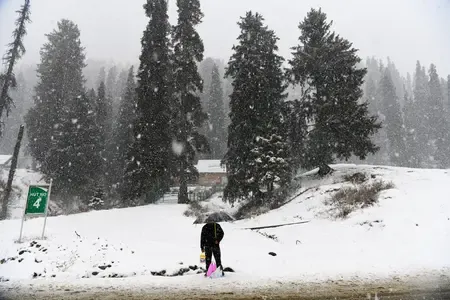
According to the Meteorological Department, the minimum temperature exceeded the freezing point in the Valley, aside from Gulmarg, which recorded a temperature of minus 2 degrees Celsius.
Srinagar city registered a minimum temperature of 3 degrees Celsius, while Pahalgam recorded 0.2 degrees Celsius.
In Jammu, the temperature was 9.1 degrees Celsius, Katra at 9.2, Batote at 7.3, Banihal at 4.8, and Bhaderwah at 3.3 degrees.
The Meteorological Department has predicted cloudy conditions for Monday and Tuesday. On December 31 and January 1, rain or snow is anticipated in several areas, with moderate snowfall expected in the central and northern regions during this timeframe.
Travelers and transporters are urged to adhere to advisories issued by the Traffic Department and local authorities.
The plains of the Kashmir Valley have yet to experience this season's first snowfall, and residents are eagerly awaiting it.
The 40-day harsh winter period known as ‘Chillai Kalan’ began on December 21 and will conclude on January 30.
Traditionally, major snow accumulation occurs in Kashmir during Chillai Kalan.
Heavy snowfall during these 40 days replenishes the perennial water resources in the mountains, which support all rivers, streams, springs, and lakes in J&K throughout the summer months.
A snowless Chillai Kalan could lead to dire consequences in the summer, resulting in water scarcity for drinking and agriculture.
This is why the first snowfall of winter is a momentous occasion in Kashmir.
People extend greetings upon the first snowfall, celebrating with the phrase ‘Nau Sheen Mubarak’.
Friends and family gather for feasts to mark the event, with one popular dish being fish cooked with tomatoes, radish slices, and lotus stems known as 'Nadru'.
This spicy delicacy is so delectable that it often leaves people licking their fingers after enjoying it.
Point of View
The rising temperatures in the Kashmir Valley, despite the absence of snow, highlight the pressing environmental changes affecting the region. This weather pattern not only impacts local culture and festivities but also raises concerns about water resources for the upcoming summer months. As always, NationPress remains committed to delivering timely and relevant news to our audience.
NationPress
28 Sept 2026
Frequently Asked Questions
What caused the rise in night temperatures in Kashmir Valley?
The rise in night temperatures is attributed to heavy cloud cover during the night.
What was the temperature in Gulmarg?
Gulmarg recorded a minimum temperature of minus 2 degrees Celsius.
What is Chillai Kalan?
Chillai Kalan is a 40-day period of harsh winter in Kashmir, running from December 21 to January 30.
Why is the first snowfall significant in Kashmir?
The first snowfall is crucial for water supply in summer and is celebrated culturally, marking an important seasonal change.
What local dish is traditionally enjoyed during the first snowfall?
A popular dish is fish cooked with tomatoes, radish slices, and lotus stems, known as 'Nadru'.