Kejriwal flags Jantar Mantar security buildup, questions Modi govt intent
Synopsis
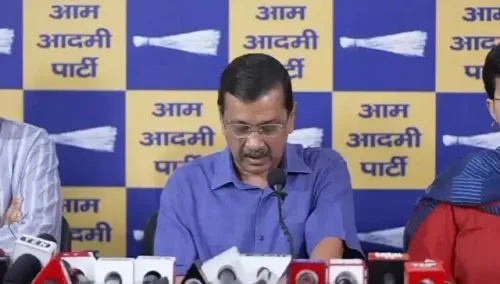
AAP convenor Arvind Kejriwal on 23 July 2026 raised alarm over heavy security and ambulance deployment near Jantar Mantar, and an order shutting Connaught Place shops by 6:30 pm. He questioned whether the Modi government was preparing to use force against protesters at the historic Delhi demonstration site.
Key Takeaways
AAP convenor Arvind Kejriwal posted on 23 July 2026 flagging a heavy security build-up near Jantar Mantar , New Delhi.
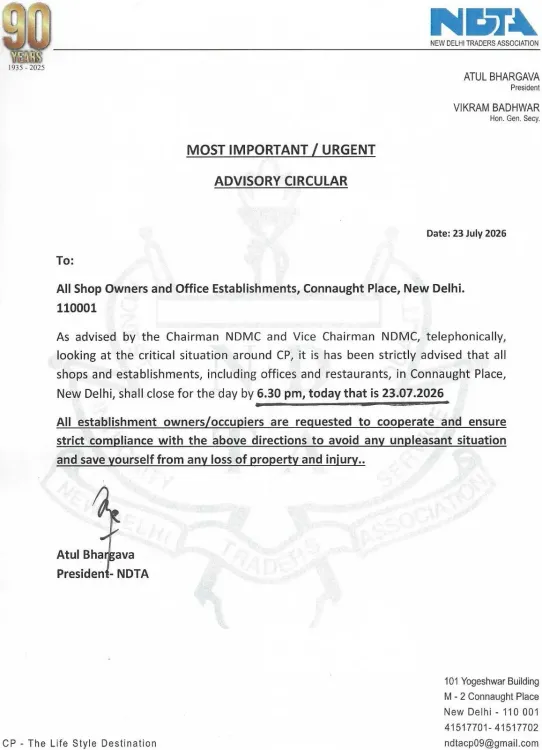
He claimed shops in Connaught Place were ordered to close by 6:30 pm and that a large number of ambulances had been deployed in the area.
Kejriwal directly questioned whether the Modi government intended to carry out a 'barbaric attack' on protesters at Jantar Mantar.
Delhi Police reports to the Ministry of Home Affairs — not the Delhi government — a structural tension that has repeatedly inflamed disputes over protest handling in the capital.
Jantar Mantar has historically been the site of major protests including farmers' agitation (2020–21) and CAA-linked demonstrations (2019–20) , both of which saw security restrictions in the area.
No formal response from Delhi Police or the Ministry of Home Affairs had been issued at the time of the post.
AAP convenor Arvind Kejriwal on Thursday, 23 July 2026, raised alarm over what he described as heavy security deployment and ambulance mobilisation near Jantar Mantar in central New Delhi, questioning whether the Modi government was preparing to use force against protesters gathering at the historic demonstration site.
In his post, Kejriwal wrote that shops in Connaught Place had been ordered to shut by 6:30 pm, and that a large number of ambulances had been positioned in the area alongside heavy security presence. He asked pointedly — 'Kya Modi sarkar aaj phir Jantar Mantar par apne bachchon par barbar hamla karegi?' ('Will the Modi government again carry out a barbaric attack on its own children at Jantar Mantar today?') — framing the security arrangements as a potential precursor to a crackdown on demonstrators.
Context
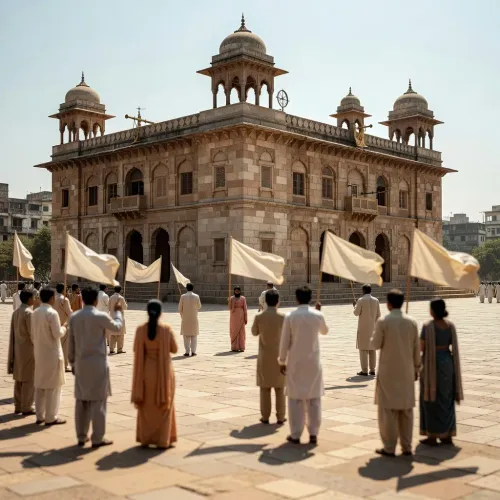
Jantar Mantar, a 18th-century astronomical monument in the heart of New Delhi, has long served as a primary venue for organised protests and public demonstrations. Its proximity to Parliament Street and Connaught Place — one of the capital's busiest commercial hubs — means that large-scale security deployments there routinely affect businesses and foot traffic in surrounding blocks.
Kejriwal's post came in the afternoon, hours before the reported shop-closure deadline, suggesting the security build-up was already visible and drawing public attention. The Aam Aadmi Party and its leadership have consistently framed central government policing decisions around protest sites as deliberate attempts to suppress democratic dissent.
Policy Backdrop
The tension over protest rights at Jantar Mantar is not new. During the 2020–21 farmers' protests, authorities imposed movement restrictions and deployed heavy security around Delhi demonstration sites. Earlier, in 2019–2020, demonstrations linked to the Citizenship Amendment Act at Jantar Mantar saw police barricades, baton charges, and temporary commercial shutdowns in the surrounding markets.
A persistent fault line in Delhi's governance is that the city's police force reports to the Ministry of Home Affairs under the central government, not to the elected Delhi government. This structural arrangement has been a recurring source of conflict between AAP administrations and the BJP-led central government, particularly when protest permissions and crowd-control decisions are contested.
Stakeholders and Impact
The most immediately affected parties are the Connaught Place shopkeepers and businesses ordered to close early, as well as any groups planning to assemble at Jantar Mantar on the evening of 23 July. Early shop closures translate directly into lost trade for vendors and retailers in one of Delhi's highest-footfall commercial zones.
For Delhi residents and commuters, heavy security deployments in the area typically mean road diversions and restricted movement across a wide radius. Civil society organisations that use Jantar Mantar as a symbolic space for legitimate protest are also directly affected by any pre-emptive restrictions on assembly.
What's Next
Attention will now turn to whether Delhi Police issues any formal orders clarifying the legal basis for the shop-closure directive and the nature of the security arrangements. A response from the Ministry of Home Affairs explaining the deployment would also be significant. Any use of force against demonstrators — or a peaceful dispersal — will shape the political narrative that follows.
Kejriwal's framing of the security build-up as a potential 'barbaric attack' sets the stage for a sharp political confrontation. If the evening passes without incident, the BJP is likely to push back against what it may call alarmist rhetoric; if there is any use of force, AAP will use the post as documented forewarning. Either way, the episode underscores the enduring contest over who controls the right to protest in the capital.
Point of View
AAP creates a paper trail that can be deployed politically regardless of what happens on the ground. The framing — 'will the government attack its own children?' — is consistent with AAP's long-running narrative that the BJP uses Delhi's police machinery to suppress opposition-aligned dissent. The deeper structural issue is the anomaly of a state capital whose police force answers to the central government, a design that guarantees friction whenever protest politics heats up. Whether or not force is used on the evening of 23 July, the episode will feed into the broader 2026 political calendar and AAP's positioning ahead of any upcoming electoral contests.
NationPress
23 Jul 2026
Frequently Asked Questions
Why were Connaught Place shops ordered to close early on 23 July 2026?
According to a post by AAP convenor Arvind Kejriwal, shops in Connaught Place were ordered to shut by 6:30 pm on 23 July 2026 amid heavy security deployment near the adjacent Jantar Mantar protest site. No official reason had been publicly stated by Delhi Police at the time of the post.
What is Jantar Mantar and why is it used for protests?
Jantar Mantar is an 18th-century astronomical monument in central New Delhi that has historically served as a designated protest site. Its central location near Parliament Street makes it a symbolic venue for opposition parties and civil society groups seeking public visibility for their causes.
Who controls Delhi Police — the Delhi government or the central government?
Delhi Police is under the jurisdiction of the Ministry of Home Affairs, which is controlled by the central government, not the elected Delhi government. This arrangement has been a persistent source of conflict between AAP and the BJP-led central government over policing and protest permissions.
Has the Modi government used force at Jantar Mantar protests before?
During the 2019–20 CAA-related protests and the 2020–21 farmers' agitation, security forces deployed at and around Jantar Mantar used barricades and, in some instances, baton charges to manage crowds. Kejriwal's post references this history in questioning the intent behind the 23 July security build-up.
What was AAP's reaction to the Jantar Mantar security deployment on 23 July 2026?
AAP convenor Arvind Kejriwal publicly flagged the deployment on social media, describing it as excessive and questioning whether the Modi government was planning to use force against protesters. His post noted the Connaught Place shop-closure order and the presence of a large number of ambulances as indicators of anticipated confrontation.