Kejriwal hints Modi may follow CEC Gyanesh Kumar out the door
Synopsis
AAP convenor Arvind Kejriwal posted a sharp Hindi quip on October 11, 2026, suggesting that after 'yesterday's tandav,' Prime Minister Modi's resignation might follow Chief Election Commissioner Gyanesh Kumar's — a pointed political broadside against the ruling establishment.
Key Takeaways
AAP convenor Arvind Kejriwal posted a barbed Hindi message on October 11, 2026 targeting both CEC Gyanesh Kumar and PM Narendra Modi .
The post uses the word taandav (destructive mayhem) to describe an event on October 10, 2026 , treating it as politically disqualifying for the government.
Kejriwal sarcastically raises the prospect of Modi's resignation following alongside Kumar's — a rhetorical escalation, not a literal demand.
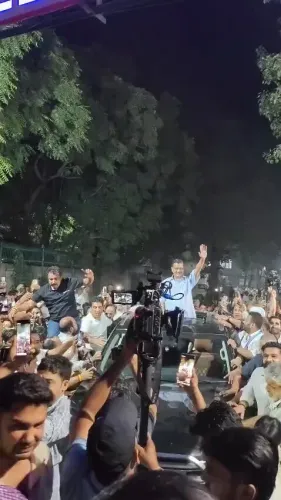
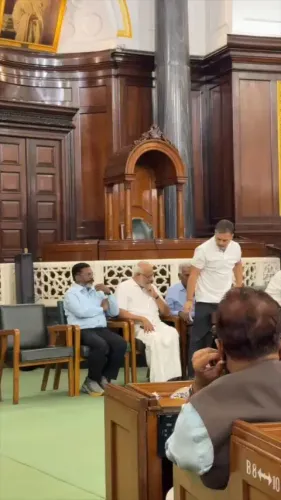
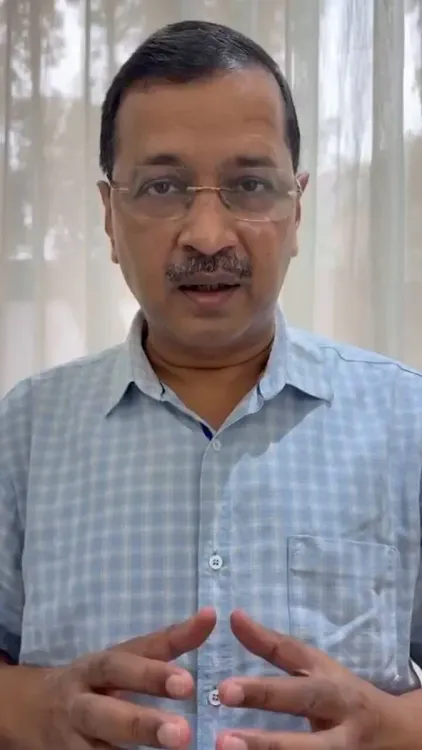
The post includes a video, suggesting Kejriwal considers visual evidence central to his claim.
AAP has a consistent record of targeting the Election Commission's credibility as part of its broader opposition strategy against the BJP-led central government.
No independent verification of the specific 'tandav' incident was available at time of publication.
A single barbed line from AAP convenor Arvind Kejriwal on Sunday, October 11, 2026 has set political circles buzzing — one that links the fate of Chief Election Commissioner Gyanesh Kumar to that of Prime Minister Narendra Modi himself, in what reads as a pointed jab at the ruling establishment after what Kejriwal called 'yesterday's tandav.'
Posting in Hindi, Kejriwal wrote: 'Kal ke taandav ke baad, aisa na ho ki Gyanesh Kumar ke saath-saath Modiji ka bhi isteefa ho jaaye.' In plain English: 'After yesterday's mayhem, let us hope it does not come to pass that Modi's resignation follows alongside Gyanesh Kumar's.'
The 'tandav' Kejriwal is referencing
While the research block carries no independent verification of the precise event Kejriwal labels a 'tandav' (a word connoting destructive, furious upheaval), the framing is unambiguous: something dramatic unfolded on Saturday, October 10, 2026, and Kejriwal is treating it as politically fatal enough to raise the spectre of the Chief Election Commissioner's exit — and, by sardonic extension, the Prime Minister's own.
The post attaches a video, suggesting Kejriwal or his team considered the visual evidence self-explanatory. Without verified detail on the specific incident, the post's political intent remains the newsworthy core: a direct opposition salvo linking an election-administration controversy to the government's own survival.
Gyanesh Kumar and the CEC office — why the name lands hard
The Chief Election Commissioner is one of the most consequential constitutional posts in India, responsible for conducting free and fair elections across the world's largest democracy. Any suggestion of a CEC's resignation — voluntary or forced — carries enormous institutional weight. By yoking Kumar's hypothetical exit to Modi's in the same breath, Kejriwal is deploying the comparison as political theatre: if the umpire goes, should the captain not follow?
It is a rhetorical device Kejriwal has used before — attaching a seemingly absurd hypothetical to a real political pressure point to amplify the underlying accusation without stating it outright.
AAP's combative playbook on election-body credibility
The Aam Aadmi Party has repeatedly questioned the impartiality of election-related institutions under the current central government, a posture that has sharpened as AAP has fought high-stakes contests in Delhi, Punjab, and beyond. Framing the Election Commission as a pressure point against the BJP is a well-worn AAP strategy — this post escalates that frame to its most dramatic register yet, invoking the word 'tandav' to signal that whatever occurred on Saturday crossed a threshold.
If the incident Kejriwal references gains traction, this post will be cited as the moment the opposition first demanded accountability at the very top. If it does not, it stands as a provocative political missive — one calibrated for virality rather than documentation.
The question now is whether anyone in the ruling establishment answers — or stays conspicuously silent.
Point of View
He forces the news cycle to ask the question he wants asked: what happened on October 10? The CEC's constitutional position makes any hint of controversy around that office politically explosive, and AAP's consistent strategy of questioning election-body impartiality means this is not an isolated statement but part of a deliberate long-game narrative. Whether the underlying incident sustains scrutiny will determine whether this post ages as prophecy or provocation.
NationPress
11 Oct 2026
Frequently Asked Questions
What did Arvind Kejriwal post about Gyanesh Kumar and Modi?
On October 11, 2026, Kejriwal posted in Hindi suggesting that after 'yesterday's tandav,' Prime Minister Modi's resignation might come alongside that of Chief Election Commissioner Gyanesh Kumar — a sarcastic political jab, not a literal demand.
Who is Gyanesh Kumar?
Gyanesh Kumar is the Chief Election Commissioner of India, the constitutional authority responsible for conducting free and fair elections across the country.
What is the 'tandav' Kejriwal referred to?
Kejriwal used the Hindi word 'taandav' — meaning destructive upheaval — to describe an event on October 10, 2026. The post attached a video as evidence, but the specific incident had not been independently verified at the time of publication.
Is PM Modi actually resigning?
No. Kejriwal's post is a rhetorical device, not a report of an actual resignation. He is using the hypothetical to politically pressure the ruling establishment after what he describes as a damaging episode.
Why does AAP keep targeting the Election Commission?
AAP has consistently questioned the impartiality of election-related institutions under the current central government, particularly as the party has contested high-stakes elections in Delhi and Punjab. Framing the Election Commission as a political pressure point is a core part of AAP's opposition strategy against the BJP.