Kejriwal Posts 'Jai Shri Ram' on X

Synopsis
AAP convenor Arvind Kejriwal posted 'Jai Shri Ram' on X on 12 July 2026 — a brief, standalone devotional salutation with no added context, drawing attention amid the party's evolving cultural outreach to Hindu voters.
Key Takeaways
AAP convenor Arvind Kejriwal posted Jai Shri Ram on X on 12 July 2026 at approximately 2:19 PM IST .
The post carried no image, video, or explanatory text — just the two-word devotional salutation.
The phrase has carried heightened political significance since the Ayodhya Ram Temple consecration in January 2024 .
AAP , traditionally associated with secular civic governance, has increasingly made public gestures of Hindu devotion in recent years.
No specific occasion or event was cited by Kejriwal in connection with the post.
Reactions from BJP , Congress , and AAP's own voter base are likely to follow.
AAP convenor Arvind Kejriwal posted the devotional salutation Jai Shri Ram on X (formerly Twitter) on Sunday, 12 July 2026, in a brief standalone message carrying no accompanying text, image, or video.
Context
The two-word post — Jai Shri Ram ('Victory to Lord Rama') — is among the most widely recognised devotional phrases in Hinduism and has carried heightened political resonance in India since the consecration of the Ayodhya Ram Temple in January 2024. Kejriwal offered no elaboration, leaving the message open to devotional, cultural, and political readings.
The post appeared on a Sunday afternoon, a time when religious sentiment is often publicly expressed on social media. No specific occasion, event, or political development was cited by Kejriwal in connection with the salutation.
Policy Backdrop
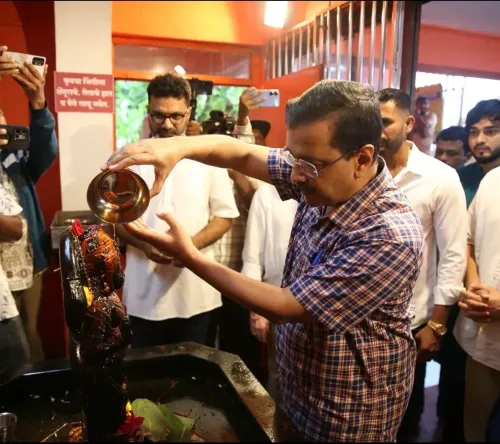
Kejriwal and the Aam Aadmi Party (AAP), founded in 2012, built their early identity around anti-corruption governance and a broadly secular civic platform. In recent years, however, Kejriwal has made visible gestures of Hindu devotion — including a visit to temples and public acknowledgment of the Ram Temple consecration — as the party expanded its electoral footprint beyond Delhi into states with large Hindu voter bases.
Indian political leaders across the spectrum have increasingly incorporated devotional language and temple visits into their public communication. This reflects a broader shift in electoral strategy, with parties seeking to signal cultural affinity with the Hindu majority without abandoning governance-centred messaging.
Stakeholders and Impact
The post is likely to be noted by Hindu voters in Delhi and Punjab, two states where AAP holds significant political presence. Supporters within AAP may read it as a natural expression of personal faith, while political rivals — particularly in the Bharatiya Janata Party (BJP) — may scrutinise it as part of a pattern of ideological repositioning.
For AAP's traditional urban, middle-class voter base, the message is unlikely to generate significant friction. For the party's secular-leaning supporters, it may prompt questions about the direction of AAP's cultural positioning ahead of future electoral cycles.
What's Next
Whether Kejriwal follows up with context — a temple visit, a religious occasion acknowledgment, or a policy statement — will determine how the post is ultimately interpreted. Reactions from BJP and Congress spokespersons, as well as internal AAP circles, are worth watching. The post adds to a growing body of devotional public communication from Kejriwal that observers will track as a signal of AAP's evolving cultural strategy ahead of the next round of state elections.
Point of View
Stripped of any accompanying context, is a textbook example of the low-cost, high-signal devotional communication that has become standard across India's political spectrum since the Ayodhya temple consecration. For AAP, it fits a discernible pattern: the party has been carefully calibrating its cultural messaging to compete on terrain long dominated by the BJP without alienating its urban, governance-focused base. The absence of elaboration is itself a strategic choice — it invites devotional solidarity while foreclosing political attack lines. Whether this represents genuine personal faith or electoral calculus, the effect is the same: Kejriwal plants a flag in a culturally significant space ahead of future electoral contests.
NationPress
11 Oct 2026
Frequently Asked Questions
Why did Kejriwal post 'Jai Shri Ram' on X?
Kejriwal posted 'Jai Shri Ram' on X on 12 July 2026 without providing any specific reason or context. The post may reflect personal devotion or be part of AAP's broader cultural outreach to Hindu voters.
What does 'Jai Shri Ram' mean?
'Jai Shri Ram' is a Sanskrit devotional salutation meaning 'Victory to Lord Rama.' It is one of the most widely used phrases in Hinduism and has gained heightened political resonance in India since the Ayodhya Ram Temple consecration in January 2024.
Is Kejriwal Hindu? Does he visit temples?
Kejriwal has publicly identified with Hindu faith and has made several temple visits during his political career. He also publicly acknowledged the significance of the Ayodhya Ram Temple consecration in January 2024.
How is AAP positioning itself on Hindu cultural issues?
AAP, founded on a secular anti-corruption platform in 2012, has increasingly incorporated devotional gestures and Hindu cultural signalling into its public communication as it seeks to expand its voter base in states with large Hindu populations.
What was the political reaction to Kejriwal's 'Jai Shri Ram' post?
As of the time of publication, no formal reactions from BJP, Congress, or other parties had been recorded. Responses from political rivals and AAP supporters are expected to follow.