Kejriwal Questions Amit Shah's Absence from Ram Mandir
Synopsis
AAP convenor Arvind Kejriwal on 1 July 2026 alleged that Home Minister Amit Shah has not visited the Ram Mandir in Ayodhya even once since its January 2024 consecration, accusing him of invoking Lord Ram solely for electoral gain and posing five pointed questions to him.
Key Takeaways
AAP convenor Arvind Kejriwal alleged on 1 July 2026 that Amit Shah has not visited the Shri Ram Mandir in Ayodhya in the two-and-a-half years since its consecration.
Kejriwal claimed Shah has mentioned Lord Ram and the temple more than 42 times in speeches and interviews, including to seek votes, without making a personal visit.
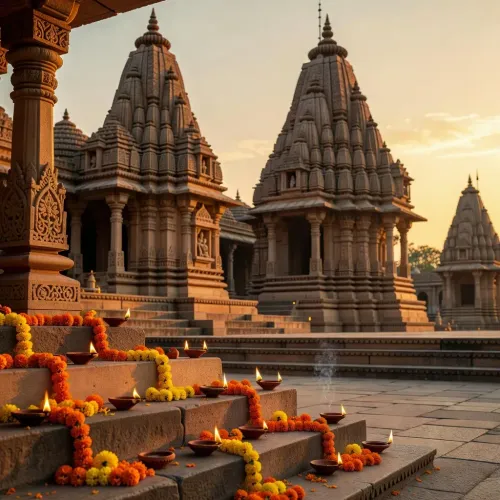
The Pran Pratishtha ceremony was held on 22 January 2024 , attended by Prime Minister Narendra Modi .
Kejriwal accused Shah of treating Ram as 'a means to acquire power and earn money' and said Shah has 'no faith in Ram.' He posed five direct questions to Shah, including whether he considers Lord Ram to be God and whether he desires Ram's blessings.
The attack follows an established AAP pattern of contesting BJP's religious credentials on the BJP's own symbolic terrain ahead of 2027 state elections .
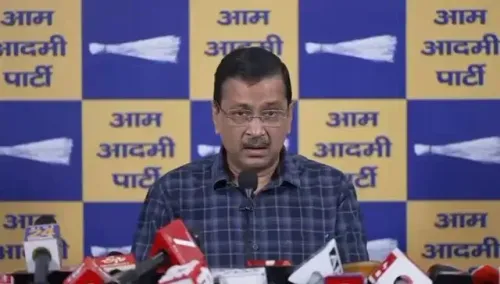
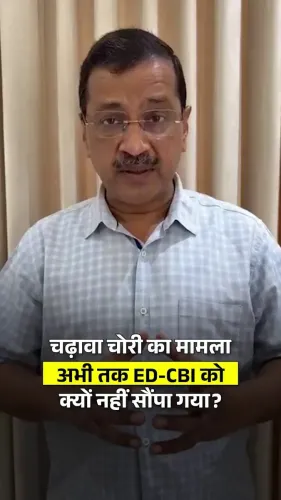
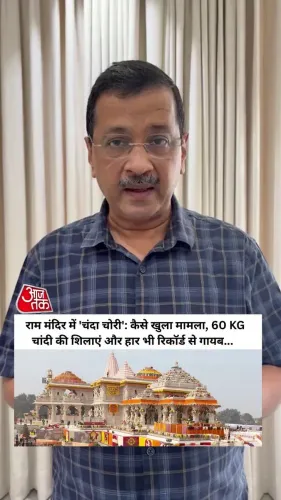
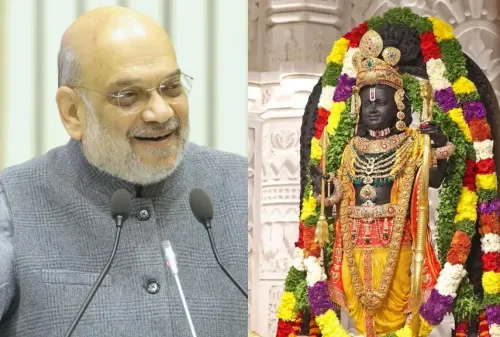
AAP convenor Arvind Kejriwal on Wednesday, 1 July 2026, publicly challenged Union Home Minister Amit Shah, alleging that Shah has not visited the Shri Ram Mandir in Ayodhya even once in the two-and-a-half years since its consecration, despite repeatedly invoking Lord Ram and the temple in speeches and interviews to seek votes.
Context
Kejriwal's post, written in Hindi, states: 'आज तक एक बार भी अमित शाह जी श्री राम मंदिर नहीं गए' ('Till today, Amit Shah ji has not visited the Shri Ram Mandir even once'). He adds that the Pran Pratishtha — the consecration ceremony — took place two-and-a-half years ago, and that in this period Shah allegedly referenced Lord Ram and the temple more than 42 times in speeches and interviews, including to solicit votes.
Kejriwal concluded with a pointed accusation: 'For them, Ram is only a means to acquire power and earn money. They have no faith in Ram.' He then posed five direct questions to Shah, asking why he had not visited, whether he did not feel the desire to seek Lord Ram's blessings, and whether he considers Ram to be God.
Policy Backdrop
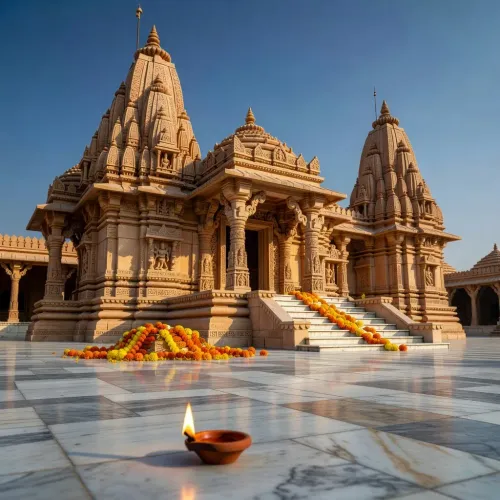
The Shri Ram Mandir's Pran Pratishtha was performed on 22 January 2024 in a nationally televised ceremony attended by Prime Minister Narendra Modi. The temple's construction followed a landmark 2019 Supreme Court judgment that awarded the disputed site in Ayodhya, Uttar Pradesh, to a Hindu trust, ending a decades-long legal dispute.
The BJP has anchored its electoral identity to the Ram Mandir cause since the Ayodhya movement of the 1980s and 1990s, and the temple featured prominently in the party's campaigns for the 2019 and 2024 general elections. The consecration ceremony itself was widely seen as a major political moment ahead of the 2024 Lok Sabha polls.
Stakeholders and Impact
Hindu voters, who form a significant constituency for the BJP, are the primary audience for both the original mobilisation around the Ram Mandir and Kejriwal's current challenge. By framing the allegation in terms of personal devotion rather than policy, AAP is attempting to contest the BJP's claim to religious authenticity on its own symbolic terrain.
The attack fits an established pattern in AAP-BJP exchanges, in which AAP has repeatedly argued that BJP leaders treat religious symbols as electoral instruments rather than objects of genuine faith. The specific focus on Amit Shah — the BJP's chief organisational strategist — signals that AAP views him as a particularly effective target ahead of upcoming state elections.
What's Next
Political observers will watch for a formal response from BJP spokespersons or Amit Shah himself, and whether any senior BJP leaders make high-profile temple visits in the coming weeks. State assembly elections scheduled for 2027 are expected to keep the Ram Mandir's political salience elevated, making the question of leaders' personal visits to Ayodhya a recurring flashpoint between the two parties.
If BJP does not respond, AAP is likely to escalate the line of attack; if it does, the exchange could define a new front in the broader contest over who owns the Ram Mandir's political legacy.
Point of View
AAP is going after the BJP's chief political strategist rather than a peripheral figure, signalling confidence in the attack line. The framing of five rhetorical questions is a well-worn opposition tactic designed to force a response or allow the silence itself to become the story. This move fits a broader AAP strategy of contesting BJP on cultural and religious ground rather than ceding that space entirely, a posture that has grown more pronounced as both parties compete for Hindu voter consolidation ahead of 2027 assembly polls.
NationPress
1 Jul 2026
Frequently Asked Questions
Has Amit Shah visited the Ram Mandir in Ayodhya?
AAP convenor Arvind Kejriwal alleged on 1 July 2026 that Amit Shah has not visited the Shri Ram Mandir in Ayodhya even once since its Pran Pratishtha on 22 January 2024. There has been no official confirmation or denial from Amit Shah's office as of the time of this report.
When was the Ram Mandir Pran Pratishtha held?
The Pran Pratishtha, or consecration ceremony, of the Shri Ram Mandir in Ayodhya was held on 22 January 2024 and was attended by Prime Minister Narendra Modi.
What did Kejriwal say about Amit Shah and Lord Ram?
Kejriwal alleged that Amit Shah mentioned Lord Ram and the Ram Mandir more than 42 times in speeches and interviews — including to seek votes — but has not visited the temple personally. He accused Shah of having 'no faith in Ram' and treating Ram as 'a means to acquire power and earn money.'
What five questions did Kejriwal ask Amit Shah?
Kejriwal asked Shah: why he has not visited the Ram Mandir; whether he does not feel the desire to see Lord Ram; whether he does not wish to go to the Ram Mandir; whether he does not want Lord Ram's blessings; and whether he considers Lord Ram to be God.
Why is the Ram Mandir politically significant for the BJP?
The Ram Mandir in Ayodhya has been a central symbol of the BJP's political identity since the Ayodhya movement of the 1980s and 1990s. The temple featured prominently in the party's 2019 and 2024 general election campaigns, and the 2024 consecration ceremony was widely seen as a major political moment.