Kejriwal Slams Modi Over Fresh NEET Re-Exam Irregularities
Synopsis
AAP convenor Arvind Kejriwal on 19 July 2026 attacked PM Modi over fresh irregularities in the re-NEET examination, saying a government that cannot conduct a single exam properly has no credibility to run the country. The post reignites pressure on the NTA and the Ministry of Education amid pending Supreme Court hearings.
Key Takeaways
Arvind Kejriwal on 19 July 2026 alleged fresh irregularities in the re-NEET examination results, calling the situation a crisis for student aspirants.
He directly addressed PM Narendra Modi , questioning how the government can claim to run the country if it cannot conduct a single exam properly.
Kejriwal cited 12 years of BJP-led central government rule as the period in which he says the country's systems have deteriorated.
The National Testing Agency (NTA) , established in 2017 , has faced repeated scrutiny over its conduct of NEET and other major national examinations.
The re-examination was itself ordered following earlier allegations of paper leaks and result anomalies in the original NEET-UG cycle.
Pending Supreme Court petitions and possible parliamentary proceedings are expected to keep the NEET controversy at the forefront of national debate.
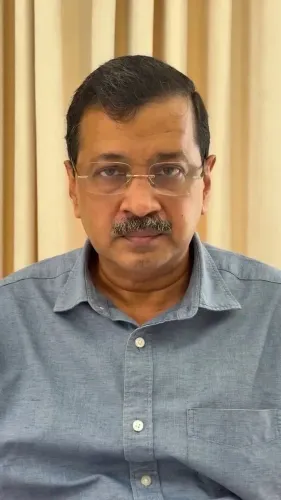
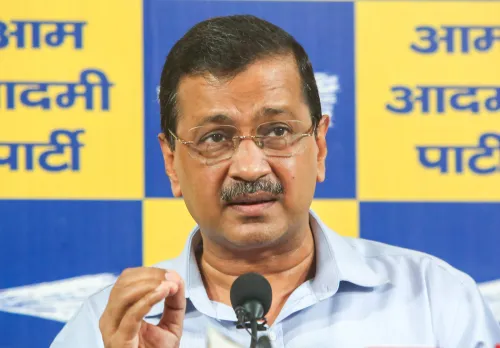
AAP convenor Arvind Kejriwal on Sunday, 19 July 2026, launched a sharp attack on Prime Minister Narendra Modi over fresh reports of irregularities in the re-NEET examination, asking how a government that cannot conduct a single exam properly can claim to run the country.
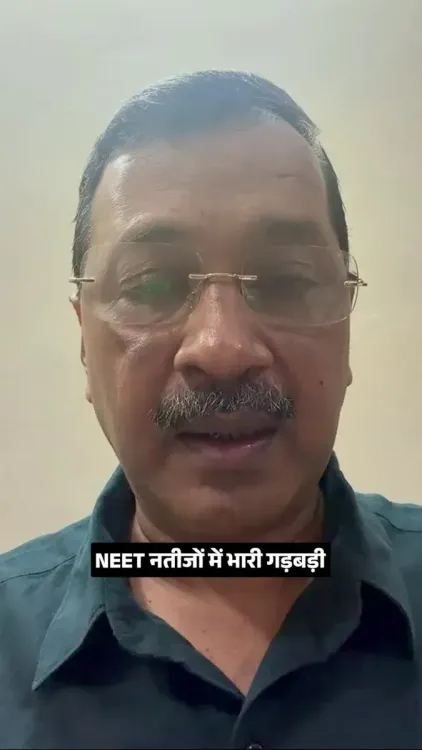
In a post on X, Kejriwal wrote: 'Re-NEET exam ke natajon mein bhi ab bhari gadbadi samne aa rahi hai. Bechare bachche jayen to jayen kahan?' — translated: 'Massive irregularities are now surfacing in the re-NEET exam results too. Where are these poor children supposed to go?' He directly addressed the Prime Minister: 'Mr Modi, if you cannot conduct even one exam properly, how will you run the country? In 12 years, you have destroyed the nation.'
Context
The National Eligibility cum Entrance Test (NEET) is the sole national entrance examination for undergraduate medical admissions — MBBS and BDS courses — across India. It was made the single mandatory gateway in 2016 following a Supreme Court order that replaced multiple state-level tests. The exam is conducted by the National Testing Agency (NTA), an autonomous body established in 2017 under the Ministry of Education.
A re-examination was ordered after widespread allegations of paper leaks and result anomalies surfaced in the original NEET-UG cycle. Kejriwal's post signals that, in his assessment, the re-examination has now produced its own set of irregularities — compounding the crisis for medical aspirants.
Policy Backdrop
The NTA has faced sustained scrutiny over its handling of high-stakes national examinations. Opposition parties have repeatedly framed successive exam controversies as evidence of systemic governance failure in the education sector. Petitions challenging the conduct of NEET have been heard at the Supreme Court of India, and demands for a structural overhaul of the NTA have grown louder across political and civil-society circles.
Kejriwal's reference to '12 years' places the accountability squarely on the Bharatiya Janata Party-led central government, which has been in power since May 2014. The AAP has consistently positioned itself as a champion of education reform, pointing to its own school-improvement record in Delhi as a contrast to what it calls central neglect.
Stakeholders and Impact
The primary victims of repeated examination failures are medical aspirants, many of them from underprivileged and middle-class families who invest years of preparation and significant financial resources in a single high-pressure test. Each cycle of irregularities delays admissions, disrupts academic calendars, and erodes confidence in the examination system.
Beyond individual students, the credibility of India's centralised medical admissions architecture is at stake. Coaching institutes, universities, and state governments that surrendered their own entrance processes to NEET now find themselves without an alternative mechanism should the national exam continue to falter.
What's Next
Pending Supreme Court hearings on NEET-related petitions will be closely watched for any directions on result validity, compensation for affected candidates, or interim relief. Pressure is also building on the government to announce concrete reforms to the NTA's governance structure before the next examination cycle begins.
With the Parliament session providing a platform for opposition questions, the NEET controversy is likely to intensify as a flashpoint between the ruling coalition and parties like AAP, which have made education accountability a central electoral and legislative theme.
Point of View
A framing AAP has used effectively to differentiate itself as a party of educational delivery over electoral rhetoric. The attack lands at a particularly sensitive moment: the re-examination was itself a remedial measure, so fresh allegations of irregularity effectively double the political damage for the ruling establishment. By centring the suffering of aspirant students rather than procedural technicalities, Kejriwal shifts the debate from bureaucratic accountability to moral accountability, a register that resonates with first-generation college-going families. This positions AAP ahead of any upcoming electoral cycle as the party most vocally aligned with the anxieties of India's competitive-exam generation.
NationPress
20 Jul 2026
Frequently Asked Questions
What is the re-NEET exam and why was it held?
The re-NEET exam was a repeat of the National Eligibility cum Entrance Test for undergraduate medical admissions, ordered after allegations of paper leaks and irregularities surfaced in the original NEET-UG examination cycle. It was meant to ensure a fair process for medical aspirants across India.
What did Kejriwal say about the re-NEET results?
Kejriwal alleged on 19 July 2026 that massive irregularities have surfaced in the re-NEET results as well, and asked Prime Minister Modi how a government unable to conduct a single exam properly can claim to run the country.
Who conducts NEET in India?
NEET is conducted by the National Testing Agency (NTA) , an autonomous body set up in 2017 under the Ministry of Education , Government of India.
What is AAP's position on NEET and education policy?
The Aam Aadmi Party has consistently criticised the central government's handling of national examinations and positioned its own school-reform record in Delhi as a model of effective education governance, contrasting it with what it describes as systemic failures at the central level.
What happens next in the NEET controversy?
Pending Supreme Court hearings on NEET-related petitions are expected to determine the validity of results and any relief for affected candidates. Calls for a structural overhaul of the NTA are also likely to be raised in Parliament.