Kejriwal Questions Air Force Use for NEET Paper Security
Synopsis
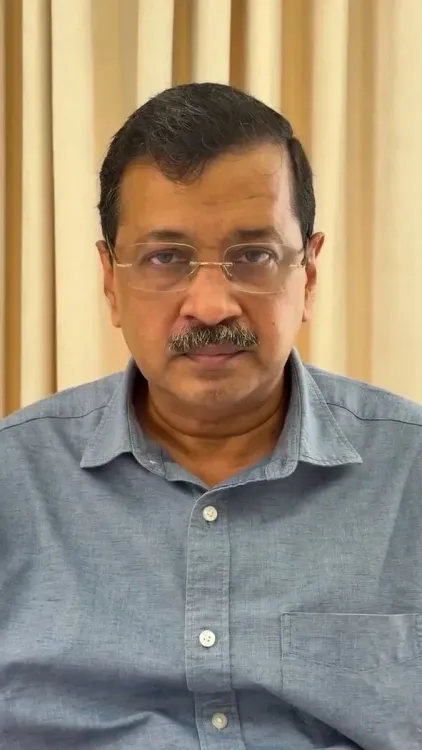
AAP convenor Arvind Kejriwal on 30 May 2026 attacked a reported plan to use Indian Air Force planes to secure NEET papers, saying it would not stop leaks and that India's education system had fallen entirely under mafia control, calling for collective action to fix it.
Key Takeaways
AAP convenor Arvind Kejriwal on 30 May 2026 criticised a reported proposal to use Indian Air Force aircraft to transport NEET question papers.
Kejriwal called the idea naive, stating it would not prevent paper leaks and reflected poorly on the government's competence.
He alleged the government lacks genuine intent to stop leaks and that India's education system is 'completely in the grip of the mafia.' NEET is conducted by the National Testing Agency , established in 2017 to centralise major entrance examinations and curb irregularities.
Kejriwal called for collective action, saying no single actor could resolve the systemic problem alone.
The criticism raises pressure on the Ministry of Education to clarify NEET 2026 security protocols and NTA's reform roadmap.
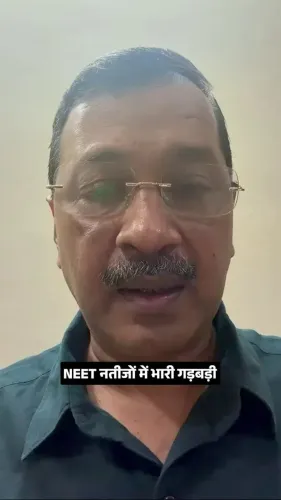
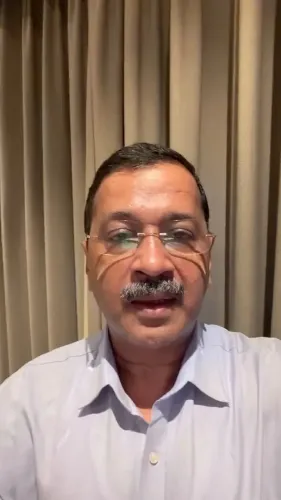
AAP convenor Arvind Kejriwal on Saturday, 30 May 2026 sharply criticised a reported proposal to use Indian Air Force aircraft to transport NEET examination papers, calling the idea naive and questioning the central government's genuine commitment to ending paper leaks in the national medical entrance test.
Context
Kejriwal's post, written in Hindi, directly challenged a reported security measure under which Air Force planes would be deployed to ferry NEET question papers to examination centres. Translating his words: 'NEET mein paper leak rokne ke liye vayu sena ke jahaz istemal kiye jaayenge' ('Air Force aircraft will be used to prevent paper leaks in NEET'). He followed that with a pointed question: 'Will this actually stop paper leaks? How can our government speak like illiterates?'
He went further, asserting: 'They have no intention of stopping paper leaks. The country's education system has completely fallen into the grip of the mafia.' He closed with a call for collective action, saying no single actor could fix the problem alone.
Policy Backdrop
NEET was introduced nationwide in 2016 following Supreme Court directions to replace a patchwork of state-level medical entrance tests with one standardised examination. The National Testing Agency (NTA), established in 2017 under the Ministry of Education, was given responsibility for conducting NEET, JEE, and other major entrance exams precisely to address longstanding complaints of leaks and irregularities in earlier systems such as AIPMT.
Despite centralisation, allegations of paper leaks and irregularities have continued to surface in successive exam cycles, making examination integrity one of the most politically charged education issues in India. Opposition parties, including AAP, have consistently framed each fresh allegation as evidence of a systemic failure of intent rather than an isolated administrative lapse.
Stakeholders and Impact
At stake are the futures of lakhs of medical aspirants who sit NEET each year, along with the credibility of the NTA and the broader architecture of centralised entrance examinations. State education departments, coaching centres, and student groups have all periodically demanded stronger technological and logistical safeguards.
Kejriwal's framing — that the education system is 'completely in the grip of the mafia' — raises the political temperature around any proposed security measure, signalling that opposition scrutiny of NEET administration will intensify ahead of the next examination cycle. His appeal for collective action also implicitly invites other opposition parties and civil society to join a coordinated campaign on exam reform.
What's Next
Attention will now shift to whether the Ministry of Education or the NTA issues a formal statement clarifying the scope and rationale of any Air Force logistics proposal for NEET 2026. Parliamentary questions on revised security protocols and possible legislative changes to the NTA's mandate are likely to follow.
If the government proceeds with the Air Force deployment plan without addressing the underlying procedural gaps that enable leaks, Kejriwal's critique is likely to gain traction among student and parent groups already sceptical of the examination body's track record.
Point of View
Then position the party as the credible alternative on governance. By invoking 'mafia control' of education, he escalates the discourse from logistics to systemic corruption — a framing that resonates strongly with the aspirational middle class that drives NEET enrolments. The call for collective action is also strategically ambiguous, leaving room for AAP to either lead a broader opposition coalition on exam reform or claim credit if the government is eventually forced to overhaul the NTA. With NEET 2026 approaching, this post is as much an electoral signal as a policy critique.
NationPress
15 Oct 2026
Frequently Asked Questions
Why did Kejriwal criticise the Air Force being used for NEET?
Kejriwal argued that using Air Force aircraft to transport NEET papers would not address the root causes of paper leaks and called the proposal naive, saying the government lacks genuine intent to fix the problem.
What is NEET and why are paper leaks a concern?
NEET (National Eligibility cum Entrance Test) is India's single nationwide medical entrance exam conducted by the National Testing Agency. Repeated allegations of paper leaks have undermined confidence in the exam's fairness and triggered political controversy.
What did Kejriwal say about India's education system?
Kejriwal stated that India's education system has 'completely fallen into the grip of the mafia' and that fixing it requires collective effort from all stakeholders, not individual action.
What is the National Testing Agency's role in NEET?
The National Testing Agency, established in 2017 under the Ministry of Education, is the autonomous body responsible for conducting NEET, JEE, and other major national entrance examinations.
What action is expected after Kejriwal's criticism of NEET security?
Observers expect the Ministry of Education or the NTA to clarify the Air Force logistics proposal and outline broader security reforms, while parliamentary questions on NEET 2026 protocols are likely to follow.